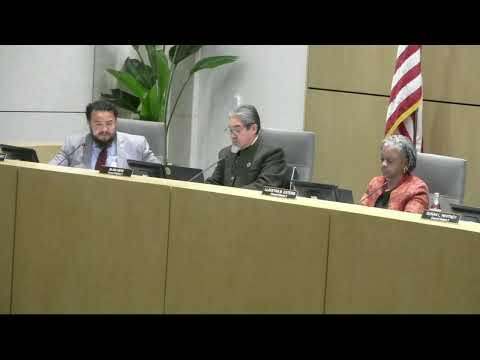
College Park council previews open-meeting software; asks staff to seek vendor comparisons and pricing details
Loading...
Summary
Councilors viewed a vendor demonstration of an OpenMeeting system for electronic voting, speaker queuing and agenda management. Members asked for more vendor comparisons, cost details and examples of the minutes-generation function before a procurement decision.
College Park councilors on Jan. 14 heard a demonstration of an “OpenMeeting” legislative-management system and discussed whether the city should adopt software to manage speaker queues, electronic roll call and generate meeting minutes.
Assistant/Presenter Michael Gardiner (staff) showed a vendor video and explained how tablets at each seat, a clerk workstation and a public monitor could display agenda items, speaker queues and vote results. “It would have the vote item and then your individual names and your vote,” Gardiner said, describing the public display and the system’s ability to record votes by item.
Council Member Whitney said the system could make roll-call votes routine and asked about on-the-fly amendments during deliberations. Gardiner replied the vendor platform can post amended language in real time. “It is capable of doing amendments in real time,” Gardiner said.
Cost and scope questions featured heavily in the discussion. Gardiner relayed the vendor’s price examples: an approximate mid-tier package quoted at about $10,000 setup with $5,000 annually, plus hardware (tablets and a large monitor) estimated near $9,000 — bringing the first-year outlay to roughly $20,000, with recurring licensing and additional committee licenses discussed at roughly $6,000 annually for system-wide committee access. Gardiner told the council the vendor had not yet delivered sample minutes output but expected to provide examples later in the month.
Council members sought clarifications about practical operations: how the system handles absent members (the public screen can show absent/locked votes), whether vote explanations are possible (the platform displays locked votes in bulk; verbal explanations would still be recorded as councilors provide them), and how remote or fully virtual meetings would display results to a remote audience.
Council Member Mitchell asked for vendor comparisons and alternative quotes. The council requested staff to return with at least one additional vendor for cost and feature comparison, sample minutes output from the vendor, and options for trial configurations. City Manager Young and City Clerk Yvette Allen confirmed the city can pursue additional demos and training would be provided if the council decides to implement the system.
Why it matters: A meeting-management system would change how the public sees votes and speaker order, could reduce staff time spent preparing minutes, and may require an initial capital outlay and recurring license fees.
Next steps: staff will contact other vendors for comparative pricing and ask the vendor for minutes examples, finalize cost estimates (including hardware) and return with a recommendation and possible pilot options.