Get Full Government Meeting Transcripts, Videos, & Alerts Forever!
Get email alerts on the Advisory Boards topic
No spam. Unsubscribe anytime.
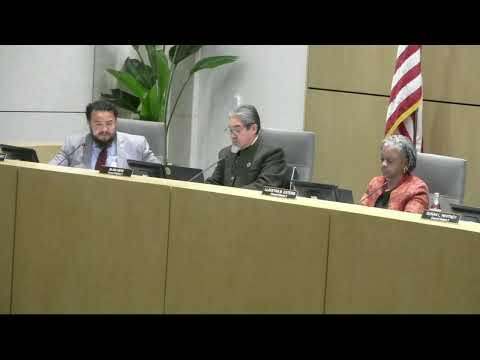
College Park council reviews advisory boards’ annual work plans, discusses volunteer access and committee support
Summary
City council members reviewed annual reports from advisory boards and discussed improving volunteer participation, staff liaison capacity and whether some committees should be invited for fuller work sessions ahead of the budget process.
The College Park City Council on Jan. 14 reviewed annual work plans submitted by the city’s advisory boards and discussed ways to increase volunteer participation and staff support ahead of the FY-2026 budget process.
Council members said the board reports contained several items with budgeting or implementation implications and asked staff for clearer follow-up so council can consider proposals during upcoming budget work sessions.
Mark Schroeder, chair of the Bicycle & Pedestrian Advisory Committee, described the committee’s large agenda and longer-term projects, saying the city’s existing street layout makes many neighborhoods challenging for cyclists and pedestrians. “If you’re trying to get out of [a cul-de-sac] on a bicycle or on foot and the only way out is Route 1 or University Boulevard, that’s dangerous,” Schroeder said. He urged continued coordination with the city on capital projects.
Miriam Bader, the city’s director of planning and community development, told the council the Advisory Planning Commission (APC) has not historically prepared a standalone annual work plan because its work is primarily application-driven: “Their primary focus is on reviewing variances and departures… it’s as-needed basis.”
Council members pressed for mechanisms to keep advisory committees and the council better informed during the year. Several members suggested the council receive agendas or periodic status updates from committees so councilors can provide earlier input rather than only seeing final recommendations at meetings. City Clerk Yvette Allen said staff will circulate questions from council to the committees and return answers in time for budget deliberations.
Councilors and committee chairs also discussed membership and volunteer access. Council Member Doctor Estes and others asked whether committees with hands-on work (for example, the Pollinator Committee, which has coordinated plant giveaways and planting events) could maintain broader volunteer lists without changing legal membership rules. Allen said the resolutions that establish boards typically set member caps (committees commonly have up to nine voting members) but that nonvoting volunteers may attend meetings and help with activities; the practical barrier is that nonmembers must monitor the city calendar to receive meeting notices. Council members asked staff to create an easier sign-up or listserv so volunteers can receive automatic notices without overloading committee chairs.
Several council members asked staff liaisons to flag committee items with budget implications so they will be reviewed by departments ahead of the council’s budget work sessions. City staff said they will evaluate requests that carry budget impacts at the department level and include recommendations in the budget packet.
Why it matters: advisory committees are a key source of project ideas and technical recommendations for College Park; clarifying how their proposals move from reports into the city budget will affect which pedestrian, environmental and community programs advance in 2025.
Council direction and next steps: staff will (a) collect council questions and forward them to committees for written responses, (b) explore creating an opt-in listserv or notification system for volunteers, (c) provide committee agendas and status reports on request, and (d) flag committee requests with budget implications for department review prior to the council’s budget work sessions.