Get Full Government Meeting Transcripts, Videos, & Alerts Forever!
Get email alerts on the Charter Review topic
No spam. Unsubscribe anytime.
Barnstable County delegates begin charter review, zero in on separation of powers, staffing and process
Summary
A Barnstable County Assembly of Delegates committee convened Feb. 12 to set key topics for a 2025 charter review, focusing discussion on clarifying legislative authority, delegate staffing and timelines; the committee did not adopt substantive charter changes and agreed to seek counsel before scheduling further work.
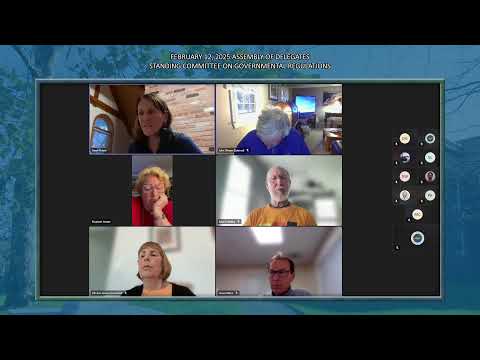
Barnstable County Assembly of Delegates members met Feb. 12, 2025, via Microsoft Teams for a standing committee session on government regulations to discuss key topics for a charter review ahead of a full commission process.
The committee’s discussion centered on three recurring themes: defining the scope of the assembly’s legislative powers, strengthening the assembly’s independent staffing authority, and improving procedures for information flow between the administration and delegates. The group agreed to compile submitted proposals, seek legal counsel to advise on the review and then set a work schedule for the charter review committee.
Delegate Brian O'Malley (Provincetown) said the group “need[s] to really put a dive…into what is the meaning and scope of all legislative powers that are expressly vested in the assembly by the charter,” urging clear language about what it means to be the legislative body and how appropriations and lawmaking relate to executive authority.
Delegate Delia Killian (Sandwich) and Delegate John Oman both argued the assembly should be able to function without reliance on the executive for basic operations, with Killian saying the assembly currently “cannot operate as a…coequal branch” when it must depend on the executive to fill staff positions or provide special counsel.
Delegate Delia Green (Wellfleet) provided a written draft with housekeeping and consistency suggestions and urged clarifications that would permit delegates to hire clerks and staff as needed. Several delegates, including Deputy Speaker Gessen, emphasized distinguishing high-level charter changes from procedural matters better handled through ordinances, administrative code or a manual of governance.
Delegates also discussed recall provisions, language to address abusive or threatening conduct toward officials, and whether to incorporate modern practices such as hybrid meetings and clearer digital-notice rules — though several members noted those specifics may be better placed in ordinances or operating procedures rather than the charter itself.
Clerk Owen Fletcher reported that KP Law had been asked whether it would serve as counsel for the charter review; the law firm was asked to indicate interest by the coming Wednesday. Fletcher said the committee is aiming to complete its preparatory work in time to start formal charter-review work in April, contingent on counsel availability and scheduling.
No final charter amendments were adopted at the session. The committee voted by roll call to adjourn; the roll call in the transcript recorded affirmative votes from Deputy Speaker Gessen, Delegate Delia Green, Delegate Harder, Delegate Killian, Delegate Brian O'Malley and Speaker Potash.
The committee asked delegates who had submitted position documents to work with the clerk to collate a formal list of key topics to present to the full assembly. Next steps identified were (1) confirm legal counsel for the charter-review process, (2) finalize and publish a set of key topics to the full assembly, and (3) set dates for the charter-review committee to begin deliberations once counsel and scheduling are confirmed.