Get Full Government Meeting Transcripts, Videos, & Alerts Forever!
Get email alerts on the Blight Revitalization topic
No spam. Unsubscribe anytime.
Nonprofit presents blighted-property inventory for two Du Bois corridors; recommends conservatorship candidates
Summary
Keystone Core Services presented a windshield survey of properties on North/South Brady and East Park, ranking 28 properties and identifying several that may qualify for conservatorship or targeted rehab funding.
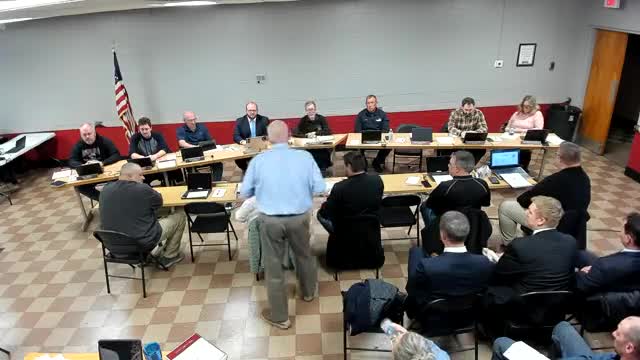
Keystone Core Services, a subsidiary of the Pennsylvania Downtown Center, presented the results of a blighted-property inventory of two primary corridors into Du Bois at Tuesday's meeting, recommending next steps and available state funding paths.
"We evaluated properties on a 1-to-5 scale from the sidewalk," presenter Bill Fontana said. "The average property score in the study area was about 3.34, and several properties scored below 2.5, indicating significant structural deterioration."
Fontana said the inventory started from a list of properties with prior code violations and included 28 properties representing 29 structures. The evaluation considered exterior-yard condition, primary-structure condition, storefront condition where applicable, and overall property condition. The team used the city's adopted International Property Maintenance Code (2018 version) and Commonwealth criteria including the Conservatorship Act.
The inventory identified roughly five properties that appear to meet the Conservatorship Act criteria; one of those is already owned by the redevelopment authority, Fontana said. He named three primarily on South Brady and one near East Park as top candidates for conservatorship proceedings. "One parcel is 205 East Park; others include 133 South Brady, 219 South Brady, and 229-230 South Brady," Fontana said.
Fontana recommended the city, downtown nonprofit groups, or other eligible conservators evaluate the highest-ranked properties for formal action and noted state programs that can fund planning and rehabilitation. "There are planning grants up to $25,000 that could be matched locally," he said, describing Main Street and Elm Street-style programs that fund residential corridor planning and subsequent rehab work.
Public discussion clarified that sidewalk walls are generally the property owner's responsibility and that most of the study properties were not owner-occupied; Fontana said 82% of the properties were investment (non-owner-occupied) structures, and five parcels were owner-occupied. He said data were pulled from Clearfield County GIS, the city treasurer's tax records, and police information provided by the city's staff.
Ending: Fontana said a full report (about 50 pages) would be provided to the city and urged the board and downtown organizations to decide which properties to pursue next, whether through conservatorship, land bank, redevelopment authority action, or nonprofit rehabilitation programs.