Get Full Government Meeting Transcripts, Videos, & Alerts Forever!
Get email alerts on the School Audits Internal Funds topic
No spam. Unsubscribe anytime.
Audit of 40 schools finds two with student-activities weaknesses; committee asks for six-year trend data
Summary
An internal audit of 40 Miami-Dade schools and centers found most campuses compliant but flagged two schools for weaknesses in student-activities bookkeeping and booster-club fund controls.
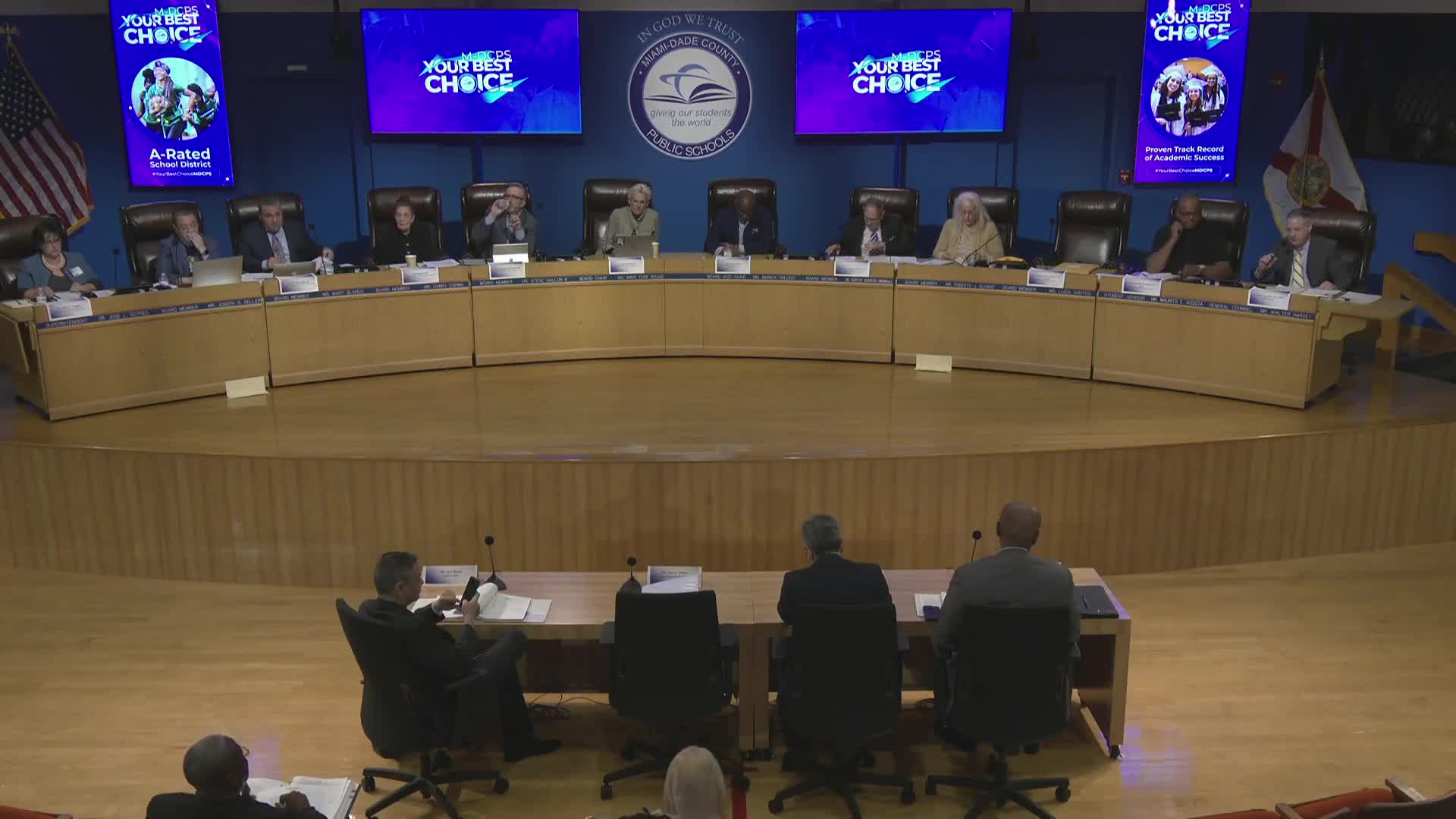
An internal audit of 40 Miami-Dade schools and centers found most campuses compliant but identified noncompliance and internal-control weaknesses at two sites involving student activities and a booster club, the district’s auditors told the Audit and Budget Advisory Committee on Feb. 4.
"Our office is presenting the February school audit report, which includes the audit results of 40 schools and centers," Tamara Wayne, assistant chief auditor, said. Wayne told the committee the audit scope covered two fiscal years for 16 centers and one fiscal year for 24 schools, and that 14 of the schools had experienced a principal or administrator change since the prior audit.
The nut graf: the district’s audit office concluded the financial statements were "fairly stated" for all 40 schools, but two schools showed issues in internal funds and booster-club fundraising that the auditors described as requiring improved bookkeeping and documentation.
Wayne said the problems involved student-activities processes, including treasurers and club sponsors, and in one case commingling of booster and school funds tied to a football booster club. "The finding with the issue with the booster club involved the football coach because it was a football booster club and the commingling of funds where they couldn't separate the activities of the school and the booster," Wayne said.
Committee members debated remedies and responsibility. ABAC member Anthony Atala and board member Steve Gallen both pressed for stronger, ongoing training; Gallen said many issues reflect volunteers or sponsors who lack training rather than intentional misconduct. "In many cases it is a gap of understanding, it is a gap of compliance on part of staff," Gallen said, adding that sponsors and volunteers often handle collections.
The superintendent (unnamed in the record) described existing training programs for assistant principals and principals and said the district already incorporates financial controls and "Money Does Matter" material into multiple leadership-development tracks. "Money matters is part of that as well," the superintendent said, describing induction and bench programs for school leaders and monthly meetings where finance topics are covered.
Board members repeatedly returned to whether the district should expand recurring training beyond principals — for treasurers, activities directors and volunteer sponsors — and whether technology (a move to cashless payments) has reduced finding frequency. Anna Hokommer and other members argued for data before changing policy; at the meeting ABAC voted unanimously to request historical trend data on audit findings at individual school sites over the last six years to show whether findings are decreasing with technology and procedural changes.
"There has been a trend over the last several years where we have improved overall," John Goodman, Chief Auditor, said, and the committee agreed to request staff to deliver trend data at a future meeting.
Committee members also raised practical points about scale: principals and volunteers run many extracurriculars at comprehensive high schools, and sponsors and student treasurers move cash during events. Several members suggested expanding training for those groups most likely to handle cash and receipts, and noted the district’s internal funds staff and activities directors already provide school-level support.
On procedure, Wayne said the audit office discussed findings with affected schools, regions and district administrators; the schools’ responses were included in the written report. The committee took the report as an action item and approved it unanimously.
Ending: ABAC directed staff to return with the six-year historical data and context about the district’s cashless transitions and internal-fund systems to inform any further policy or training changes.