Get Full Government Meeting Transcripts, Videos, & Alerts Forever!
Get email alerts on the School Internal Audits topic
No spam. Unsubscribe anytime.
Audit finds mostly sound school finances but flags student-activities and booster-club controls; committee asks staff for six-year trend data
Summary
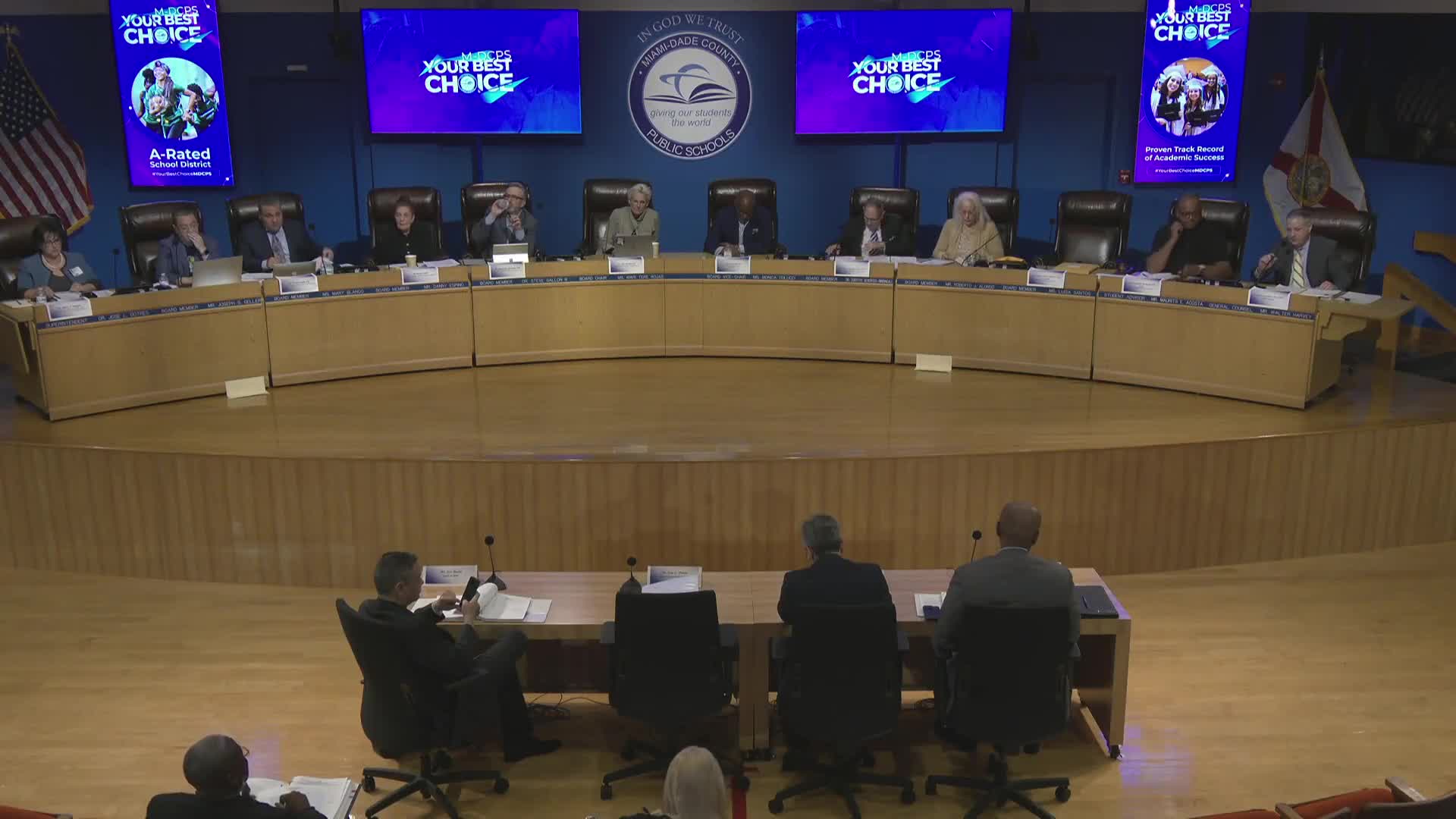
An internal audit of 40 schools found generally fair financial statements but cited student-activities and booster-club control weaknesses at two schools. The Audit and Budget Advisory Committee directed staff to produce a six‑year trend on the frequency of school-level findings and discussed expanding training and cashless options.
An internal audit of 40 Miami‑Dade County public schools found financial statements to be fairly stated overall but identified noncompliance and inadequate internal controls in student-activities and booster-club accounts at two schools.
The audit presentation by Tamara Wayne, assistant chief auditor, covered 40 schools and centers with audit scopes covering one or two fiscal years ending June 30, 2024. Wayne said 16 centers were audited for two fiscal years and 24 schools for one fiscal year; 14 of the sites had a change in principal or administrator since the prior audit. "The financial statements were fairly stated for all 40 schools," she said, but added that two schools had findings related to internal funds and booster clubs.
The committee’s discussion focused on what caused the repeat findings, how training is delivered, and whether the district should expand continuous training for staff who handle school funds. Dr. Gallon and other committee members stressed that many fundraising and receipt issues stem from club sponsors, volunteer boosters and young student treasurers, not intentional fraud by principals. Wayne said the two primary problem areas involved student-activity collections and a football booster club where funds had been commingled.
Superintendent (unnamed in the record) described the district’s multiyear leadership development programs for assistant principals and principals, saying money‑management education is part of those induction and continuing‑education programs. He also acknowledged the need for targeted remedial actions at schools with repeated findings.
Committee members and staff discussed technology as part of the solution. Several members asked for data on whether moving toward cashless payment systems has reduced findings. John Goodman, chief auditor, said audits have trended toward improvement in recent years and agreed to supply the historical data the committee requested.
Motion and directive: the committee moved and unanimously approved a request that staff provide historical trend data, specifically the frequency of finding occurrences at individual school sites over the last six years, to help determine whether training or system changes (including cashless solutions) are reducing problems. The motion did not change any school’s supervisory or disciplinary process; it directs staff to report back with data and analysis.
Committee members emphasized context: most schools (95% in the report) had no findings, and committee members urged proportionate responses that consider the large volume of volunteer and student activity at high schools. Participants also recommended exploring expanded, targeted training for club sponsors, booster volunteers and activities directors as well as continuing principals’ training.
The committee concluded the item by approving the school audit report (action item) and advancing the request for data. Staff said they will return with the requested trend analysis and additional recommendations about training cadence and system changes.
Ending: The committee recorded the audit report as an action item and passed it unanimously. Committee members asked staff to return with the six‑year trend analysis and to explore whether extending the district’s cashless/payment options to boosters and clubs would reduce future findings.