Get Full Government Meeting Transcripts, Videos, & Alerts Forever!
Get email alerts on the Higher Education Enrollment topic
No spam. Unsubscribe anytime.
Minnesota undergraduate enrollment rises 7.4% in 2024; lawmakers hear administrators and students credit North Star Promise
Summary
Statewide undergraduate head count rose from about 238,000 to 256,000 in 2024, a 7.4% increase, lawmakers heard; university and college leaders described campus-by-campus recoveries and students testified the North Star Promise scholarship was pivotal to their ability to enroll and persist.
Minnesota undergraduate enrollment increased 7.4% from 238,000 to about 256,000 in 2024, producing a net gain of roughly 18,000 students, the Senate Higher Education Committee heard at a Tuesday hearing.
"Across all institution types, Minnesota undergraduate enrollment has surged in 2024," Chair Firtay, chair of the Senate Higher Education Committee, said as the hearing opened, citing statistics published by the National Student Clearinghouse Research Center in January.
Why it matters: Committee members heard that the statewide gain—higher than the national average and the leading growth rate in the Midwest—moves the state closer to its 2025 postsecondary attainment goal and helps address workforce shortages. Campus leaders described varied recoveries across the University of Minnesota system, Minnesota State institutions, private nonprofits and community colleges; students and system officials credited state programs, especially the North Star Promise scholarship, with reducing financial barriers and supporting persistence.
University of Minnesota system leaders described a systemwide turnaround after pandemic-era declines. "The University of Minnesota offers an exceptional academic experience," Melissa Lopez Franzen, executive director of government and community relations for the University of Minnesota, said, summarizing the system's message that research opportunities, diverse campus identities and targeted programs have helped bring students back.
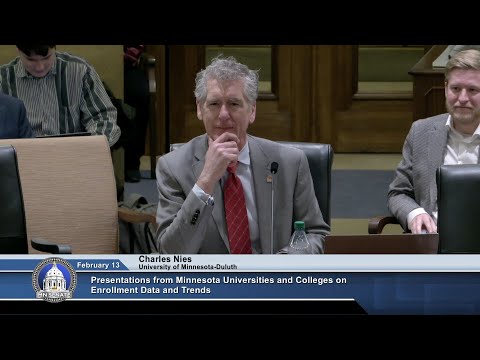
Campus-level details provided at the hearing included: - Crookston: Chancellor Mary Holtz Clause said total campus enrollment is about 2,600, with roughly 1,700 degree-seeking students and about 1,000 online students. Crookston lost about 9% of students during the COVID period but has focused on returning adults, credit-for-prior-learning and pathway programs to reverse the decline. - Duluth: Charles Neece (speaker identified as chancellor at UMD) reported applications up about 30%, confirmations up 12% year-to-date, and a first‑to‑second year retention rate of about 84%. The campus emphasized transfer students and first‑generation enrollment gains. - Morris: Chancellor Janet Erickson and vice chancellor Melissa Burt said Morris has seen a long-term enrollment decline but reported recent increases in applications, admits (up 30% for fall 2025 at the time of testimony) and first‑to‑second year retention, and cited targeted program investments such as a new licensed alcohol and drug counseling track. - Rochester: Chancellor Laurie Carroll said UMR served 936 students and reported application increases (23%), offers up 39% and paid confirmations up 176% year over year; the campus is planning phased growth toward 1,500–2,500 students and requested state investment to expand facilities for health‑sciences programs. - Twin Cities: Greg Snead, vice provost for enrollment on the Twin Cities campus, reported undergraduate enrollment near 32,000 and total degree‑seeking enrollment around 47,000 (including graduate and professional students); he said 61% of undergraduates were Minnesota residents and the campus retention rate was near 91%.
Minnesota State system officials described systemwide stabilization and early signs of recovery: vice chancellor Bill Mackey said fiscal 2024 produced the first full‑year equivalent enrollment increases for the system since 2011 and projected more than 5% FYE growth for 2024–25 across most colleges and universities. Individual colleges reported stronger one‑year gains: several community and technical colleges described double‑digit increases tied to targeted recruitment, employer partnerships and new programs (Saint Cloud Technical & Community College reported roughly a 12% enrollment increase in the testimony).
Community colleges and private nonprofit institutions also reported uneven but improving trends. Presenters from the Minnesota Private College Council said undergraduate head count for its members was down about 8.5% since fall 2015 but up 1.9% year‑over‑year to fall 2024; graduate enrollment for private colleges remained down from a decade earlier.
Students and administrators repeatedly credited recent state financial aid and outreach programs with increasing access and persistence. Multiple student testifiers said the North Star Promise scholarship was decisive in allowing them to enroll full time, reduce work hours and stay on a path to graduation. "The North Star Promise changed everything," said Shirley Mullen, a nursing student at Metro State University. John Runigan, a student at Concordia College who described his advocacy for the scholarship, said the measure "fundamentally changed higher education in Minnesota and beyond." Other students described North Star as the difference between taking classes part time while working and enrolling full time with the ability to participate in internships and campus leadership.
Program and policy references included the North Star Promise scholarship, the federal Free Application for Federal Student Aid (FAFSA), and the Minnesota Office of Higher Education's Directed Admissions program; witnesses said those programs, plus targeted legislative investments in mental health, basic‑needs supports and workforce scholarships, have raised awareness of college options and reduced the financial barriers that had kept some students from enrolling.
What lawmakers asked and what remained unsettled: Committee members pressed campus leaders on capacity (for example, Crookston projected on‑campus capacity near 850–900 and online capacity 1,200–1,400 by 2027–28) and on the fiscal and facility investments needed to sustain growth, especially at specialized campuses like Rochester. Private college witnesses expressed concern about recent federal grant losses at some institutions and said they are still assessing impacts. Several presenters urged continued state investment in outreach, transfer pathways and support programs to preserve momentum.
The hearing produced no formal votes; it served to collect campus data, student stories and officials' requests for continued legislative support. Committee materials provided slides and spreadsheets with detailed campus head counts, FYE trends and program descriptions, which committee staff said will inform further budget and policy review.
The committee adjourned after hearing more than two dozen campus leaders, system officials and students describe enrollment trends and policy priorities affecting Minnesota higher education.