Get Full Government Meeting Transcripts, Videos, & Alerts Forever!
Get email alerts on the Housing Affordability topic
No spam. Unsubscribe anytime.
Resident urges council to prioritize middle- and lower-income homeownership; suggests modular "Boxabl" units and grant use
Summary
A resident highlighted Woodstockhousing study findings, cited a 42% shortfall for middle-income housing in 2021 and zero met demand for lower-income ownership, and urged council to explore modular homes, preserve existing affordable stock, and use funding sources such as ARPA and TAD.
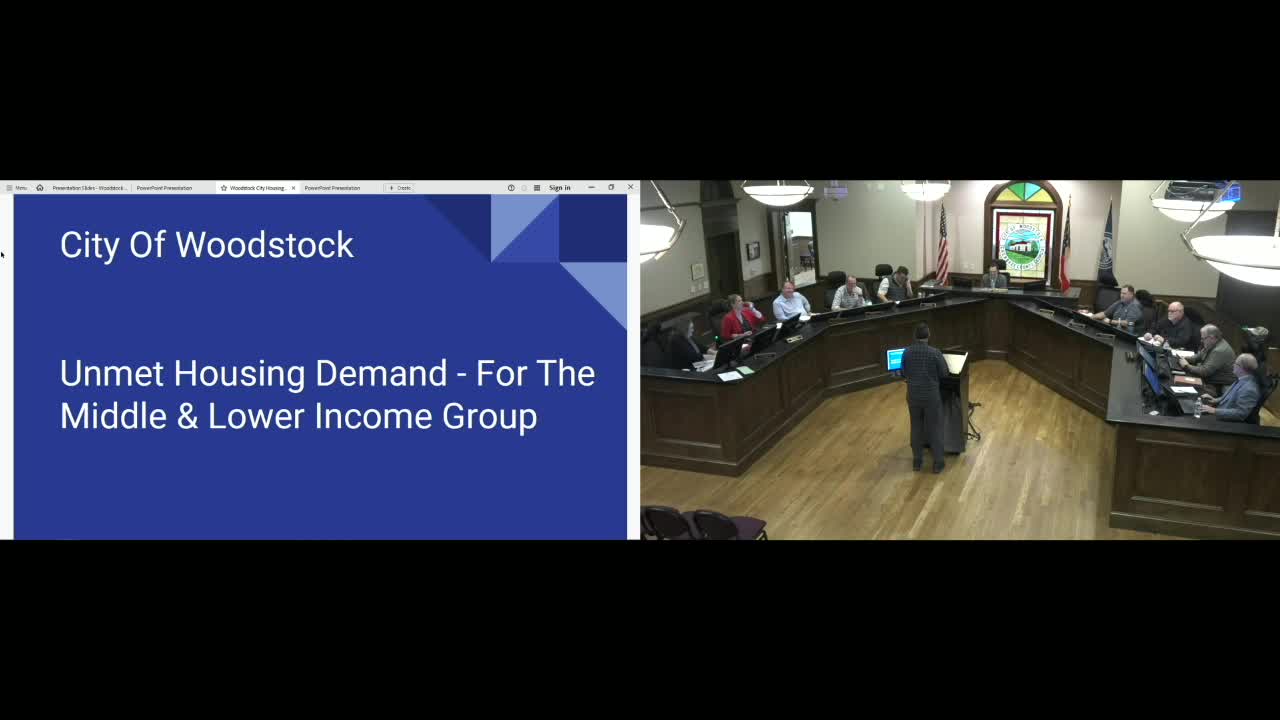
During public comment, Gopi Govindaraj urged the mayor and council to make middle- and lower-income homeownership a priority and proposed exploring factory-built modular housing as one tool.
The comment is significant because the cityhousing study (2021) cited unmet need for middle- and lower-income households that, according to the speaker, remains unresolved and affects municipal workforce members such as teachers, police and firefighters.
"I've looked at the 2021 report, the comprehensive housing study. And one of the main issues that was identified is the unmet housing needs for the middle and lower income group," said Gopi Govindaraj during public comment. Govindaraj said the study showed a roughly "42% shortage for middle income housing" and asserted that the lower-income demand in 2021 was recorded as "0 demand met." He said those shortfalls have likely worsened with recent price increases.
Govindaraj suggested several approaches drawn from the study and his own research: partner with developers to produce tiny or factory-built homes at scale (he cited modular firms such as Boxabl, saying units can start around $50,000); preserve and protect older lower-cost housing stock; and use a mix of funding sources, including unassigned fund balances, ARPA funds and tax allocation district (TAD) resources.
"We need to preserve and protect lower cost affordable home stock," he said, and urged the council to "think hard and deep" about zoning changes, incentives for developers, and use of available grants to create ownership options for middle- and lower-income families.
The mayor and council did not take action during public comment. Staff and council did not provide an immediate response or timeline in the meeting; the speaker said he would follow up with the council.
For clarity: the figures cited by the speaker were drawn from the 2021 comprehensive housing study as described in his remarks; the council did not provide updated metrics during the meeting.