Get Full Government Meeting Transcripts, Videos, & Alerts Forever!
Get email alerts on the Attendance Engagement topic
No spam. Unsubscribe anytime.
CCSD reports drop in chronic absenteeism to 26.6%; board asks for continued targeted interventions
Summary
The district reported a drop in chronic absenteeism to 26.6% for the first semester of 2024–25 (down from 29.6% year‑over‑year) and described targeted outreach, home visits and partnerships; trustees asked for town-hall summaries, municipality-level data and supports for students facing housing and mental-health instability.
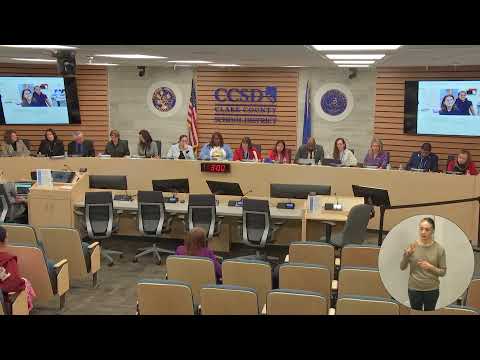
Clark County School District staff told the Board of Trustees on Feb. 13, 2025, that chronic absenteeism for the first semester of the 2024–25 school year stood at 26.6%, down from 29.6% at the same point last year. Trustees accepted the report (agenda item 3.02) by a unanimous 7-0 vote.
Associate Superintendent Kevin McPartland and Danielle Jones, Director of Chronic Absenteeism and Shared Housing, presented the data and described the district’s multi-pronged strategy: a district data dashboard used to target supports; increased coordination with schools, municipalities and community partners; daily/after-hours home visits by attendance enforcement officers (20,000 home visits reported in the first semester); the Everyday Matters public campaign with business partnerships and distributed window decals; and student town halls to hear student perspectives.
Jones and McPartland highlighted reductions for multiple student groups compared with the first semester last year — for example, a 9.1 percentage‑point improvement for American Indian and Alaska Native students and reduced gaps between highest- and lowest‑attending groups (a gap improvement from 24.4 to 20.6 percentage points). The presenters said CCSD’s chronic absenteeism rate compares favorably to large districts such as Los Angeles Unified and Denver Public Schools at the end-of-year benchmark.
Trustees asked operational questions. Trustee Dominguez described ride-alongs with attendance officers and asked whether the district is tracking municipality- or school-level spikes tied to immigration-related public concern; staff said they monitor school-level data every two days and had not seen a sustained districtwide spike beyond a one-day dip tied to a national campaign. Trustees also probed supports for families with housing or mental-health instability; staff described partnerships, telehealth (Hazel Health), Care Solace, school counselors and social workers, and a Go To Grow coalition that pulls municipal and nonprofit resources together.
Trustees requested additional reporting: summaries of student town halls (without breaching confidentiality), municipality- and school-level trends, and outreach materials to reduce the spring attendance decline. The board accepted the chronic absenteeism update 7-0 and asked staff to continue targeted interventions and reporting.