Get Full Government Meeting Transcripts, Videos, & Alerts Forever!
Get email alerts on the Bond Financing topic
No spam. Unsubscribe anytime.
Bond counsel, ECD outline IDB’s pipeline: three closed issuances, affordable‑housing inducements and new fee revenue
Summary
Bond counsel and Metro’s Economic and Community Development office briefed the Industrial Development Board on a pipeline that includes two inducements for affordable‑housing projects, a recent Cumberland Heights closing and new application/closing fees that are funding possible IDB grants.
Bond counsel and Metro’s Economic and Community Development office updated the Industrial Development Board on revenue bond activity, a pipeline of affordable‑housing projects and how the board’s newly collected fees could fund small grants and programming.
The update matters because the board’s actions can enable financing and tax‑incentive tools that shape where housing and development are built; bond counsel and ECD described timelines, legal steps and limits on incentives such as pilot agreements and tax‑increment financing.
Corbin and Charles Carpenter, issuer counsel for the board, said the board closed three bond issuances in the past year, including an issuance for Cumberland Heights and two supplemental financings tied to affordable‑housing projects. Corbin Carpenter said the two Dominion projects received inducements from the IDB in December and that Tax Equity and Fiscal Responsibility Act (TEFRA) public hearings required by federal tax code have been completed. He said Dominion’s next step is to apply to the Tennessee Housing Development Agency (THDA) for volume cap/low‑income housing tax credit allocations; THDA award decisions were expected in the spring and, if awarded, closings were anticipated in the fall. “The board closed 3 bond issuances this past year,” Corbin Carpenter said.
Cumberland Heights — a recovery‑center project in West Nashville — was described as a recent closing that included a new dormitory of 40 beds. The attorneys said approvals or inducements do not guarantee a closing; applications may be withdrawn or altered before final bond resolutions and closings.
Carpenter firm counsel recapped board policy changes made last year: an updated bond application, an increased application fee and a new closing fee; counsel said legal fees for bond counsel and related advisors are paid by applicants from the transaction cost of issuance, not by the IDB or Metro. The firm noted that after a closing, the issuer files federal and state reporting forms disclosing fees paid and other transaction details.
The Carpenters reviewed statutory tools the IDB may use: issuing tax‑exempt bonds, entering pilot (payment‑in‑lieu‑of‑tax) agreements and participating in TIF arrangements. They stressed that most pilot and TIF deals require Metro Council approval and that pilot payments are treated as tax payments to Metro’s general fund; the IDB itself does not receive pilot revenue. “Pilot payments are actually made as if they're just regular tax payments. So they go into the general fund of Metro,” counsel explained.
Jamari Brown, director of Metro Economic and Community Development (ECD), briefed the board on ECD strategy and pipeline. Brown highlighted Prosper Nashville, a strategy that prioritizes talent/workforce development, economic competitiveness, small and minority business support, and partnerships. Brown described target industries and career pathways the city is developing to align training with employer demand.
Brown also reviewed the city’s small‑business and property‑investment incentives that ECD administers and noted practical limitations: one small‑business payroll incentive currently ties eligibility to a wage threshold that has risen (the office cited the program’s occupational wage test moving to approximately $55,000), which reduces applicant pools; the property investment program requires parcels below a valuation threshold (under $1 million at application) and limits awards to exterior improvements with a $10,000 minimum — conditions that can restrict participation because commercial property values in Nashville have risen.
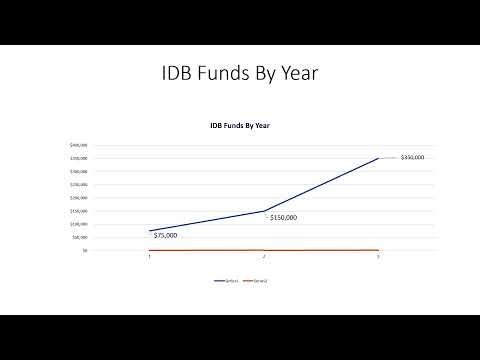
Both counsel and ECD discussed the board’s fee revenue. Chair remarks summarized the board’s recent receipts: the IDB’s fund balance grew from roughly $75,000 in 2023 to about $150,000 at the end of last year, driven by application and closing fees; the chair said application fees last year amounted to about $25,000. Counsel said closing fees collected by the IDB are to be used to further the board’s mission; Metro holds IDB funds in the Metro general fund. The Carpenters and ECD urged use of those funds to support programmatic goals such as small‑business grants, workforce education and other city priorities.
Carpenter counsel and Brown answered members’ questions about deal structure, timing and process. Counsel reiterated that inducement resolutions and TEFRA hearings are preliminary steps; final bond resolutions and substantially final documents come later, and the board may decline to approve final resolutions even after an inducement.
Brown closed by encouraging continued coordination between ECD, Metro Legal and the board to handle incoming project requests and to present a consistent process to developers. “If you build it, they will come,” Brown said, summarizing his office’s strategy to pair business attraction with workforce and housing planning.