Get Full Government Meeting Transcripts, Videos, & Alerts Forever!
Get email alerts on the Education Teacher Recruitment topic
No spam. Unsubscribe anytime.
Rancho High’s Future Educators Academy places students in elementary classrooms, offers college credit and reimbursement pathway
Summary
Rancho High School’s Future Educators Academy, a Teaching and Training CTE program in the Clark County School District, sends high school students into elementary classrooms for internship experience, offers dual-enrollment college credit and connects graduates to a state tuition-reimbursement pathway, a segment about the program reported.
Rancho High School’s Future Educators Academy, a Teaching and Training career-technical education (CTE) program in the Clark County School District, sends high school students into elementary classrooms for internship experience, offers dual-enrollment college credit and connects graduates to a state tuition-reimbursement pathway, a segment about the program reported.
The program “inspires students at the early age of 14 to become teachers,” the piece said, and currently places 21 Rancho students as interns at C.C. Rondeau Elementary School while reporting more than 300 students enrolled in the district’s Teaching and Training program. The segment said those students have collectively saved about $141,000 in tuition through the dual-credit coursework.
Why it matters: districts nationwide cite ‘grow-your-own’ efforts to address teacher shortages. Local officials and participants in the segment described the academy as a pipeline that trains students from the community who are likely to remain in the Clark County School District (CCSD).
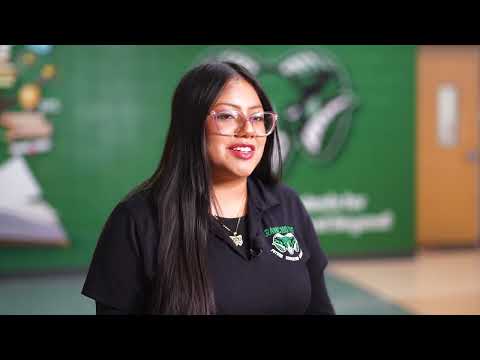
Students described hands-on experience in elementary classrooms. Senior Aliyah Lopez said the program expanded her options: “In my culture, it’s more like you finish high school and then that’s it. Like, congrats. Like, that’s the most you can get. But I feel like just being given the opportunity to go to college, it’s, like, pretty amazing.”
Shelley Cruz Crawford, identified in the segment as a principal at C.C. Rondeau Elementary School, said apprenticeship-style models both recruit and screen future teachers: “We know apprenticeship models work, and when our students get to see what this job looks like, it does two things. It inspires them to become educators, and it also tells them, like, hey, maybe this isn't for me.”
The segment described students twice-weekly placements at C.C. Rondeau, where high school interns are paired with a classroom teacher and participate in lesson preparation and instruction. It said the experience gives students classroom familiarity and exposure to day-to-day teaching demands before they commit to college programs.
State policy connection: the segment named Nevada Assembly Bill 428 as establishing a tuition reimbursement program for students who graduate from a Teaching and Training program, attend college in Nevada and then teach two years as a licensed teacher in the Clark County School District.
No formal board action or vote was recorded in the segment. The piece presented the program as an existing CTE offering and a state-level reimbursement incentive rather than as a proposed change requiring approval.
The segment noted that Rancho students earning dual-enrollment credits have realized measurable tuition savings, and it highlighted participants’ stated intent to remain in CCSD after licensure. Program leaders and students described the academy as part of broader district efforts to recruit and retain teachers.