Get Full Government Meeting Transcripts, Videos, & Alerts Forever!
Get email alerts on the Prescribing Psychologists topic
No spam. Unsubscribe anytime.
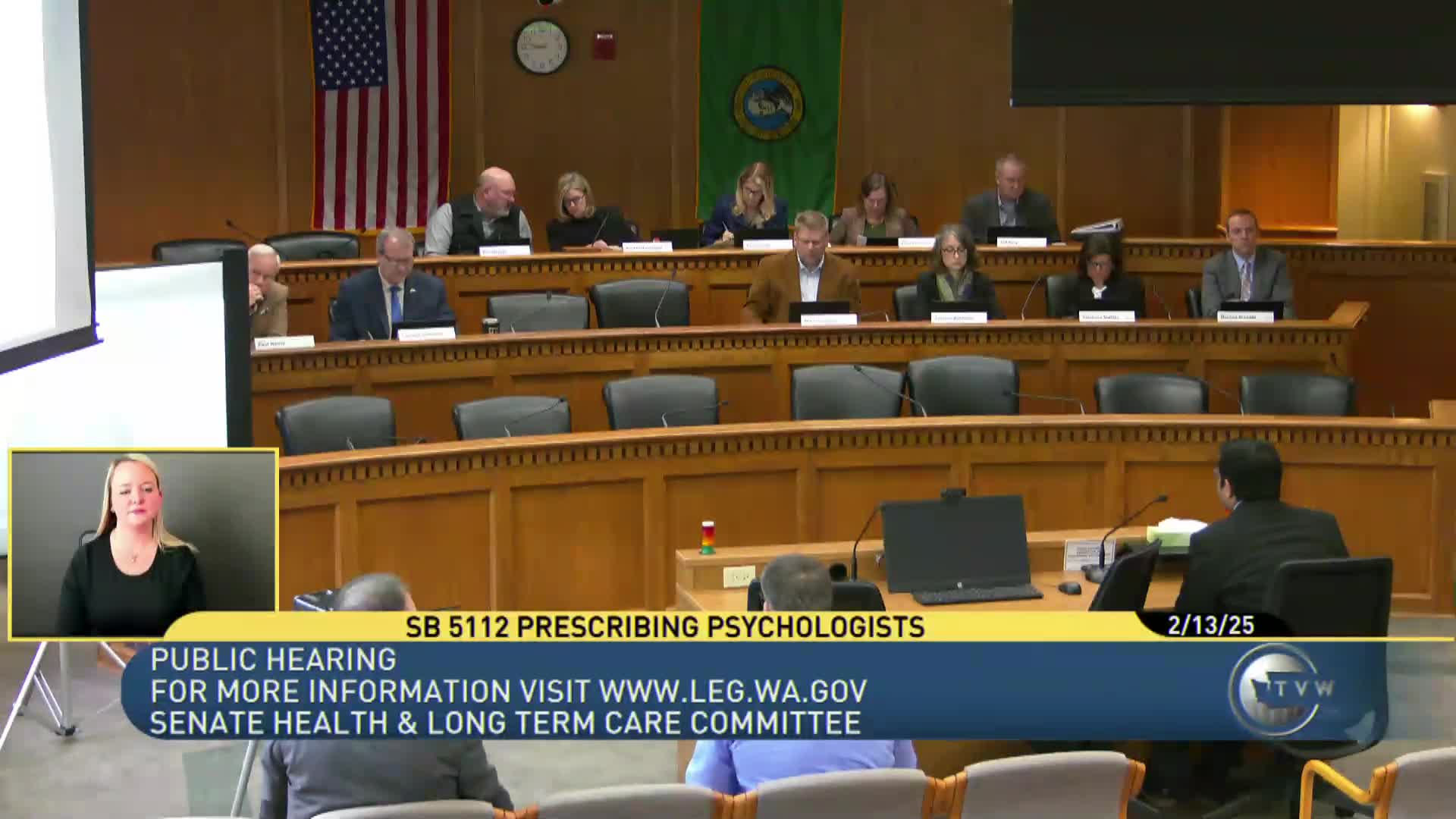
Committee hears broad testimony for and against allowing prescribing psychologists in Washington
Summary
The Senate Health and Long Term Care Committee on Feb. 13 heard testimony on Senate Bill 5,112, which would create a voluntary certification allowing qualified psychologists to prescribe psychotropic medication, with training and collaboration requirements described in staff briefings.
Olympia — The Senate Health and Long Term Care Committee on Feb. 13 held a lengthy hearing on Senate Bill 5,112, a proposal to create a voluntary prescribing‑psychologist certification. The bill would allow a licensed psychologist who completes a prescribed master’s degree in clinical psychopharmacology, supervised clinical fellowships and an exam to prescribe psychotropic medications (with restricted opioid authority) and would add a psychiatric prescribing expert to the Psychology Examining Board.
Senator Bateman, the bill’s prime sponsor, said the measure is intended to increase access to psychiatric medications and lessen workforce shortages: “The goal of this bill is to increase access to psychiatric care,” she said. Committee staff summarized the certification requirements briefly and told members the package reflects recommendations from a Department of Health Sunrise Review and other stakeholder input.
Supporters included prescribing psychologists, health services researchers and people who said they had faced long waits for prescribers. Dr. David Shearer, a clinical and prescribing psychologist, described three decades of Department of Defense experience training psychologists to prescribe. Research testimony from Dr. Philip Hughes, a health services researcher, cited a peer‑reviewed study comparing outcomes for more than 21,000 patients and concluded prescribing psychologists had lower rates of adverse drug events and similar emergency‑department and adherence outcomes compared with psychiatrists; Hughes also testified that modeling of statewide effects suggested reductions in suicide attempts and substantial long‑term savings.
Prescribing practitioners and some primary‑care physicians said the additional credential allows integrated therapy and medication management and can bring care to underserved communities. Family medicine physician Dr. Keith Peterson, who has worked with a prescribing psychologist for 10 years, told the committee: “After 10 years of working closely with prescribing psychologists, I can tell you from a medical perspective, this profession is both safe and effective.” Several witnesses representing deaf and rural communities said qualified prescribing psychologists would reduce travel burdens and language barriers for people who rely on American Sign Language.
Opponents included multiple physician groups, child and adolescent psychiatrists and medical societies who called the proposed training insufficient, warned of patient safety risks, and argued the certificate would not materially increase access. Katie Colan of the Washington State Psychiatric Association said the Sunrise Review initially questioned the proposal and that parts of the revised training “are not substantially equivalent” to nurse‑practitioner or physician training. Dr. Teresa Miskimen Rivera of the American Psychiatric Association said psychotropic medications “impact the entire body” and require years of medical education and clinical experience to manage safely.
Other physicians said alternative solutions — telepsychiatry and the collaborative‑care model used in primary care — could expand access without changing prescriptive authority. Multiple witnesses cited differing state experiences: Idaho has issued a small number of licenses while Colorado, Utah and Illinois have larger programs. Several psychiatrists warned the credential would not meaningfully increase providers in rural or Medicaid populations and urged investment in scalable collaborative models.
The Department of Health testified it completed a Sunrise Review in 2020 and that changes in the current draft address several earlier concerns, including: minimum didactic hours for the master’s program, required supervised clinical contact and a required ongoing collaborative relationship with a medical practitioner; the department also noted it had submitted technical amendment suggestions to the committee.
No committee vote was taken on SB 5,112 on Feb. 13. Testimony will remain in the record; committee staff recorded a large number of pro and con sign‑ins in the hearing file and said written testimony from people unable to testify in person will be accepted for committee consideration.