Get Full Government Meeting Transcripts, Videos, & Alerts Forever!
Get email alerts on the Hospital Price Transparency topic
No spam. Unsubscribe anytime.
Committee hears bill to require hospitals to submit federal price lists to state
Summary
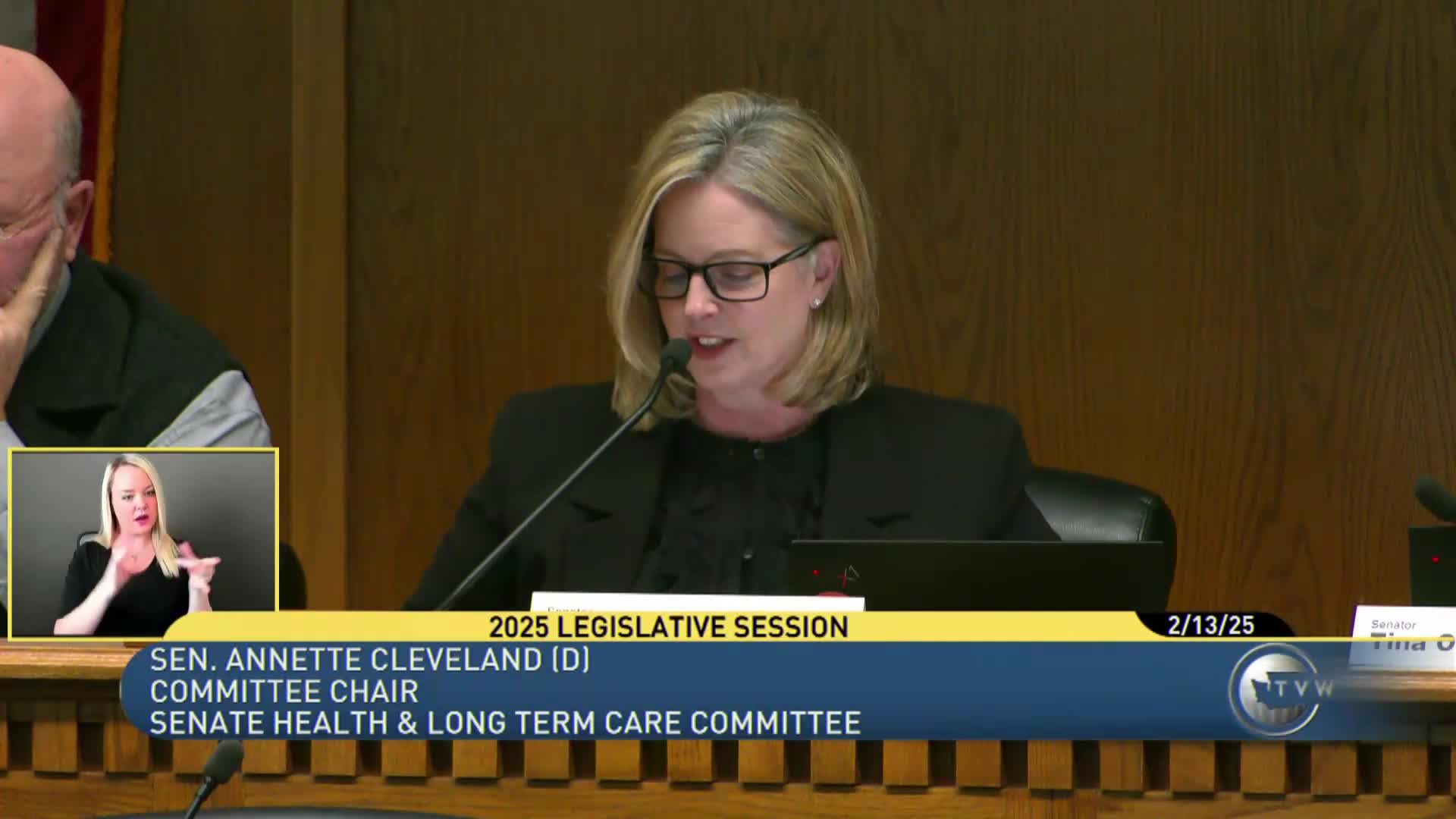
The Senate Health and Long Term Care Committee on Feb. 13 heard testimony on a proposed substitute to Senate Bill 5,493 that would require Washington hospitals to publish price transparency data required by the Centers for Medicare and Medicaid Services and submit annual lists to the Washington State Department of Health beginning in 2027.
Olympia — The Senate Health and Long Term Care Committee heard public testimony Feb. 13 on a proposed substitute to Senate Bill 5,493 that would require Washington hospitals, beginning in 2027, to publish the standard charge and “shoppable services” data required under federal Centers for Medicare and Medicaid Services rules and to submit those lists annually to the Washington State Department of Health.
The bill’s sponsor, Senator Richeli, told the committee the proposal is a “pretty simple bill” intended to ensure Washingtonians retain access to price information and to help consumers make informed decisions. Committee staff described the bill as mirroring federal CMS requirements and explained the Department of Health would receive the federally required machine‑readable files and consumer‑friendly price estimator data.
Supporters at the hearing said state enforcement and a public search tool could improve compliance and help people on fixed incomes. Lisa Thatcher of the Washington State Hospital Association told the committee the association “would recommend the bill to you for consideration” in its current proposed substitute form, saying the measure would keep information available in Washington if federal rules changed. David Koenig of the Retired Public Employees Council of Washington said state enforcement authority and a public comparison tool would “give patients access to pricing upfront and help them avoid unexpected bills.”
Not all witnesses agreed the substitute delivers strong enforcement. Steve Fenberg, a policy advocate who worked on similar laws in Colorado, said a recent amendment removed state enforcement provisions and “I don’t think this bill really frankly does anything anymore.” Kevin Mora, co‑founder of the nonprofit Power to the Patients, told the panel that estimates and standard charges are not the same as real negotiated prices: “Estimates are not real prices. Standard charges are not real prices.”
The committee chair closed the public hearing after more than 30 people testified in person and remotely. Staff noted testimony was split among proponents and opponents and that the department’s staff briefing framed the substitute as aligning state reporting with existing CMS rules.
The hearing record shows members of the public described case examples of surprise billing and large differences between cash prices and billed amounts. Committee staff said the substitute would require hospitals to submit the same files required by CMS and that the Department of Health would not impose requirements beyond the federal rules in the substitute as presented.
The committee did not take a vote on SB 5,493 during the Feb. 13 meeting; the hearing was closed and the committee moved into an executive session to consider other bills.