Get Full Government Meeting Transcripts, Videos, & Alerts Forever!
Get email alerts on the Education topic
No spam. Unsubscribe anytime.
Committee advances discussion on shifting institutional-education oversight, extends OSPI timeline to 2028
Summary
House Bill 1827 would revise and extend the Office of Superintendent of Public Instruction’s duties and timeline for oversight and delivery of basic education services to justice-involved students, pushing the implementation date to Sept. 1, 2028 and expanding OSPI consultation, reporting and planning obligations.
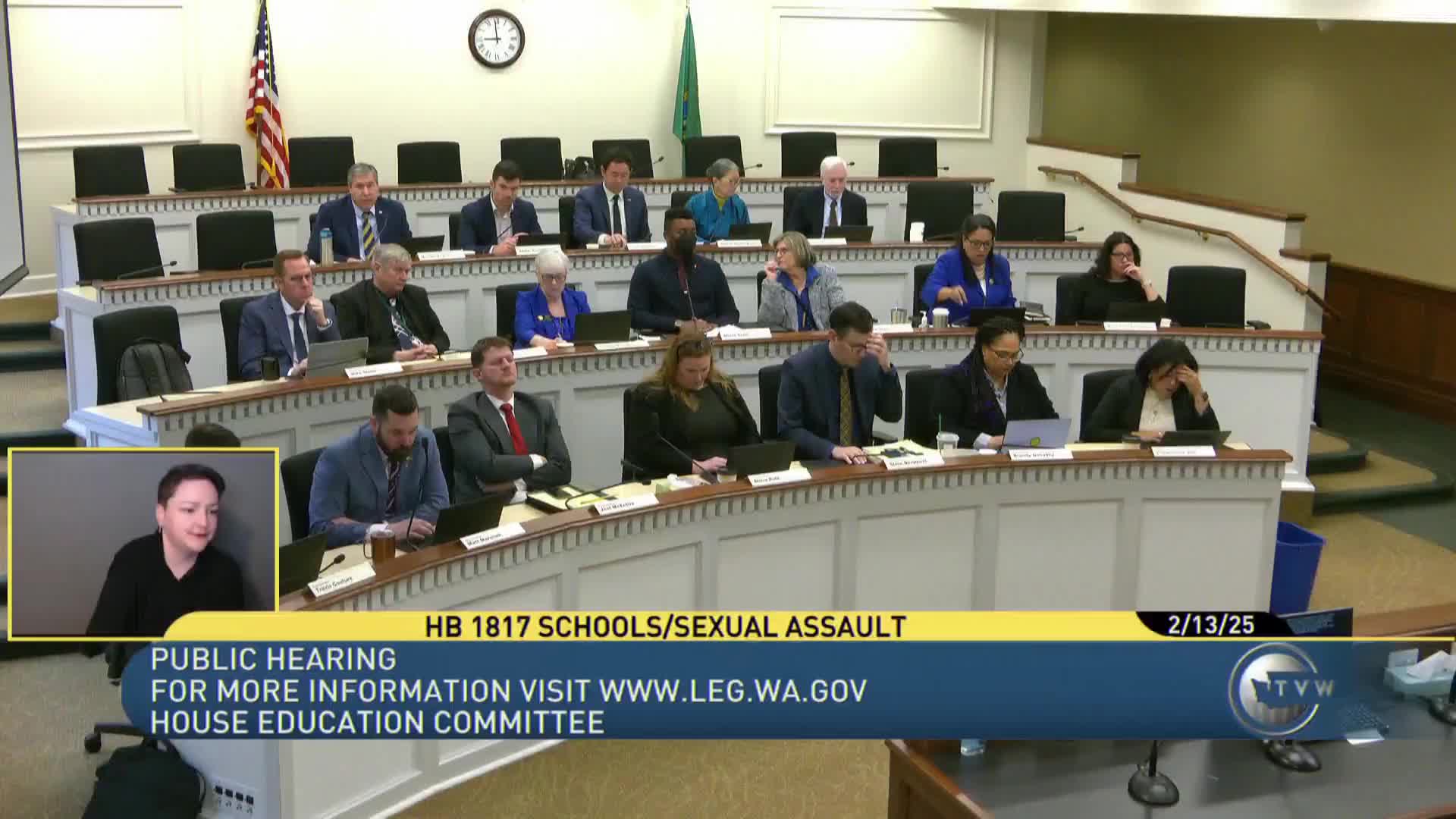
The House Education Committee heard testimony on House Bill 1827, which would modify earlier 2023 direction about state oversight of institutional education and extend the implementation timeline by one year. The bill revises the Office of Superintendent of Public Instruction’s (OSPI) duties related to ensuring delivery and administration of basic education services to justice-involved students and requires additional study, consultation and reporting.
Committee staff Ethan Moreno summarized the bill’s background and changes. Substitute House Bill 1701 (2023) assigned OSPI responsibility beginning Sept. 1, 2027 for delivery and oversight of basic education services in facilities not under DSHS or DOC jurisdiction; HB 1827 delays and modifies that timeline, making OSPI responsible beginning Sept. 1, 2028, and extends required annual progress reports through Dec. 2027. The bill also directs OSPI to adopt rules, consult with organizations representing those who deliver education to justice-involved students, and expand its planning duties to implement research and recommendations from the Joint Select Committee on Governance and Funding for Institutional Education, to examine an additional option that preserves school-district roles, and to recommend statutory changes to ensure proper oversight.
Representative Lisa Callan, sponsor, said the measure continues a multi-year effort to improve outcomes for youth involved with juvenile justice and institutional education. Callan noted grave graduation-rate gaps for justice-involved youth, and emphasized the need for trauma‑informed delivery, clearer governance and attention to staffing transitions and student outcomes.
OSPI and labor representatives that work in institutional settings testified in favor. Misha Trnisky, speaking for the superintendent of public instruction, said the bill would help OSPI play a stronger role in improving outcomes and coordination across detention and rehabilitation facilities. Simone Beau of the Washington Education Association, representing educators who teach in juvenile facilities, supported the timeline extension and recommended stronger language to ensure educators’ voices are heard and better alignment of data metrics. Green Hill school psychologist Dr. Heather Schilling and Lewis County detention-center teacher Steve Klein described the importance of preserving educator involvement and local-district roles where appropriate. Dorana Uzzle, representing Issaquah staff who work at Echo Glen, emphasized strong teacher–student bonds in institutional settings and asked for clear explanations of the intended problems the changes would address.
Committee members asked few technical questions in the hearing itself; witnesses and sponsors focused on next steps, data alignment, and the need for a thoughtful transition timeline. Testimony emphasized the need for adequate funding, clarified data definitions and more time for direct input from educators who work inside institutional settings.
Ending: The public hearing concluded with no committee action. The bill would extend OSPI’s implementation timeline to Sept. 1, 2028 and require additional consultation and reporting steps; sponsors and education labor groups urged careful attention to educator input, data alignment and funding as the committee considers statutory and governance changes.