Get Full Government Meeting Transcripts, Videos, & Alerts Forever!
Get email alerts on the Committee Votes topic
No spam. Unsubscribe anytime.
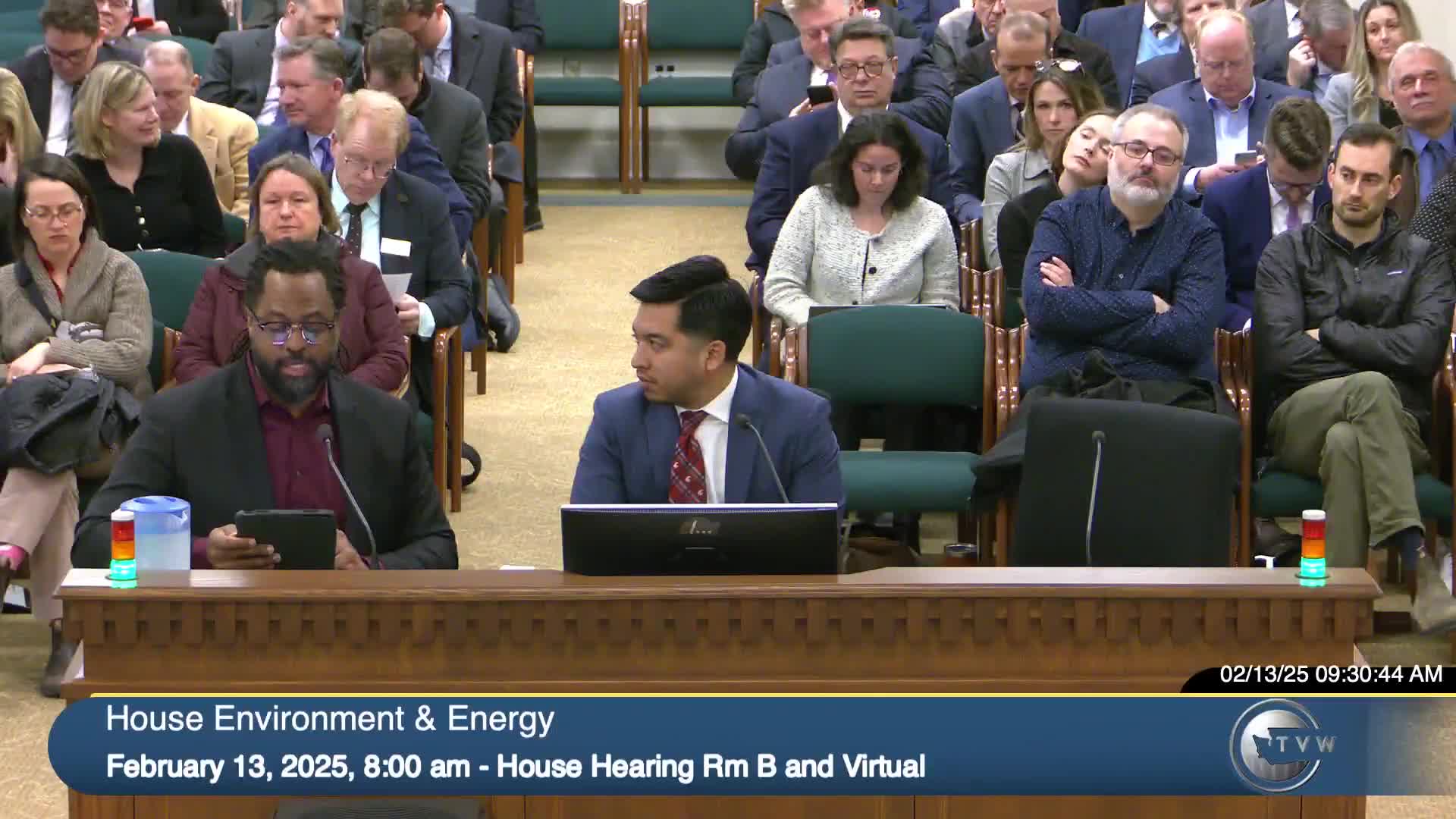
Committee reports three bills out with recommendations on textiles, utility financing and sewage‑spill notices
Summary
The House Environment & Energy Committee reported out substitute versions of House Bill 1420 (textile producer responsibility), House Bill 1656 (utility financing orders for disaster recovery), and House Bill 1670 (sewage‑spill public notification) with recorded roll-call votes.
The House Environment & Energy Committee on Thursday voted to report out substitute versions of three bills, sending them to the next legislative stage with committee recommendations.
Substitute House Bill 1420: The committee adopted an amendment (H1347.1) adding disclosure provisions for apparel producers and then incorporated the amendment into the substitute. The committee reported substitute HB 1420 out of committee with a due-pass recommendation on a roll-call vote of 11 ayes, 9 nays and 1 excused. Representative Charlotte Mena, sponsor of the amendment and the bill, urged approval to advance work on waste, toxics and greenhouse-gas impacts tied to textiles; opponents argued concerns about affordability and the bill's scope.
Substitute House Bill 1656 (financing orders for emergency cost recovery): The committee reported the proposed substitute out with a due-pass recommendation on a roll-call vote of 15 ayes, 5 nays and 1 excused. The substitute clarifies the petition process to the Utilities and Transportation Commission for a financing order, removes lost revenue from eligible bondable expenses, and requires surplus amounts to be returned for customer refunds. A striking amendment that would have removed natural gas utilities from the bill was withdrawn.
Substitute House Bill 1670 (sewage-spill notification): The committee reported the proposed substitute out of committee with a due-pass recommendation on a vote of 20 ayes and 1 excused. The substitute narrowed the bill's scope to sewage discharges, limited the hours for mandatory public notification to regular business hours, removed an interactive mapping requirement and clarified the public-facing content that Ecology must publish.
Representative votes and roll-call totals were recorded in the committee minutes for each action. Committee chairs and sponsors indicated some measures will continue to be refined in subsequent drafting and floor-stage work.