Get Full Government Meeting Transcripts, Videos, & Alerts Forever!
Get email alerts on the Middle Housing Rural topic
No spam. Unsubscribe anytime.
Bill would let fully planning counties allow limited middle housing in certain rural clusters
Summary
House Bill 18 40 would allow counties that fully plan under the Growth Management Act to authorize at least one middle‑housing unit per parcel in certain ‘limited areas of more intensive rural development’ (LAMMARD), up to four units per parcel, provided sewer is available; counties would get appeal protections under the bill.
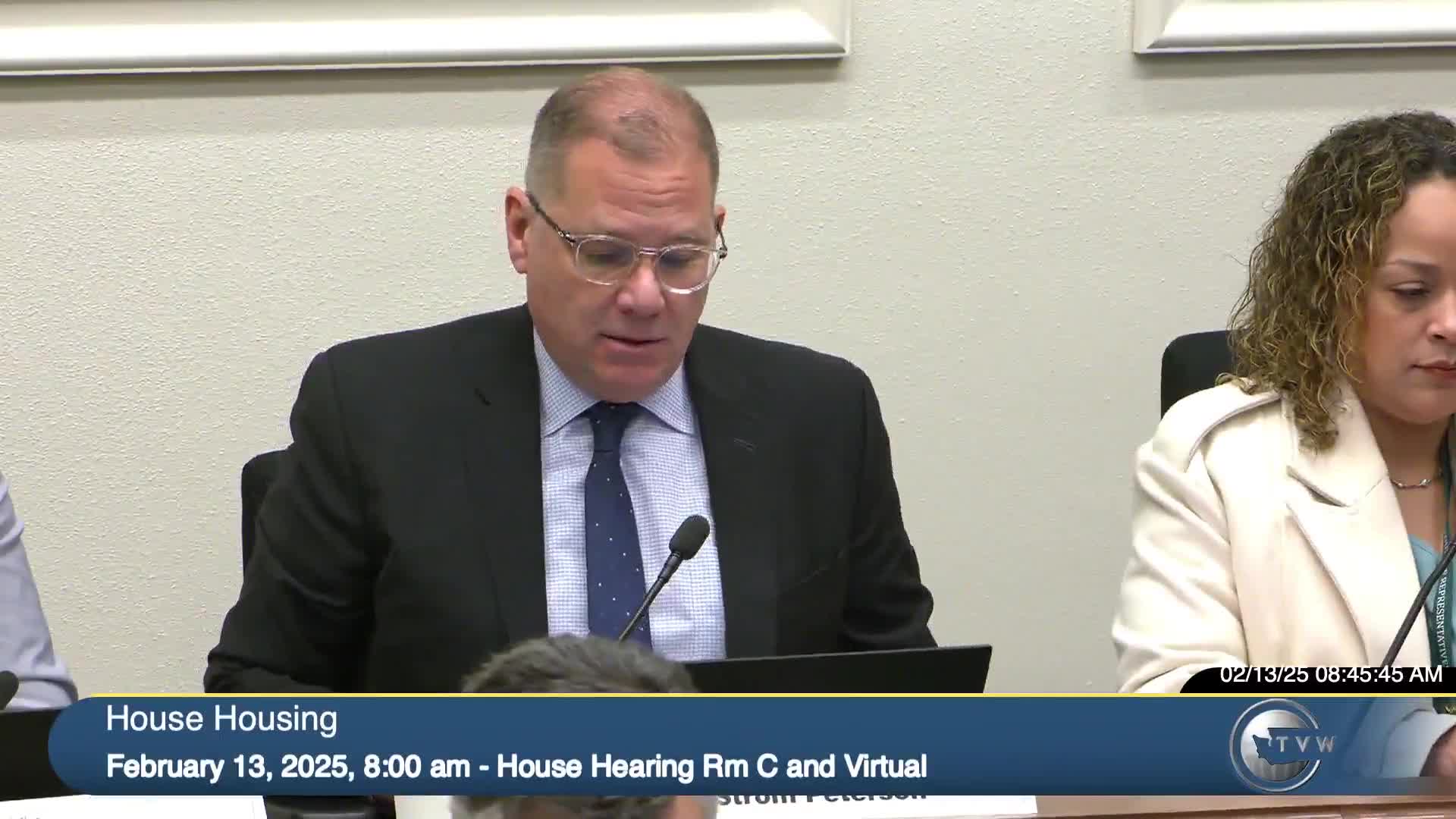
House Bill 18 40 would authorize fully planning counties to allow at least one middle‑housing unit (duplex, triplex, four‑plex, townhome) on every parcel within a limited area of more intensive rural development, commonly called a LAMMARD, when that parcel otherwise permits detached single‑family homes, staff told the committee on Feb. 13.
Key provisions: The bill limits middle housing in those rural clusters to no more than four residential units per parcel, prohibits counties from imposing standards on middle housing that are more restrictive than those for detached single‑family dwellings, requires that middle housing in a LAMMARD be served by sewer, and—importantly for counties—renders actions taken under the authorization not subject to appeal under the Growth Management Act or the State Environmental Policy Act (SEPA), according to the staff briefing.
Why it matters: Supporters, including county executives and commissioners, said the change gives counties tools to increase housing supply in unincorporated areas with existing infrastructure. Whatcom County Executive Satpal Singh Sidhu told the committee that outside-city residents account for a large share of many counties’ populations and that many LAMMARDs already have roads, water and other basic infrastructure.
Local governments and some land‑use advocates stressed implementation safeguards. Thurston County Commissioner Carolina Mejia supported the bill and said it would expand workforce housing options in unincorporated areas ready for growth. FutureWise and other land‑use groups recommended technical clarifications, urged that designated areas have urban services available, and flagged environmental and transportation infrastructure concerns.
Appeals and safeguards: County representatives emphasized that appeal protections help move planning decisions forward and reduce delays that can arise from litigation by organized parties; land‑use advocates said some areas designated as LAMMARDs contain environmental constraints that warrant careful review. Testimony and questions from committee members focused on how the bill’s design standards and appeal limitations would interact with local permitting and infrastructure planning.
Outcome: The committee heard testimony from county leaders, housing advocates and land‑use groups and closed the public hearing; no committee vote occurred during the hearing.
Ending: Proponents urged the committee to give counties another tool for increasing middle‑housing supply outside city limits; opponents and technical witnesses asked for clarifying language on services, design standards and environmental protections.