Get Full Government Meeting Transcripts, Videos, & Alerts Forever!
Get email alerts on the Corrections Ombuds topic
No spam. Unsubscribe anytime.
Committee advances substitute to create advisory council to corrections ombuds; substitute narrows reporting duties
Summary
The committee reported out a proposed substitute to House Bill 1396 to create an advisory council to the Office of the Corrections Ombuds (OCO); the substitute changes the council’s communications and requires the OCO to solicit and share aggregated feedback from incarcerated people and others.
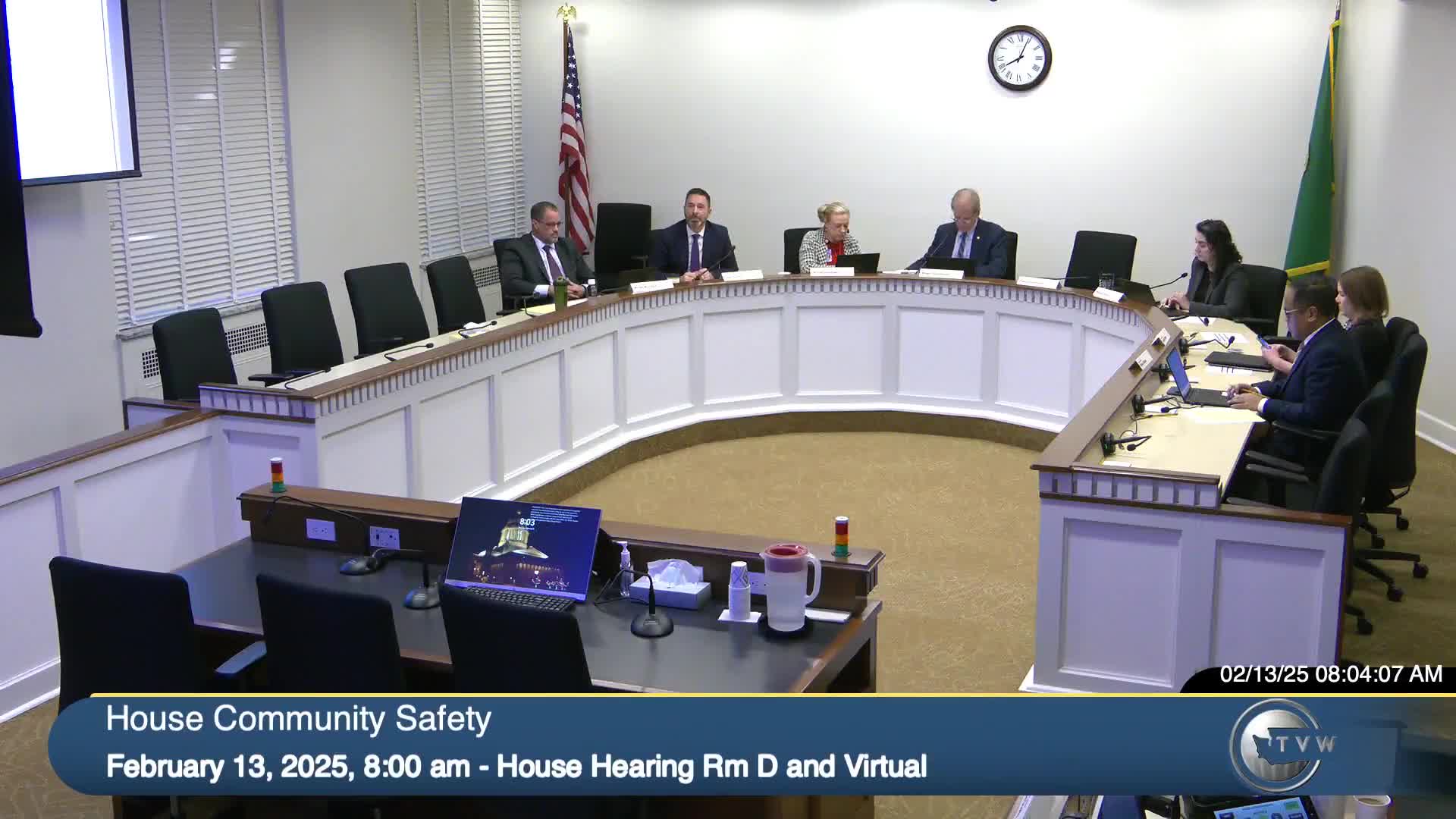
The House Community Safety Committee on Feb. 13 reported out a proposed substitute to House Bill 1396 to create an advisory council to the Office of the Corrections Ombuds (OCO) and to amend the OCO’s duties.
The substitute (H 1341.1) narrows how the advisory council may communicate: instead of authorizing the council to issue an annual report with recommendations for OCO policies, the substitute allows the advisory council to communicate with the OCO, the governor’s office and legislators regarding concerns and priorities. The substitute also requires the OCO to solicit feedback directly from incarcerated individuals, family members, representatives of incarcerated individuals, Department of Corrections employees, advisory council members and others, and to share aggregated feedback with the advisory council.
Representative Farvar, who spoke in favor of the substitute, said increased communication with incarcerated people and between the OCO and the advisory council would build trust and accountability. The committee’s ranking member expressed concern about costs and noted the sponsor’s proposal for a victims’ ombudsman that the committee could not consider at this time.
A roll call was taken on the substitute: Representatives Goodman, Davis, Farvar, Fosse and Obradis recorded aye votes; Graham, Griffey and Burnett recorded nays or nays without recommendation. Representative Simmons was excused. The clerk reported a tally of five ayes and three nays; the committee reported the proposed substitute out with a due-pass recommendation.
Ending: The substitute was reported out of committee and will proceed to the next legislative step.