Get Full Government Meeting Transcripts, Videos, & Alerts Forever!
Get email alerts on the School Construction Finance topic
No spam. Unsubscribe anytime.
Bill would let school districts use voter-approved levy revenue to front fund new school construction
Summary
House Bill 1796 would permit school districts that have passed a capital levy to issue limited general obligation bonds for new building construction within existing indebtedness limits, enabling districts to front fund projects and potentially avoid higher future construction costs.
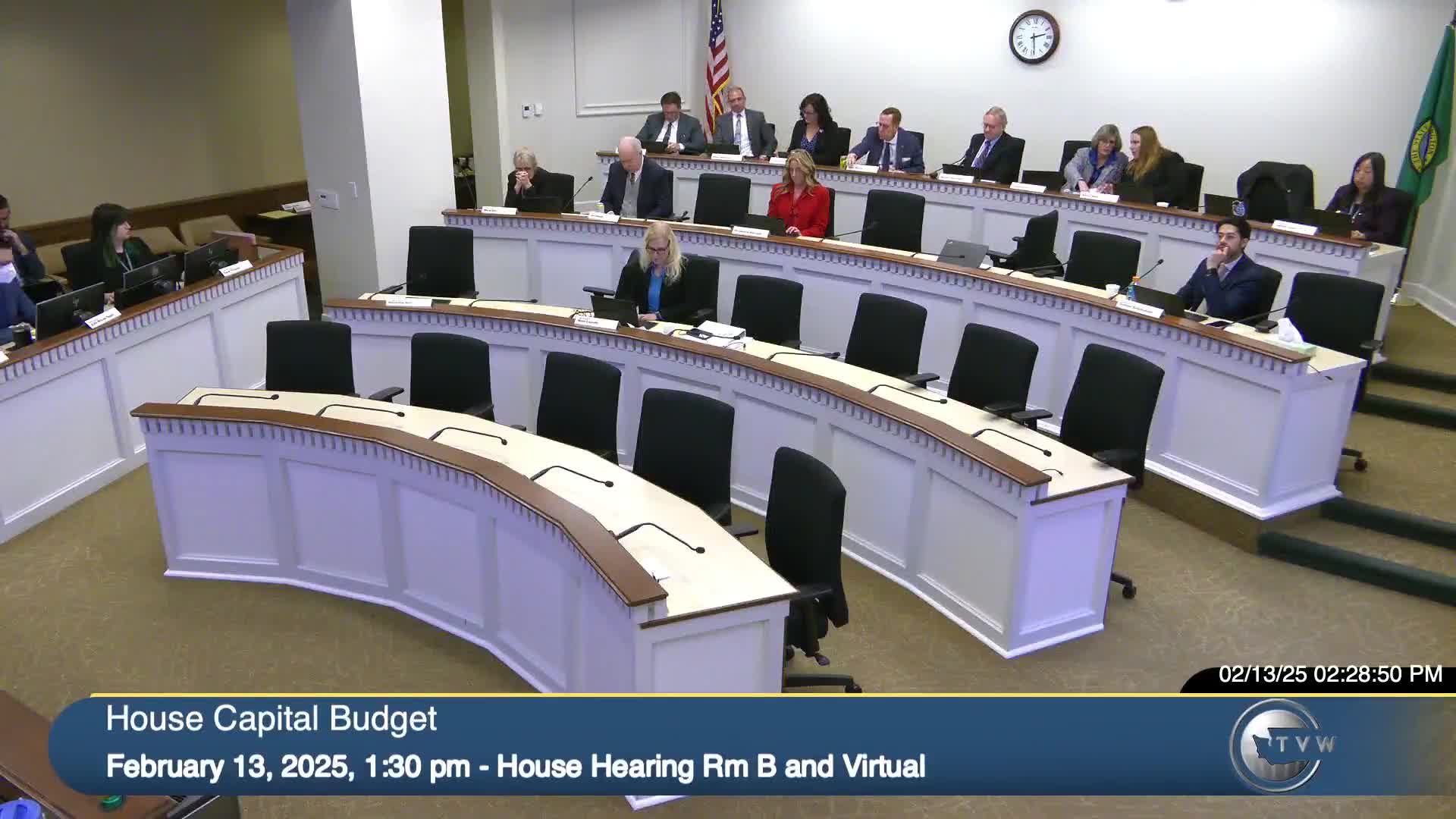
Committee staff John Wilson Tapelli briefed the Capital Budget Committee on House Bill 1796, explaining current law limits school-district indebtedness within a statutory cap (0.375% of taxable property value) and allows limited general obligation (LGO) borrowing for certain capital purposes but generally excludes new building construction from that authority. Under the bill, districts could issue LGO bonds within their current indebtedness limits to fund erection of buildings and related fixtures, provided the district has passed a capital levy to support the construction and has not been on binding financial conditions in the prior three years.
Representative Kallen, the sponsor, told the committee the change ‘‘is really working hard to solve a problem that many of our school districts are facing’’ and would be a tool to reduce construction cost escalation by allowing districts to front fund projects that voters already authorized via levies. Superintendents and school-board leaders from Lake Washington, Issaquah, Central Valley and other districts testified in support, describing rapid enrollment growth, multi-year cost escalation risks and the taxpaying public’s prior approval of levy revenue; Lake Washington School District officials noted a 2024 voter-approved levy of roughly $676.9 million over six years and argued the bill simply allows districts to access collected funds earlier.
Opposing testimony included a taxpayer who said the change could enable debt practices he viewed as problematic; committee staff and members discussed that any borrowing would still be subject to the existing statutory debt limits and repayment obligations. No fiscal note was available at the time of the briefing; staff said the bill’s fiscal impact would be indeterminate but that it could affect timing of school construction assistance requests. The committee closed testimony without taking a vote.