Get Full Government Meeting Transcripts, Videos, & Alerts Forever!
Get email alerts on the Local Finance topic
No spam. Unsubscribe anytime.
Sponsors seek to ‘harmonize’ local REIT rules, remove expirations and expand flexibility
Summary
House Bill 17-91 would align allowable uses of local REIT 1 and REIT 2, remove certain expirations and allow greater flexibility for cities and counties to use REIT funds for affordable housing, operations and maintenance; local governments and associations largely supported the bill at a House Finance hearing.
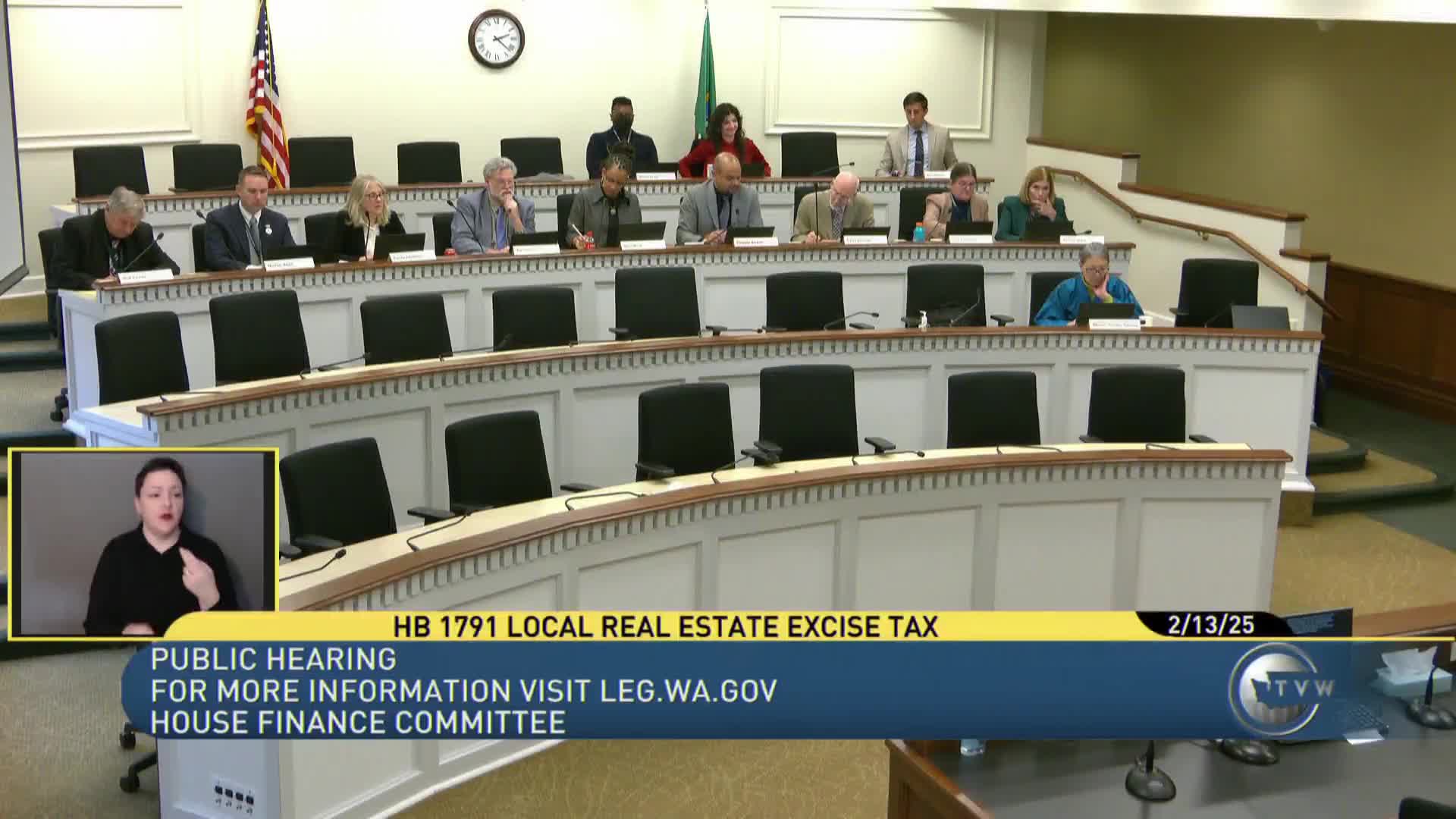
House Finance heard testimony Feb. 13 on House Bill 17-91, sponsored by Representative Dave Paul, which would harmonize and increase flexibility in the uses of two local real estate excise tax rates (commonly called REIT 1 and REIT 2).
Rochelle Harris, committee staff, outlined the statutory differences that currently restrict how jurisdictions use REIT 1 and REIT 2 revenues. “Some of them are based on the size of the city and town and whether or not they fully plan under the Growth Management Act,” Harris said, and she explained that the bill removes population- and planning‑status based restrictions, allows revenues raised under one rate to be used for eligible uses under the other, and restores the temporary flexibility that had allowed up to 35% of revenues to be used for operations and maintenance.
Representative Dave Paul (10th Legislative District) told the committee the bill responds to requests from smaller cities such as Oak Harbor that benefited from temporary flexibility granted during the COVID period. “I refer to this bill as the REIT harmonization bill,” Paul said, adding that the proposal includes “pretty significant guardrails” and is not a council‑manic tax.
Local government associations uniformly supported the bill. Carl Schroeder of the Association of Washington Cities said harmonization would “untie the hands of your local governments to address with our own revenues that we’re currently collecting the priority needs of the community.” Paul Jewell of the Washington State Association of Counties likewise supported the bill, emphasizing the need for funds to operate and maintain capital projects. Some stakeholder groups, including Washington Realtors, said they were open to working on a revised version but had concerns with the bill as introduced.
Supporters said the bill would help smaller cities and counties use REIT dollars for affordable housing, maintenance and public facilities and would remove confusing administrative barriers that had been reinstated after a prior temporary flexibility expired. No committee votes were recorded in the hearing; the bill remains under consideration.