Get Full Government Meeting Transcripts, Videos, & Alerts Forever!
Get email alerts on the Affordable Housing topic
No spam. Unsubscribe anytime.
Bill would let any county or city ask voters to add local affordable-housing REIT
Summary
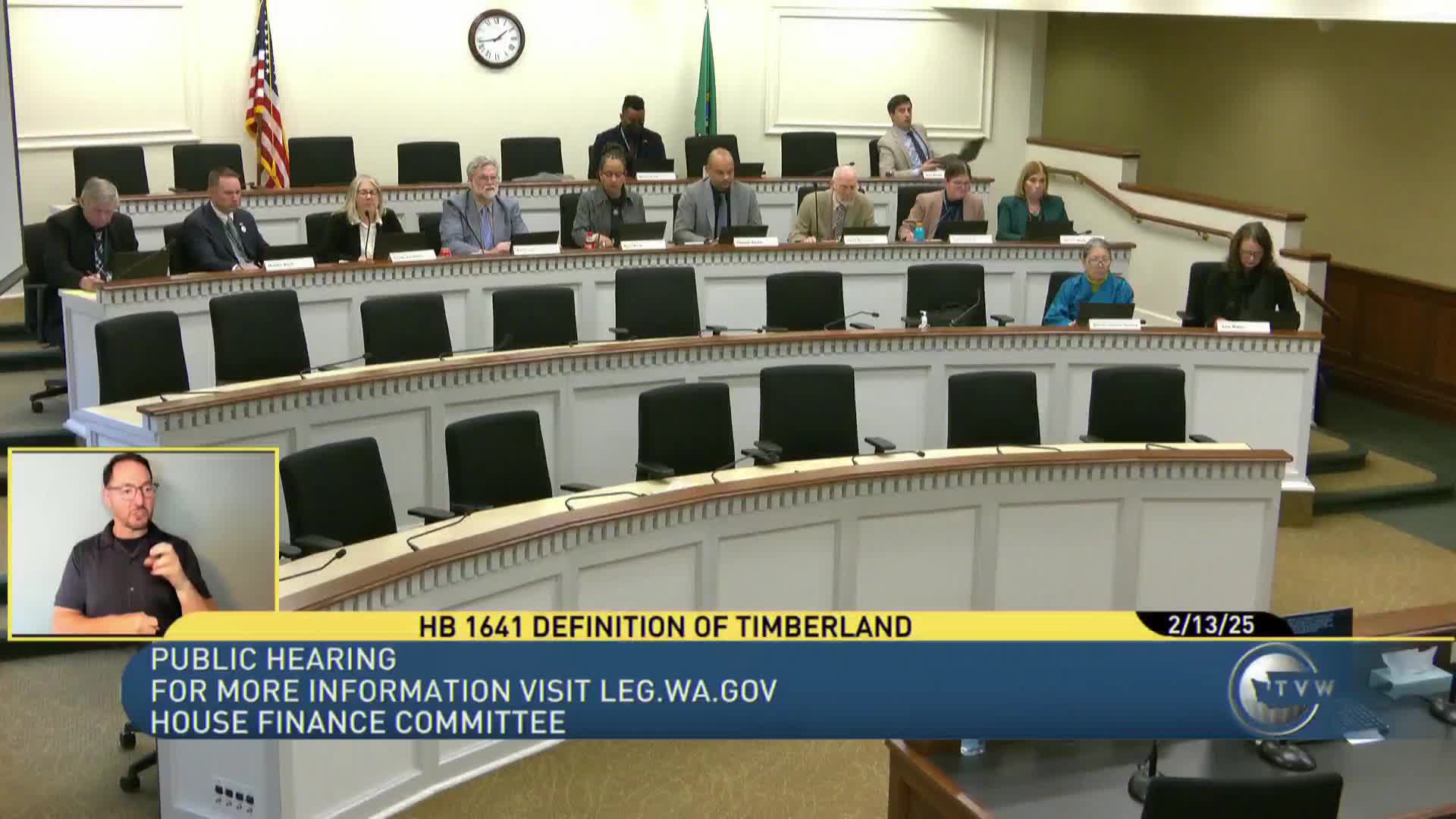
House Finance took testimony Feb. 13 on House Bill 18-67, which would allow any county — and cities after Jan. 1, 2027, if a county does not adopt the option — to submit to voters a local-option real estate excise tax dedicated to affordable housing.
House Finance took testimony Feb. 13 on House Bill 18-67, which would expand a local-option real estate excise tax for affordable housing so that any county could place the question before voters; if a county does not adopt the option by Jan. 1, 2027, the authority could be adopted by a city via voter approval.
Rochelle Harris, committee staff, summarized the bill: the local affordable-housing REIT is distinct from the state REIT because it is imposed on both buyer and seller, requires voter approval, and revenues must be placed in an affordable housing account and disbursed by competitive grant or loan. “House Bill 18-67 expands authority to impose this affordable housing REIT for local governments by removing the requirement that a county must have imposed the conservation area tax before imposing it,” Harris said.
Representative Alex Ramel, sponsor, told the committee the measure provides another local tool “to help us address the housing crisis.” Ramel said the tax would be optional and subject to voter approval, and that communities decide whether the local option fits their needs.
The public record at the hearing included a wide range of local-government officials, housing providers and advocates in favor, plus business and real-estate-industry organizations opposed. Supporters pointed to San Juan County’s experience: Nancy DeVoe and others described the San Juan locally approved REIT (the HOME fund) as a major local revenue source that generated an estimated $15 million over 12 years and leveraged additional dollars for housing projects. Amanda Lynn (San Juan Community Land Trust) said the REIT allowed projects that “serve all income levels from 30% of AMI to 115% of AMI” and credited a roughly 3:1 leveraging rate on a recent homeownership project.
Local elected officials testified in favor: Skagit County Commissioner Lisa Janicki said the option would allow coordinated county-city funding strategies; Bellingham City Council member Hannah Stone and Whatcom County Council member Jonathan Scanlon said it would create a local revenue source tied to housing needs in their jurisdictions. Paul Jewell of the Washington State Association of Counties also supported the bill, saying local governments need tools to finance operations and maintenance of projects.
Opposition testimony came from the Washington Realtors, Building Industry Association of Washington, and individual student speakers. Bill Clark of Washington Realtors said REITs are a volatile transaction-based revenue and cautioned about further increases in the tax burden on property transfers. Student speakers said increased local REITs could deter prospective homebuyers in fragile markets.
Rochelle Harris told the committee a fiscal note had not yet been produced; staff said the bill would not directly affect state revenues but could increase local revenues depending on local adoption. The bill received extensive in-person and remote public testimony and remains in committee for further consideration.