Get Full Government Meeting Transcripts, Videos, & Alerts Forever!
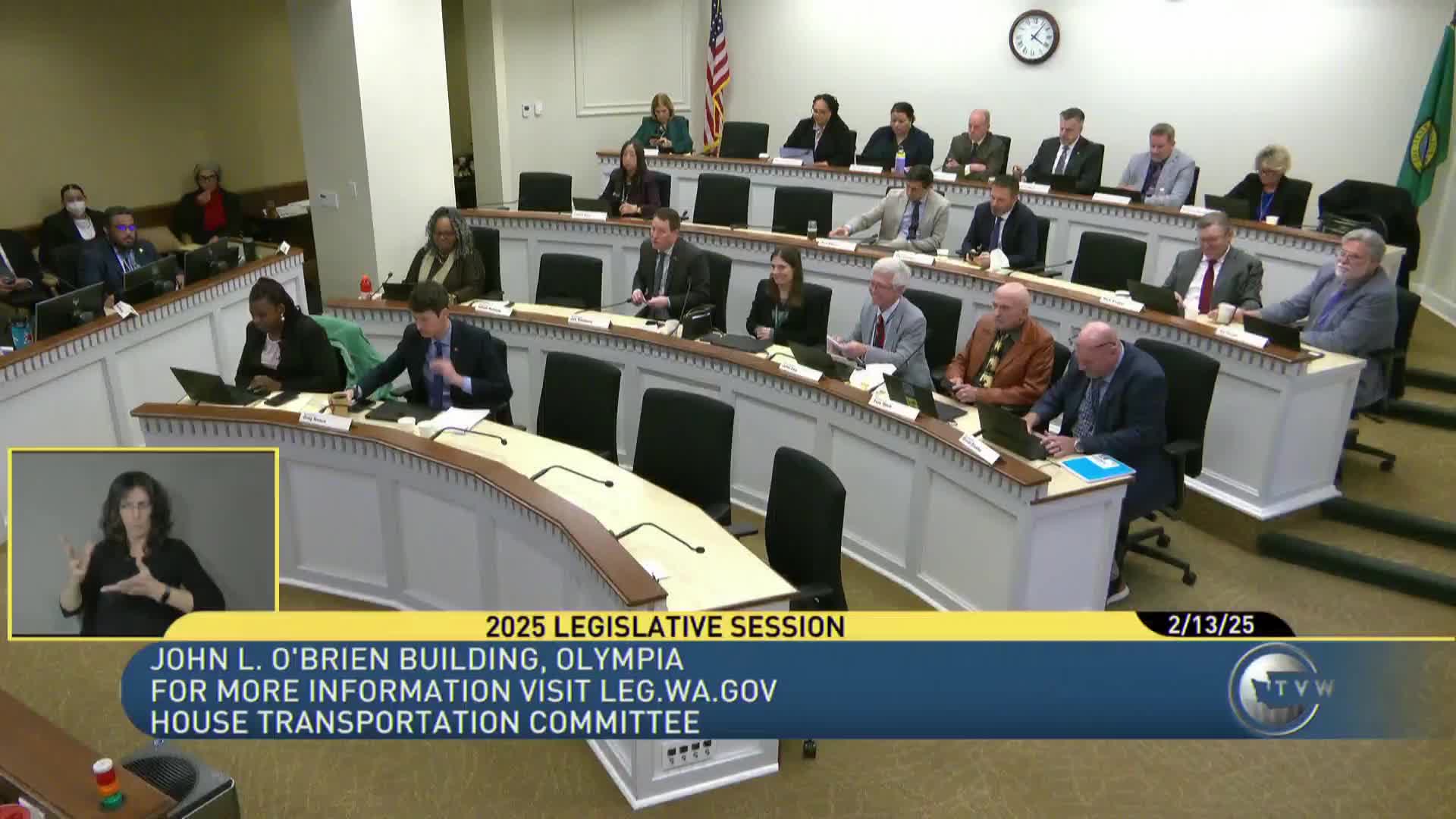
House Transportation Committee holds public hearing on HB 1921, a phased road-usage charge to replace shrinking gas-tax revenues
Summary
OLYMPIA, Wash. — The House Transportation Committee on Feb. 13 held a public hearing on House Bill 1921, a proposal to establish a road usage charge (RUC) that would levy a per-mile fee for use of public roadways and phase in mandatory enrollment over time, beginning with electric and hybrid vehicles.
OLYMPIA, Wash. — The House Transportation Committee on Feb. 13 held a public hearing on House Bill 1921, a proposal to establish a road usage charge (RUC) that would levy a per-mile fee for use of public roadways and phase in mandatory enrollment over time, beginning with electric and hybrid vehicles.
The bill would set a baseline road usage fee at 2.6 cents per mile and create a separate 10% road usage assessment, to be used for multimodal purposes such as rail, bicycle, pedestrian and public transit. Department of Licensing staff would administer the program; participants would report mileage by odometer or other approved methods and receive a credit for motor fuel taxes already paid. The bill includes multiple deadlines and direction for interagency reports, tribal consultation and legislative oversight.
Why it matters: Washington’s gas-tax revenue has fallen as vehicles become more fuel-efficient and electric, and committee presenters and many municipal groups told lawmakers that counties and cities face growing preservation and maintenance backlogs. The bill’s supporters say a per-mile fee protects the “user pays” principle and stabilizes revenue for highway preservation; opponents say the proposal is regressive, risks privacy encroachment, and could disproportionately burden rural and low-income drivers.
Presentation and bill summary
Jennifer Harris, committee staff, summarized the bill and the Transportation Commission’s multi-year work on RUC: “House Bill 19 21 concerns establishing a road usage program.” Committee and agency presenters described the bill’s main features: a voluntary enrollment window aimed at EVs and hybrids beginning in July 2027, a later window for certain higher-efficiency internal-combustion vehicles, and a mandatory phase that would begin with electric and hybrid vehicles in July 2029 and include additional ICE vehicle categories in subsequent years. The bill limits program eligibility to vehicles that can…
Already have an account? Log in
Subscribe to keep reading
Unlock the rest of this article — and every article on Citizen Portal.
- Unlimited articles
- AI-powered breakdowns of topics, speakers, decisions, and budgets
- Instant alerts when your location has a new meeting
- Follow topics and more locations
- 1,000 AI Insights / month, plus AI Chat