Get Full Government Meeting Transcripts, Videos, & Alerts Forever!
Get email alerts on the Real Estate Excise Tax topic
No spam. Unsubscribe anytime.
House bill would let governmental buyers qualify forest sales for lower REIT rate
Summary
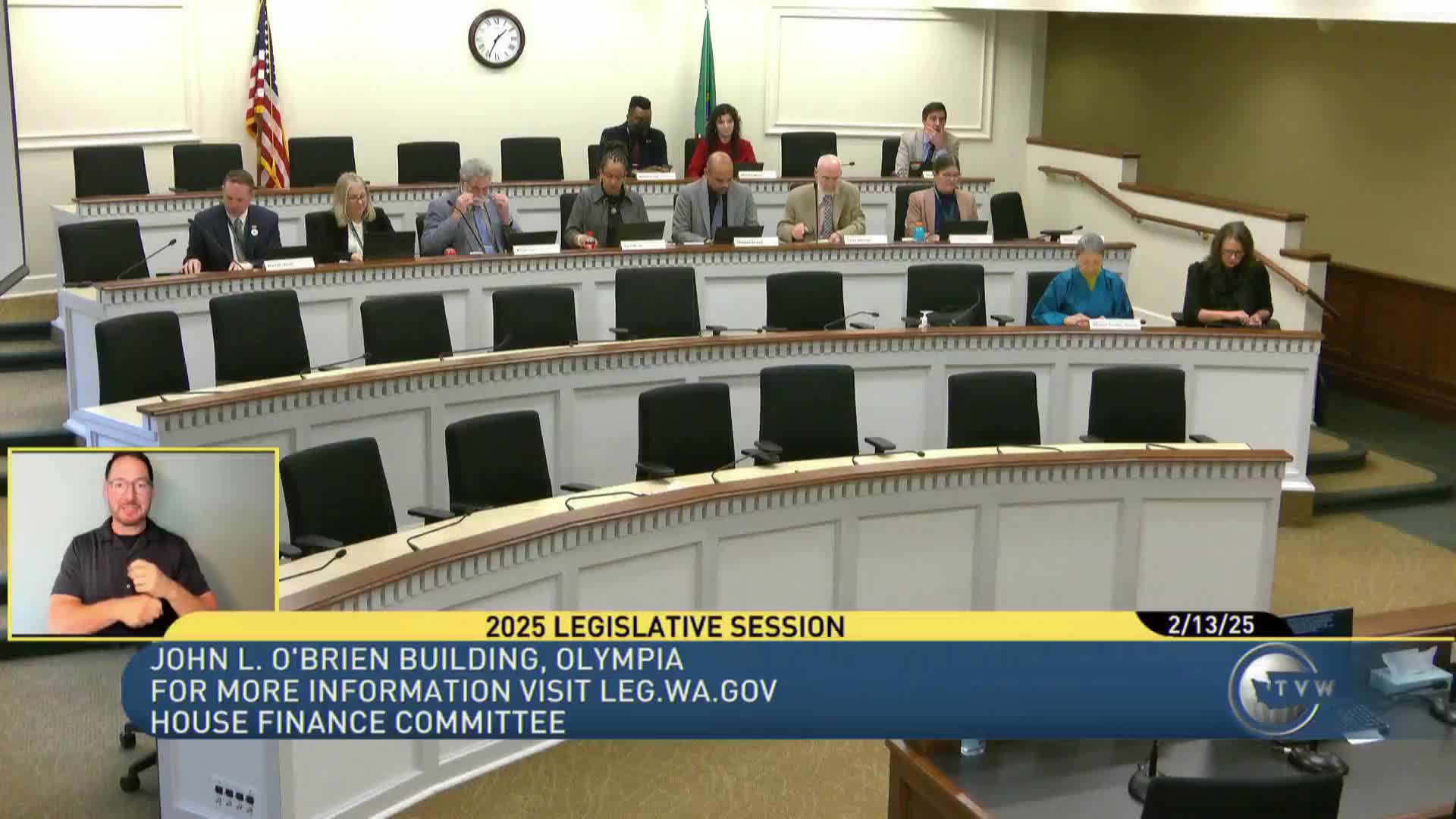
House Finance held a public hearing Feb. 13 on House Bill 16-41, which would expand the real estate excise tax (REIT) definition of timberland so certain forest lands transferred or sold to governmental entities qualify for the 1.28% REIT rate.
House Finance held a public hearing Feb. 13 on House Bill 16-41, which would expand the real estate excise tax (REIT) definition of timberland so certain forest lands transferred or sold to governmental entities qualify for the 1.28% REIT rate.
“For the record, Christina King, staff to the committee,” said Christina King during the staff briefing, describing the bill’s core change: “The definition of timberland for purposes of calculating the rate of the real estate excise tax is expanded to include certain forest lands transferred or sold to a governmental entity. The rate is 1.28%.”
The staff presentation explained the current REIT structure and the existing “current use” valuation programs for forest and agricultural lands. King noted that in 2024 the legislature created an open-space exception to compensating tax for certain transfers to governmental entities, provided the governmental entity continues to manage the land as forest land or timberland.
Sponsor Representative Steve Thuringer (20th Legislative District) told the committee the bill aims to reduce conversion of working forestland by making it easier for state and local agencies to acquire and maintain those lands. “If we lose those working landscapes to conversion and development, we don’t get them back,” Thuringer said, urging the committee to consider the bill as a tool to keep lands in “a working landscape shape.”
Dwayne Emmons, assistant deputy for State Uplands at the Department of Natural Resources, testified in support. Emmons said the current tax treatment can require sellers to pay higher excise taxes when selling to governmental buyers, producing a bid‑price distortion in sealed-bid sales and creating an acquisition disadvantage for public purchasers. “This bill really levels that playing field, helps us keep working forest lands working,” Emmons said. He also said DNR worked with large landowners and local governments on the draft.
Staff summarized the fiscal note: the bill is projected to reduce general fund revenue modestly (staff cited an estimated $240,000 reduction for the 2025–27 biennium and about $285,000 for 2027–29) and to produce smaller effects on multiple accounts outside the general fund. Staff also noted the Department of Revenue anticipates a one-time $60,000 expenditure in fiscal 2026 to provide training, update rules and notices, and notify stakeholders.
Supporters said the change would remove a disincentive for owners to sell to governmental buyers that will continue to manage forest land, while opponents were not recorded during the public hearing. The committee closed the hearing on HB 16-41 after the testimony and fiscal discussion.
The bill remains at the hearing stage; no motions or votes were recorded in the transcript.