Get Full Government Meeting Transcripts, Videos, & Alerts Forever!
Get email alerts on the Elections topic
No spam. Unsubscribe anytime.
Committee hears arguments for and against allowing jurisdictions to move local elections to even years
Summary
House Bill 13 39 would permit cities, towns and special purpose districts to switch local elections to even-numbered years subject to public hearings and timing rules; witnesses debated turnout, voter engagement and fiscal effects.
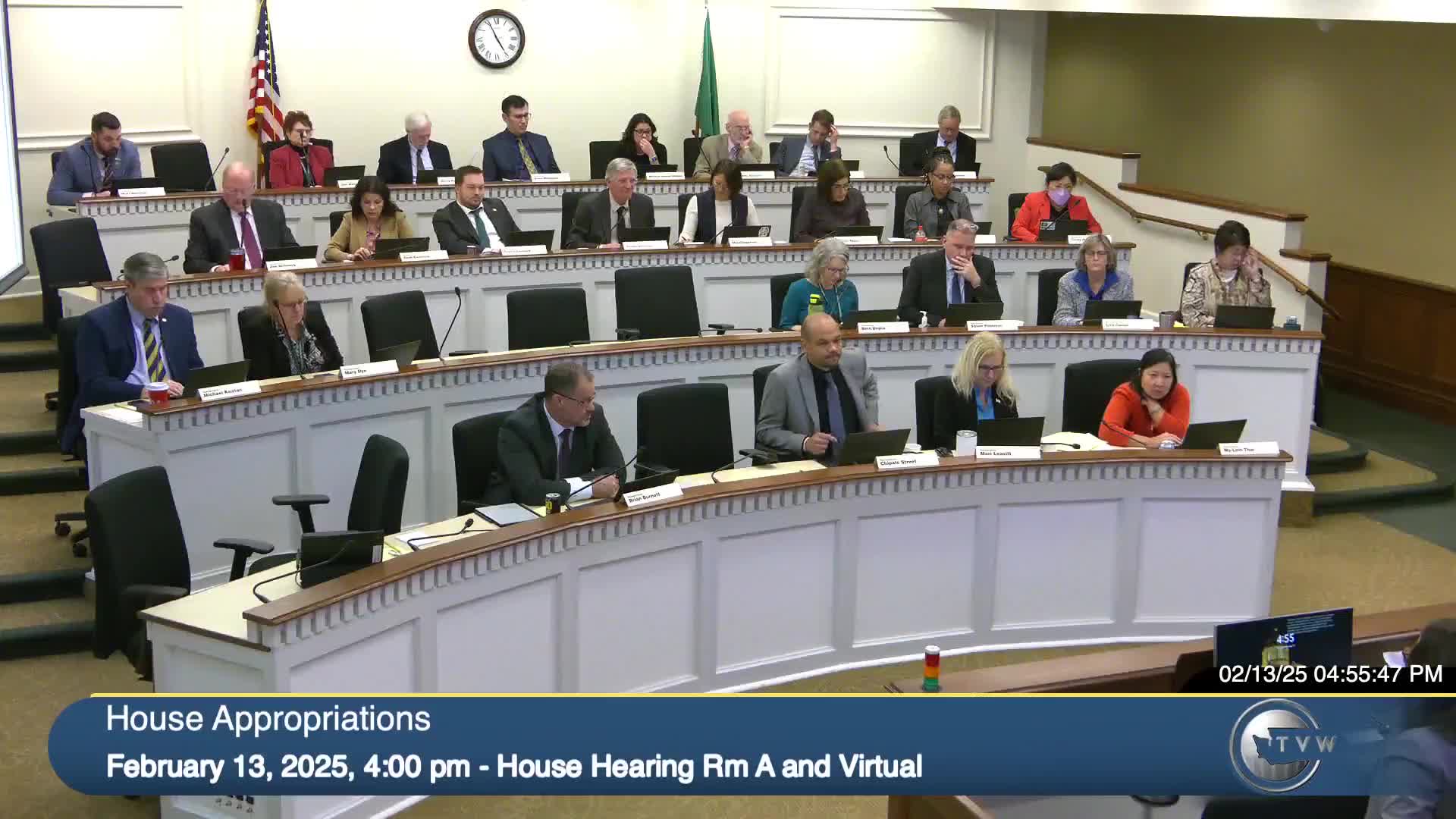
The House Appropriations Committee took testimony on House Bill 13 39, which would let cities, towns and special purpose districts choose to hold their local elections in even‑numbered years rather than odd years.
Under the bill, jurisdictions may switch in one of three ways: ordinance by the legislative body, voter approval of an ordinance or charter amendment referred by the legislative body, or voter initiative where permitted. Before adoption, the legislative body must hold two public hearings and the final vote cannot occur sooner than 30 days after the second hearing. A jurisdiction that switches must adopt the change before Jan. 15 of an odd‑numbered year to take effect that cycle. Transition terms for officers elected in the next odd‑year election would be adjusted by either shortening or lengthening the term by one year to align with the new cycle.
Staff noted a fiscal note with uncertain impacts for the state: while the Office of the Secretary of State said impacts are indeterminate because the number of jurisdictions that would switch is unknown, a hypothetical 15% increase in state‑share election costs could cost roughly $3.6 million per year. County auditors told staff that shifting jurisdictions to even years could reduce county revenues in odd years because counties bill jurisdictions for their prorated share of election costs; that effect could reduce funds used for annual election operations.
Testimony divided along lines of democratic participation and administrative cost. Supporters, including Sightline Institute and civic advocates, argued even‑year elections increase turnout and strengthen democracy; they noted 36 of 39 counties already hold even‑year local elections and pointed to higher turnout in presidential and midterm cycles. Opponents, including the Secretary of State’s office and some local residents, warned that moving local contests into larger ballots could drown out local candidates, lengthen ballots, increase processing and postage costs, and create voter drop‑off in lower‑visibility local races. Speakers cited King County drop‑off data and said county fiscal impacts could be uneven.
Proponents said the bill is voluntary, preserves local choice and would allow an orderly, gradual transition; opponents urged caution about operational consequences. The committee did not take a vote.