Get Full Government Meeting Transcripts, Videos, & Alerts Forever!
Get email alerts on the Water Infrastructure topic
No spam. Unsubscribe anytime.
Planning commission approves special use, land‑use change and preliminary plat for Norman groundwater treatment facility at 4020 East Tecumseh Road
Summary
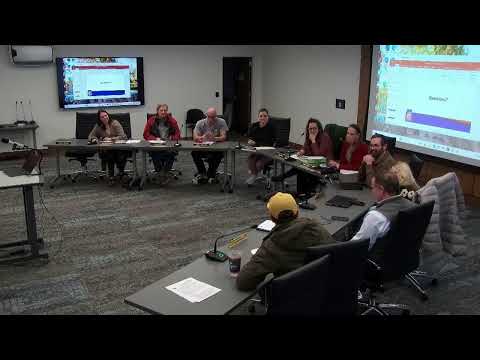
The Norman Planning Commission voted 8‑0 to approve a land‑use map amendment, a special‑use ordinance limited to drinking‑water treatment, and a preliminary plat to build a groundwater treatment facility at 4020 East Tecumseh Road.
The Norman Planning Commission voted 8‑0 to approve a package of items to enable a Norman Utilities Authority groundwater treatment facility at 4020 East Tecumseh Road: Resolution R‑2425‑82 to amend the 2025 Land Use and Transportation Plan to institutional use, Ordinance O‑2425‑25 granting a special use for municipal (public utility) use in the residential estates district, and Preliminary Plat P‑P‑2425‑7 for the proposed 28.2733‑acre site.
Justin Fish of the Planning Department presented the application and said the change moves the parcel from “very low residential / country residential” to an institutional designation to allow a drinking‑water treatment facility. The commission heard a utilities department presentation describing the project as a centralized disinfection facility intended to provide a consistent chlorine residual to groundwater supplies; staff and the applicant said the project had been contemplated for more than a decade and had funding and land acquisition approved in earlier rate votes.
City Utilities representatives described the initial phase as a mostly unmanned building that will provide disinfection (sodium hypochlorite and liquid ammonium sulfate feeds), lab testing and light staff visits for monitoring and maintenance. The applicants said no large pumps are planned at this phase (the system will use existing system pressure), chemical storage tanks will be placed inside containment areas, and the facility will include secondary containment sized at about 10% of tank capacity so a single leak would be contained on‑site.
The applicant described site mitigation committed to neighbors: a berm with proposed tree plantings to screen the facility, low‑impact development (LID) stormwater measures with a rain garden for water quality and infiltration, and burying a future clear‑well (a ground storage tank planned for a later phase and described as roughly 40 feet tall if above ground) so it will not be visible. The applicant also said chain‑link fencing with barbed wire would be required around the secured treatment area by regulation but would be set well back and screened with landscaping.
Commissioners and neighbors asked whether the facility could be used for wastewater in the future. The utilities representative and staff repeatedly stated the special‑use condition limits the site to drinking‑water treatment only and that any future request to change to wastewater treatment would require the utilities and applicant to return to the planning process for separate approval. Commissioners acknowledged the practical concern that reserving the site for future expanded water treatment is efficient, but emphasized that any different use would require a new application and review.
Noise and generator operation were discussed; the utilities representative said the generator would be used only for emergencies and weekly maintenance and that staff have committed to coordinate timing to minimize neighborhood disruption. Adjacent property owners who attended a predevelopment meeting were cited by the applicant and by a commissioner as having raised concerns that staff said were addressed (screening, burying the clear‑well, limiting operations, and timing of generator tests).
The commission approved the land‑use amendment, special‑use ordinance (with an explicit condition limiting the use to drinking‑water treatment), and the preliminary plat by voice and roll call; the transcript records “yes” votes from Commissioners Brewer, McDaniel, McCown, Jablonski, Byrd, McClure, Griffin and Bridal, and the motion passed 8‑0.
Key technical and public‑safety details recorded in the hearing: chemical feed types (sodium hypochlorite (bleach) and liquid ammonium sulfate), on‑site secondary containment sized to contain a release, an emergency generator for backup power, LID stormwater measures, and a regulatory requirement for fenced, secured treatment areas. The special‑use approval includes the explicit limitation that the site be used for drinking‑water treatment only; any change to wastewater treatment would require a new land‑use and zoning application and approval by the planning commission and ultimately the city council.
The utilities department and planning staff plan follow‑up permitting and design work; the transcript does not include construction schedules or capital costs for construction of the treatment plant.