Get Full Government Meeting Transcripts, Videos, & Alerts Forever!
Get email alerts on the Land Use Zoning topic
No spam. Unsubscribe anytime.
San Fernando council adopts mixed-use overlay; amends recitals, adds capacity and fiscal analyses
Summary
The San Fernando City Council approved second reading of two ordinances creating a mixed-use overlay for certain C1 and C2 properties, amended recitals to remove a federal-funding reference, and added requirements for sewer, water and municipal-service fiscal analyses. The council voted unanimously.
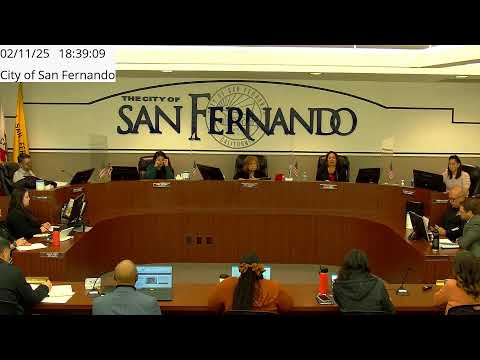
The San Fernando City Council on Tuesday approved second reading of two ordinances to establish a mixed-use overlay zone and apply it to specified commercial parcels, voting to adopt the California Environmental Quality Act mitigated negative declaration addendum and sending the amended ordinances to the state for review.
Erica Ramirez, a city planning staff member, presented the ordinances — Ordinance 17-28 (a zoning text amendment to establish the mixed-use overlay) and Ordinance 17-30 (a zoning map amendment to add the overlay to certain C1 and C2 zone properties) — and described changes directed by the council after a Jan. 21 public hearing. Ramirez said the revisions add recitals expressing the council’s views on state housing requirements and add findings that require applicants to submit sewer and water capacity analyses and fiscal-impact evaluations of effects on municipal services.
The recitals added language noting the council’s “disapproval of the state’s heavy-handed curtailing of local zoning decision making authority” and said the ordinance is approved to satisfy legal obligations under current state housing laws and to avoid penalties or costly litigation. Council Member Victoria Garcia asked to strike a sentence referencing suspended federal funding, saying she did not recall federal funding being discussed and that the concern was state enforcement and potential loss of state resources. Garcia said, “I believe the federal funds were suspended perhaps at the time this was written, but that was rescinded,” and moved to remove the federal reference from the recitals.
Mayor Mary Mendoza emphasized the deadline tied to the city’s housing element: “The housing element is . . . 2021 to 2029, and . . . our deadline to get this done is February 12, which is tomorrow.” Mendoza said failure to adopt the zoning updates could lead to the housing element being decertified and to a loss of local control over what gets built in the city.
Multiple council members raised concerns about community outreach. Council Member Patty Lopez said many residents “don’t know about this rezoning” and urged additional door‑to‑door or multilingual outreach, noting seniors and working residents may not be reached online. Vice Mayor Solorio reiterated that approving the overlay does not compel immediate development, asking staff to clarify that the zone simply provides standards that developers would follow if and when they propose projects; Ramirez confirmed that development applications would be evaluated against the new standards, including required water/sewer and municipal-service analyses.
Council Member (name not specified in the record) questioned whether certain substantive changes would require returning for another hearing; staff and council members agreed that the recitals are non‑substantive and that the ordinance could proceed to second reading with the agreed text, while more substantive edits would require additional review.
A motion to approve the two ordinances with the amendment removing the federal‑funding reference and other minor text corrections passed on roll call: Council Member Patty Lopez — yes; Council Member Victoria Garcia — yes; Council Member Joe Fajardo — yes; Vice Mayor Solorio — yes; Mayor Mary Mendoza — yes. The council directed staff to forward the amended ordinances and the CEQA addendum to the California Department of Housing and Community Development for review.
The council’s action updates the San Fernando Municipal Code to create the mixed‑use overlay and applies it to designated commercial corridors; it does not itself approve any specific development. Future projects proposing mixed‑use construction will be subject to the overlay’s development standards and the additional capacity and fiscal analyses identified by staff.