Get Full Government Meeting Transcripts, Videos, & Alerts Forever!
Get email alerts on the Education Funding topic
No spam. Unsubscribe anytime.
Joint interim committee adopts report outlining three options to address student-needs funding
Summary
The Joint Interim Committees adopted a report presenting three options for the state's 30-year foundation funding program, favoring a hybrid approach that would keep the current foundation in place and add weighted funds for student needs; the committee said any move to change funding would require legislation and be phased in as revenues allow.
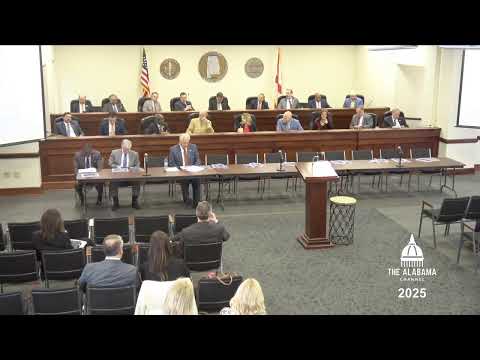
The Joint Interim Committees voted to adopt a report that lays out three options for how the state funds public education and how student needs would be addressed, committee members said during a meeting. The report presents (1) keeping the current foundation program unchanged, (2) replacing the foundation program with a new student-needs-based formula, or (3) a hybrid approach that retains the foundation program and adds a separate pot of weighted funding for student needs.
The report matters because it frames possible changes to a foundation program that has been in place for roughly 30 years and sets the legislative pathway for adding money targeted to English learners, students in poverty, special education and charter schools. Committee members said any change under options 2 or 3 would require specific legislation to define weights and that implementation should be phased in over time to match available revenues.
Representative Jeremy Garrett, who presented the options, described the hybrid approach as leaving the foundation program intact while adding a separately funded weighted pot for student needs. Garrett said the committee discussed staging increases over several years rather than committing to rapid funding increases that might have to be reduced later. An example in the presentation showed a hypothetical pot of $60 million added in an initial year, with possibilities of $90 million or $100 million in subsequent years, to be allocated by weight to systems with higher shares of targeted needs.
Garrett also noted that current targeted student-need line items account for only about 1% of the overall education budget and that moving to a needs-based formula would be a complex undertaking. "If we do 2 or 3, we will have to discuss the weights or have legislation for that to talk about the weights," Garrett said, adding the committee's expectation that any weighting changes would be phased in over about five years "as we felt we had the funding."
Senator Smitherman urged the committee to consider a one-time allocation to help failing schools reach a level where new, weighted funding could have effect. "We've got to do a one-time allocation to all 200 failing schools that we have in this state so that we can get back up to that point," Smitherman said, adding that past, targeted infusions had helped some schools leave failing status. That suggestion was presented as a policy option to consider, not as an adopted part of the report.
Other discussion items included questions about teacher pay and rural transportation. In response to a question from Senator Singleton about how teacher raises would be calculated under a hybrid model, Garrett said teacher raises would remain part of the foundation program. Representative Stumpf raised concerns that rural student needs, particularly long transportation distances, could be overlooked if the discussion is strictly student-centered; committee members noted transportation is tracked as a separate line item and could be addressed there.
The committee noted the existence of the Education Opportunity Fund — referred to during the meeting as holding about $1,200,000,000 — as a potential source for transformative investments over time. Members emphasized caution in committing recurring funding the committee could not sustain: they said the committee does not want to give money that must later be taken back from school systems if revenues fall.
Senator Roberts moved to adopt the report and Senator Hatcher seconded. The motion passed on a voice vote; no roll-call tally was recorded in the transcript. The report sets out options and sample language, but committee members stressed that the document is not binding and that the legislature could choose any of the three options — or a different approach — as legislation moves forward.
Next steps identified by committee members included drafting legislation to specify weights if the legislature pursues options 2 or 3, building accountability and reporting requirements into any new appropriations, and phasing implementation to match revenue forecasts. The committee did not finalize weight amounts or a detailed statutory proposal at the meeting.