Get Full Government Meeting Transcripts, Videos, & Alerts Forever!
Get email alerts on the Economic Development Funding topic
No spam. Unsubscribe anytime.
House advances plan to seed a rural-focused development fund funded from future abatements
Summary
HB243 creates an Alabama Development Fund to direct a share of certain sales-tax abatements from new economic-development projects into grants for rural development, quality-of-place initiatives and international business outreach; lawmakers debated the policy’s tradeoffs for incentives and rural investment.
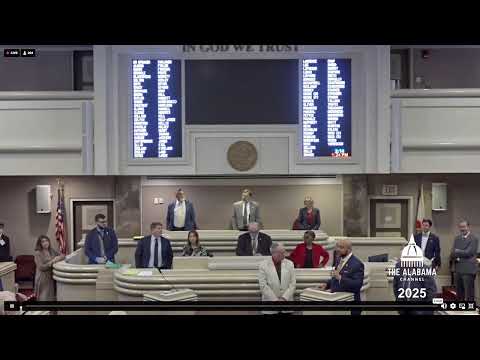
The Alabama House debated and passed HB243, a proposal to create an Alabama Development Fund that would collect a portion of future sales-tax abatements tied to economic-development deals and direct those resources to rural development, quality-of-place projects and international outreach offices. Representative Witt, the bill’s sponsor, described the mechanism as a “creative funding mechanism” that would be self-funding from a slice of future abated taxes.
Under the bill, a portion of sales tax and certain local tax abatements associated with new projects would be redirected into a state-managed fund; Representative Witt estimated the mechanism could generate roughly $26–$28 million a year under recent deal volumes. Supporters said the fund would boost rural competitiveness, allow the state to place international business officers in growth markets and provide grant resources for places that currently lack capacity for traditional economic-development incentives.
The proposal drew a mix of commentary. Representative Garrett and others said the measure helps fund rural growth and enables the state to “think outside the box.” Some members urged caution about competing incentives and long-standing concerns that abatements tilt the playing field toward large projects; Representative Harrison noted the principle that government should level the playing field rather than pick winners. Speakers from diverse delegations urged that the fund be used to help counties with limited tax bases and to provide targeted investments in industrial parks and infrastructure.
The House approved the bill by recorded vote after debate and several members asked for follow-up reporting on fund rules and project selection. Clerk records show final passage recorded 100-2 in favor on the floor. Sponsors said the fund targets rural projects and does not change abatements on existing agreements; it applies to new abatement deals moving forward.