Get Full Government Meeting Transcripts, Videos, & Alerts Forever!
Get email alerts on the Code Amendments Parks Animals topic
No spam. Unsubscribe anytime.
Council hears staff proposal to amend park, animal and zoning code; public raises safety and enforcement concerns
Summary
City staff presented a package of proposed code amendments on Feb. 12 to allow limited alcohol at pavilion patios, set park closing hours, strengthen the dangerous-dog ordinance, require metal-detecting permits in sensitive areas, and adopt state-authorized bite/quarantine procedures.
The Fond du Lac City Council on Feb. 12 received a staff presentation on a package of proposed amendments to multiple chapters of the city code covering alcohol use in parks, dangerous dogs, animal-bite quarantine procedures, metal detecting and park hours. The item was presented as an input item; staff said the changes will be returned to council as an ordinance.
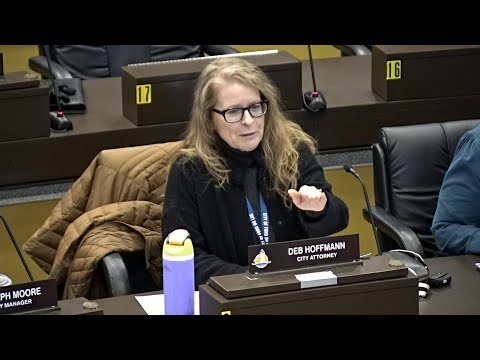
City Attorney Miss Hoffman summarized the package and said the “main goal of that was to allow the patio off the side our new lovely renovated, pavilion” to be used for events where on-site catered alcohol would otherwise be prohibited. She told the council the draft also adds closing hours for Lakeside Park and Lakeside West (11 p.m.), with an exception to allow marina users to come and go; adds municipal-citation authority for certain batteries; strengthens the Dangerous Dog ordinance using model provisions; requires permits for metal detecting in parks to protect burial mounds and closed or contaminated sites; and adopts state law for the bite/quarantine program (referred to in discussion as State Statute 9.521) so the city’s practice matches state authorization.
Public speakers and council members raised several substantive concerns and suggested amendments. Resident Jim Thomas, whose neighborhood raised the dangerous-dog item, praised provisions in the draft such as continuing designation when an owner moves, insurance or surety-bond requirements, and stiffer fines. Thomas also said the emergency response and police reporting after a dog attack felt inadequate and asked that the city consider how delayed-onset injuries (his dog died a week later) should be reflected in reporting and enforcement. He said: “I like the provisions to allow you some leeway for the amount of fines ... I think that sends a very clear and strong message that the city is taking this issue seriously.” Thomas also asked for clarity on who designates a dog as “vicious.”
Council member Miss Learing questioned whether a permit requirement for metal detecting would unduly burden out-of-town visitors and small recreational users; City Attorney Hoffman said applicants would speak first with the park superintendent so the superintendent could identify protected or restricted areas. Mr. Schisler asked that the dangerous-dog language be pulled out and considered separately and proposed adding authority for impounding animals during proceedings and allowing nuisance charges in court; Hoffman said staff would look at those suggestions but noted current animal-storage capacity in the region is limited. Mr. Heisler asked whether the city could restrict alcohol for youth athletic events; Hoffman said the default city code prohibits alcohol in parks except by special permission and that event-specific exceptions would need to be considered on a case-by-case basis.
Hoffman characterized the battery addition as a means to allow municipal citations in limited battery cases that may not rise to district-attorney pursuit. She said the city’s draft mirrors the state-authorized quarantine program so the city can obtain state approval for its animal-bite protocol.
Discussion vs. next steps
No ordinance was adopted at the meeting. City staff asked council members to submit additional comments to Miss Hoffman; the package will be returned in ordinance form with any recommended revisions. Council members expressed general support for strengthening dangerous-dog remedies but asked staff to research options for judicial determinations of “vicious” status when a dog kills a domestic animal and for possible impoundment language.
Ending
Council closed the input-item discussion and scheduled the proposed code changes to return in ordinance form at a future meeting, after staff gathers suggested edits and checks enforcement implications.