
Zoning board upholds building commissioner: 59 South Shore use not deemed commercial
Get AI-powered insights, summaries, and transcripts
Subscribe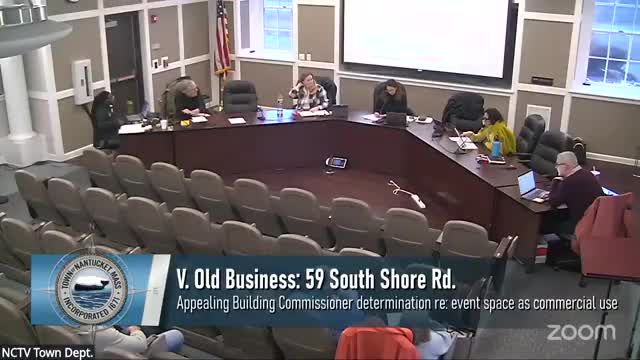
Summary
The Nantucket Zoning Board of Appeals on Feb. 13 upheld Building Commissioner Paul Murphy's finding that activities at 59 South Shore Road did not constitute a prohibited commercial use in a residential district, rejecting a motion to overturn the commissioner's decision.
The Nantucket Zoning Board of Appeals on Feb. 13 upheld Building Commissioner Paul Murphy's determination that the uses conducted at 59 South Shore Road do not amount to a prohibited commercial operation in a residential zone, after a contentious public hearing and a 3'to'2 vote on a motion to overturn the decision.
Neighbors and their counsel argued the house had been marketed and used as an event venue, citing a promotional video and police logs of noise complaints tied to a large September wedding. Dan Bailey, a land'use attorney representing neighbors who appealed, played excerpts of marketing materials and described police reports and prior large gatherings to argue the scale and organization of events went beyond what is "customary, subordinate and incidental" to single'family residential use.
The homeowners, Jamie and Liz Feeley, countered that the property is their primary residence and described most uses as family gatherings and occasional short'term weeklong rentals. Attorney Rick Bodette told the board the house lacks a permitted commercial kitchen and that catering is performed off'site, and he stressed that the town has no bylaw explicitly prohibiting private events or defining "event" in a way that would make enforcement straightforward.
Several neighbors described traffic, staging, equipment deliveries and other impacts around the large wedding; attendees described instances of trucks, security and overflow parking on nearby streets. Board members and town staff, including the building commissioner and licensing and health staff whose earlier internal meetings were discussed, noted there were noise complaints but no recorded noise ordinance violations and that the Board of Health had declined to adopt regulations in October following an earlier review.
After deliberations the board considered a motion to overturn the building commissioner's decision and to issue a zoning enforcement order directing the owner to cease using the property as an event space. The motion, made by staff member Billy (name on record), was seconded and put to roll call. The board recorded three votes in favor and two opposed; that margin was not sufficient under the board's supermajority threshold for overturning the commissioner. The board therefore left the building commissioner's determination intact.
The hearing produced no new town bylaw changes; multiple speakers urged that townwide regulation (for example a definition of "event" or numerical limits) be considered at Town Meeting or by the Board of Health to give clearer standards for enforcement. Members of the public and several board members said the case highlighted an enforcement gap between neighborhood nuisance concerns and the current text of the zoning bylaw.
The board closed the public hearing and the determination stands as of Feb. 13. Any further enforcement or bylaw amendments would need to come from town departments or Town Meeting action, not from this single appeal.