Get Full Government Meeting Transcripts, Videos, & Alerts Forever!
Get email alerts on the Ethics Cooling Off Lobbying topic
No spam. Unsubscribe anytime.
House committee reports bill to impose two-year cooling-off period for departing lawmakers
Summary
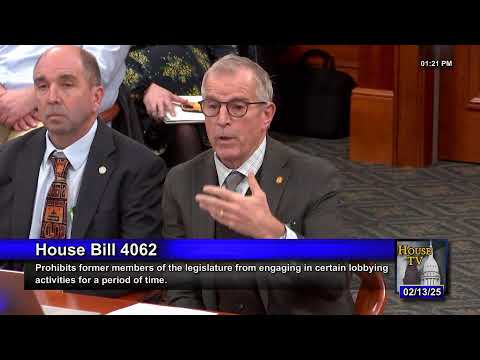
The House Committee on Government Operations reported House Bill 4062 with recommendation after testimony from the sponsor that the bill would bar former state lawmakers from registering as lobbyists for two years following the end of their term.
The House Committee on Government Operations on an unspecified date reported House Bill 4062 with recommendation after sponsor Representative Tisdale testified the measure would bar former state lawmakers from registering as lobbyists for two years after their term ends.
Representative Mark Tisdale, the bill sponsor, said the measure “helps ensure that elected officials focus on serving their constituents, during their time in office rather than positioning themselves for future employment.” He told the committee the bill applies to members of both the House and Senate and described it as intended to “slow the revolving door.”
Committee members questioned the length of the proposed restriction. Representative Vanderwall asked why the bill sets two years rather than a shorter period. Tisdale responded that two years provides “just enough of a separation” so that the member’s in‑office activity cannot be directly linked to a future hiring opportunity. Representative Fitzgerald and others raised queries about the role of lobbyists and the value lobbyists provide as institutional memory, while stressing the need to avoid any appearance of impropriety.
Tisdale referenced existing state rules and said he had found a change that took effect in 02/2014; he also cited a Center for Public Integrity article noting past House speakers who became lobbyists. The committee read two cards from stakeholders opposed to speaking in support of the bills: Aaron Shore of the Michigan Department of State and Logan Vorce of the Michigan League of Conservation Voters.
On a motion by Representative Harris to report the bill with recommendation, the clerk called the roll. The committee recorded 3 yes votes, 0 no votes and two passes; the motion prevailed and House Bill 4062 was reported with recommendation.
The bill will next move through the House process under the usual committee-report rules; no final House vote was taken by the committee itself.