Get Full Government Meeting Transcripts, Videos, & Alerts Forever!
Get email alerts on the Bodycam Redaction Fees topic
No spam. Unsubscribe anytime.
Police chiefs back fee schedule to cover time and redaction costs for body and dash camera records; advocates warn of access barriers
Summary
The Connecticut Police Chiefs Association urged lawmakers to authorize redaction fees for body‑worn and dashboard camera footage under Senate Bill 973, saying agencies face heavy staff burdens and delays. Civil‑liberties and press advocates raised concerns about affordability and public accountability.
Police chiefs told the Government Oversight Committee on Thursday that Connecticut law should allow law‑enforcement agencies to charge reasonable fees to cover the time and technology required to review, redact and provide body‑worn and dash camera footage to requesters.
"This bill will help...strike the balance between providing the public the information they want from law enforcement agencies while establishing a fee structure that helps public agencies offset the rapidly increasing costs associated with this technology," said Carl Jacobson, chief of police in New Haven, testifying for the Connecticut Police Chiefs Association.
Jacobson described significant staff demands: in New Haven the department has "15 full time civilians, 2 sergeants, and a lieutenant who oversee the redaction" and still runs months behind on requests. He estimated the agency receives roughly "50 to 60" FOIA requests for video per month; many incidents involve multiple camera files and can require 16 to 20 hours of staff time to review and redact.
Russell Blair of the Freedom of Information Commission told the committee the commission supports a tailored fee structure that recognizes the unique burden of video redaction while protecting public access. "We believe the fee structure is reasonable," he said, but he also pointed to some technical conflicts in draft language and said involved parties should be able to get footage of their own encounters without charge.
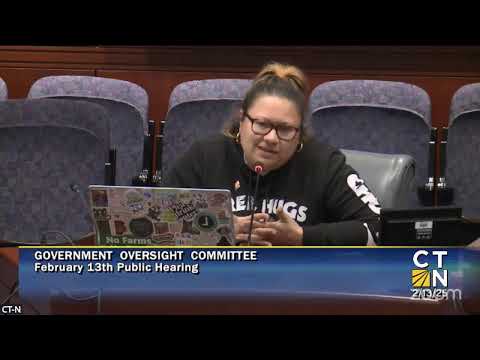
Not all witnesses agreed. Yvelisse Correa Brown, a testifier from the public, opposed the fee structure and said fees could block low‑income people and community watchdogs from obtaining footage needed to hold police accountable. Michelle Jacquelyn of the Connecticut Council on Freedom of Information and others emphasized the importance of preserving access for victims, attorneys and the press.
Committee members asked whether fees would reduce frivolous or "fishing" requests that consume staff time; Jacobson said a modest fee likely would, and that some requests should remain free for involved parties, victims and attorneys. Jacobson also suggested departments could use collected fees to support equipment, staffing and wellness services for staff who must repeatedly view traumatic footage.
No committee vote occurred at the public hearing.
Why it matters: Body‑worn and in‑car cameras are important for transparency, but producing redacted video is time‑consuming and costly. Lawmakers must weigh operational capacity and public‑access principles when setting fees and exemptions.
What’s next: Committee members asked staff to examine fee caps, waiver processes for low‑income requesters, and mechanisms to notify requesters of estimated costs before processing.