Get Full Government Meeting Transcripts, Videos, & Alerts Forever!
Get email alerts on the Teacher Privacy Sb1209 topic
No spam. Unsubscribe anytime.
Educators, unions press lawmakers to bar FOIA release of teachers’ home addresses and cell numbers
Summary
Union leaders and the Connecticut Education Association urged the Government Oversight Committee to protect teachers and other school employees from having personal contact information released under Senate Bill 1209. Witnesses said threats, harassment and doxxing are rising and that exemptions would improve recruitment and safety.
Union leaders and education groups told the Government Oversight Committee on Thursday that public‑employee safety and school staffing hinge in part on preventing release of personal addresses and phone numbers under the Freedom of Information Act.
"Prohibiting the disclosure of residential addresses of public employees through the FOIA process will not harm...the ability of the public to hold the government accountable. It will, however, help protect the people who work tirelessly to make Connecticut a wonderful place to live," said Travis Woodward, president of CSEA SIU Local 2001, who testified on behalf of the labor union about Senate Bill 12‑09.
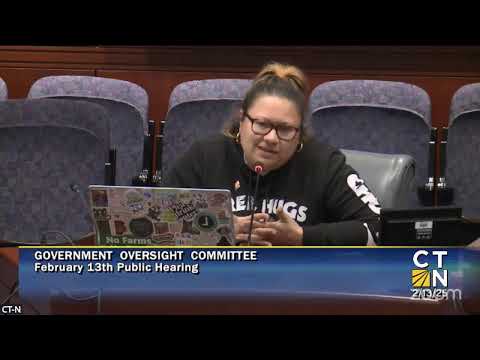
Jocelyn Delancey, vice president of the Connecticut Education Association and a fifth‑grade teacher, said educators face growing harassment online and in person and asked the committee to add protections that also cover personal cell‑phone numbers. "Having our private information available through FOI puts us at risk," Delancey said.
Katie Diaz, president of the Connecticut Education Association, said the change would be a proactive safety measure rather than a reactive exemption. "We're asking for a proactive measure that gets out ahead of the issues that really creates safe spaces for our educators to work," Diaz said.
Travis Woodward called for extending exemptions beyond licensed teachers to include paraeducators, nurses and other school district workers and noted that 13 groups already receive FOIA address exemptions, including police officers and firefighters. Testimony and committee discussion emphasized that exemptions should be narrow, that public workplace addresses (school buildings) remain public so families can contact schools, and that protections should focus on private home addresses and personal cell numbers.
No committee vote was taken during the hearing.
Why it matters: Witnesses said access to home addresses and cell numbers through FOIA facilitates harassment, threats, and recruitment challenges; lawmakers will weigh privacy for public employees against the public’s right to government information.
What’s next: Committee members requested additional data on FOIA requests to school districts and asked for further drafting to clarify scope and any implementation details.