Get Full Government Meeting Transcripts, Videos, & Alerts Forever!
Get email alerts on the Freedom Of Information Shelter Addresses topic
No spam. Unsubscribe anytime.
Bill to shield locations of sexual‑assault shelters wins support; FOI commission warns executive‑session language could clash with land‑use rules
Summary
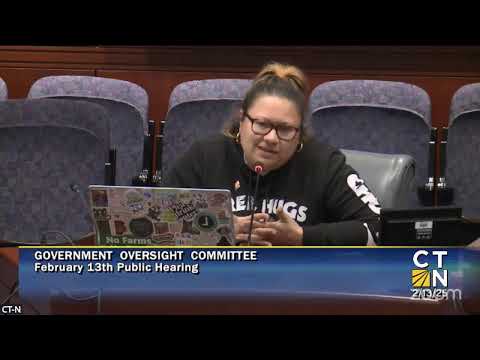
State Representative Sarah Kitt urged the Government Oversight Committee on Thursday to expand Freedom of Information Act address protections to residential sites used as confidential housing for sexual‑assault victims under House Bill 6,883.
State Representative Sarah Kitt urged the Government Oversight Committee on Thursday to give a favorable report to House Bill 6,883, saying the measure would extend existing Freedom of Information Act protections for domestic‑violence shelters to residential sites used to house sexual‑assault victims.
"Often, survivors of sexual assault need emergency, anonymous shelter to heal and pursue justice safely," State Representative Sarah Kitt said in testimony. She cited a Connecticut Department of Public Health surveillance finding that in 2023 "3,509 minors and 546 adults were seen in area hospitals for injuries from sexual assault." Kitt said Section 2 of HB 6,883 would expand the addresses exemption to those residential sites and require that public‑agency meetings that discuss such confidential housing be held in executive session.
The bill drew support from the Freedom of Information Commission. Russell Blair, director of education and communications at the Freedom of Information Commission, told the committee the commission "does not have any objection to making it clear that whether it's domestic violence or sexual assault, the information about those locations is protected from disclosure." Blair added that the commission sees the policy intent behind the change but raised concerns about how the bill ties that protection to executive‑session requirements for public meetings.
"There are times when a zoning or site‑plan application would, by other statutes, require public notice and a public hearing," Blair said. He pointed to statutory public‑hearing processes for certain site plans and to land‑use boards' obligations to notify abutters. Blair suggested either removing the meetings language from the bill or creating an agency discretion mechanism to avoid automatically forcing land‑use discussions into executive session.
Members of the committee pressed that balance. Representative Dathan asked whether the bill's protections could be limited to the confidential housing address itself while allowing planning and zoning commissions to consider the project's scope — number of units, parking, traffic — without exposing residents' identities. Russell Blair answered the challenge, saying local rules vary and that a narrower approach or a discretionary standard might better accommodate land‑use notice requirements and other statutes that compel public hearings.
The Connecticut Council on Freedom of Information opposed a separate part of HB 6,883 that would add a specific class of attorneys to the list of protected addresses. Michelle Jacquelyn, co‑president of the council, told the committee she "opposes section 1 of HB 6,883, which adds a specific group of attorneys to the list of already protected addresses," and warned that broadening exemptions annually risks reducing public access without improving safety.
The committee discussion centered on how to protect survivors and employees while preserving required public notice for land‑use approvals. Several members suggested drafting narrower language — for example, allowing a project to be described generically as congregate or supportive housing in public filings while withholding specific residential addresses — and asked staff to bring potential revisions back to the committee.
No formal committee action was taken during the public hearing.
Why it matters: HB 6,883 would change how municipalities treat records and meetings that touch on confidential housing for victims, potentially keeping precise addresses out of public records but creating tension with existing public‑notice duties under land‑use law.
What’s next: Committee members asked the bill sponsors and staff to consider language that protects survivor safety while respecting statutory public‑hearing obligations for site plans and zoning applications.