Get Full Government Meeting Transcripts, Videos, & Alerts Forever!
CT Freedom of Information Commission briefs oversight committee on records law, exemptions and complaint process
Summary
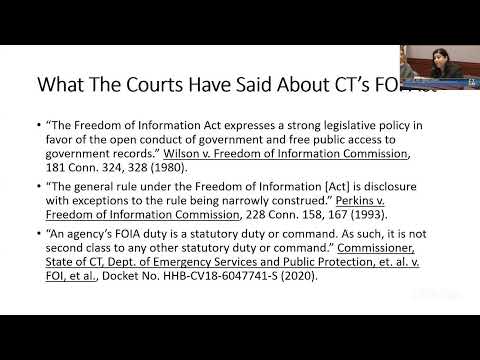
Russell Blair, director of education and communications for the Freedom of Information Commission, told the Government Oversight Committee at an informational forum Feb. 13 that Connecticut celebrates the 50th anniversary of its Freedom of Information Act in 2025 and that the statute and related case law remain central to public access to government records and meetings.
Russell Blair, director of education and communications for the Freedom of Information Commission, told the Government Oversight Committee at an informational forum Feb. 13 that Connecticut—elebrates the 50th anniversary of its Freedom of Information Act in 2025 and that the statute and related case law remain central to public access to government records and meetings.
Blair said the commission is a small but active enforcement and education agency, with nine commissioners, 18 staff attorneys and more than 800 complaints in 2024. "We got 855 such complaints in 2024," he said, adding that about two‑thirds of those were resolved through the commission
The commission nd its staff, Blair said, operate as an administrative appeals body: a requester must first seek records from the agency that maintains them, and if dissatisfied may file a complaint with the commission, which can hold contested‑case hearings, issue written findings and, ultimately, see cases reviewed in superior court and, in some matters, by the state Supreme Court.
Why it matters
The briefing came as committee members pressed about bills that would expand nondisclosure of public employees ddresses and as legislators asked for clarity about response timelines and so‑called vexatious requesters. Those issues affect how local and state agencies balance transparency with safety, privacy and administrative burden.
Key points from the presentation
- What counts as a public record: Blair summarized the statutory standard as records "relating to the conduct of the public's business," whether emails, handwritten notes or video. He emphasized that exemptions and other statutes can limit disclosure.
- Exemptions and safety:…
Already have an account? Log in
Subscribe to keep reading
Unlock the rest of this article — and every article on Citizen Portal.
- Unlimited articles
- AI-powered breakdowns of topics, speakers, decisions, and budgets
- Instant alerts when your location has a new meeting
- Follow topics and more locations
- 1,000 AI Insights / month, plus AI Chat