Get AI Briefings, Transcripts & Alerts on Local & National Government Meetings — Forever.
Senate committee approves vetting system for vape manufacturers after heated debate over youth access and small businesses
Loading...
Summary
The committee voted 5‑2 to send SB 1272 forward with amendments that require Arizona vape manufacturers to be certified by the state and list approved products in a public directory; opponents warned the rule would collapse small businesses reliant on the federal PMTA process while proponents cited illicit disposable vapes and youth targeting.
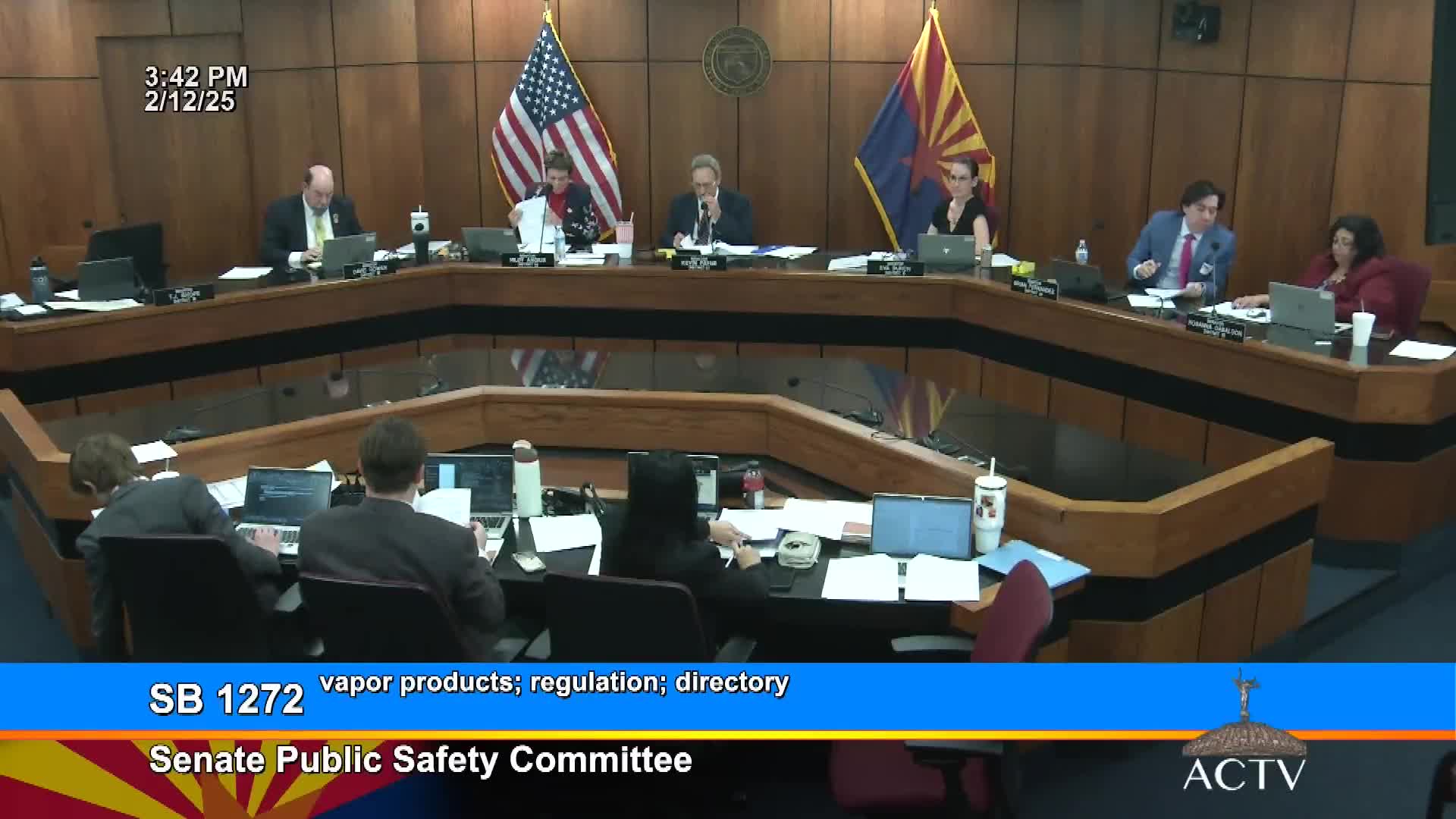
The Senate Committee on Public Safety approved SB 1272 with an amendment requiring manufacturers of vapor products sold in Arizona to obtain annual certification from the Arizona Department of Liquor Licenses and Control. The committee vote was 5‑2 on a bill that drove the longest night‑of hearing in the session, with four speakers on each side presenting sharply different evidence about youth vaping, illicit imports and the federal premarket tobacco application (PMTA) process.
What the bill requires: beginning Oct. 1, 2025, manufacturers must show either a federal marketing granted order for the product or an FDA acceptance letter for a timely PMTA. Certified products will appear in an online state directory; unlisted or unapproved products may not be sold in Arizona, and civil penalties may reach $10,000 per unapproved product. The measure also requires nonresident manufacturers to designate a registered agent in Arizona and may require a $25,000 bond for certain foreign manufacturers.
Proponents said Arizona needs an enforceable state tool to keep illicit disposable vapes — often made overseas and lacking ingredient transparency — out of local markets and away from teens. Joe Dickinson of the Border Security Alliance told senators that packages and device designs indicate many illegal units are manufactured abroad and that those products can contain dangerous substances: “The rapid expansion of the illicit vaping market is a severe threat, particularly to our young teenagers,” Dickinson said. Amanda Graham of the Arizona Petroleum Marketers Association, representing convenience stores, told the committee the bill helps combat illicit imports and provides local law enforcement an enforcement mechanism.
Opponents, including representatives of specialty vape retailers and manufacturers, argued the bill simply enshrines the federal PMTA process in state law and will advantage large tobacco companies while wiping out many small independent businesses that lack the time and money to secure federal orders. Shannon Whitaker, representing the Arizona Smoke Free Business Alliance, called the federal PMTA process “arbitrary and capricious” and said the cost and shifting rules have left thousands of operators in limbo. Joby Dickinson, CEO of a retail group, said PMTA has awarded only a small number of approvals and “the FDA admitted that they promised never to award any further applications” in testimony quoted to the committee; opponents also warned of overreach if SCOTUS modifies federal process rules (a court case was pending at the time of the hearing).
Testimony from educators and law enforcement complicated the picture. Marcus Cisneros, a school board vice president for Littleton Elementary School District, described having to install bathroom vape detectors after increasing incidents; he urged action to protect students. Supporters including the Arizona Police Association and several county sheriffs emphasized public‑health risks and the need for identification and removal of unapproved products from store shelves.
Committee action: senators moved and passed SB 1272 as amended; the amendment narrowed documentary requirements so manufacturers could provide a copy of either a federal marketing granted order or an FDA acceptance letter for a timely PMTA rather than both. The committee’s roll call was 5 ayes and 2 nays, giving the bill a due‑pass as amended recommendation.
Practical effect: if enacted, Arizona would maintain a state directory of certified manufacturers and approved vapor products and create a civil‑penalty enforcement path for unapproved products. The bill leaves unresolved federal‑level questions: the PMTA process and pending federal litigation may change the national landscape, a point several speakers raised during testimony.
Quotes are drawn verbatim from the committee transcript.