Get Full Government Meeting Transcripts, Videos, & Alerts Forever!
Get email alerts on the Broadband Bead topic
No spam. Unsubscribe anytime.
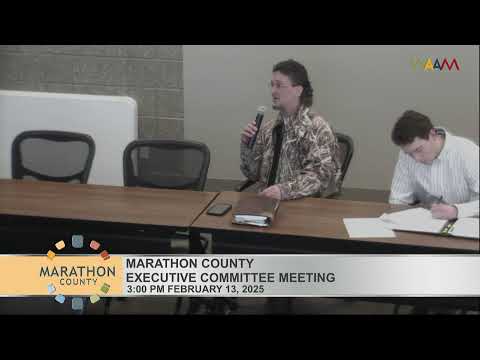
Executive committee endorses three ISPs to support BEAD grant applications
Summary
Marathon County executive committee voted to forward endorsements for Bertram Communications, Bug Tussle and Mosaic to the full county board so the providers may claim community-engagement points in upcoming BEAD grant scoring.
The Marathon County Executive Committee voted to forward to the full county board its endorsement of three internet service providers—Bertram Communications, Bug Tussle and Mosaic—to support those firms’ applications for federal BEAD funding.
The endorsement, approved by voice vote, gives each of the three companies community-engagement points in the state scoring process and is intended to help their applications in the National Telecommunications and Information Administration’s Broadband Equity, Access and Deployment (BEAD) program. Supervisor Robinson, chair of the county broadband task force, explained the local endorsement process and the task force’s recommendation.
Why it matters: Wisconsin’s share of BEAD funding is roughly $1,055,000,000 and the federal program aims to close gaps in broadband access for unserved and underserved locations. Robinson said the county has more than 8,400 broadband service locations identified as unserved or underserved and that the BEAD process will first prioritize fiber-to-the-premise projects.
Robinson summarized the task force’s technical review and timeline, saying, “Round 1 will be for fiber to the premise.” He told the committee the task force recommended Bertram and Bug Tussle for countywide proposals and Mosaic for the western portion of the county, and that the recommended providers were judged capable of meeting build-out requirements that could run through 2029. Robinson also noted legal limits on information sharing: “There are anti collusion provisions in the law that don't allow them to share a lot of information with the committee.”
The task force reported the following key points for committee consideration: Wisconsin’s preliminary BEAD allocation and program rules; an estimate of more than 8,400 unserved/underserved service locations in Marathon County; the task force’s review of presentations from multiple providers; and the recommendation to endorse three firms so each might receive community-engagement points during state scoring. Robinson said Frontier proposed a more limited service area and was not endorsed, while Charter had not submitted a formal proposal and therefore was not recommended.
County staff and task force members told the committee the endorsements do not create a county financial subsidy request at this time. Robinson said companies are seeking assistance only with utility-accommodation policies and potential siting for fiber hubs; no county funds were requested by the providers in committee presentations.
The committee approved a motion to forward support for the three companies to the full county board. Corp. counsel clarified that separate resolutions and votes will be required at the full county board level.
What’s next: The state Public Service Commission will evaluate vendor applications, publish a preliminary plan for public comment later in the summer and then submit the state plan to the National Telecommunications and Information Administration for the BEAD program.