Get Full Government Meeting Transcripts, Videos, & Alerts Forever!
Get email alerts on the Height Restrictions 6 Stories topic
No spam. Unsubscribe anytime.
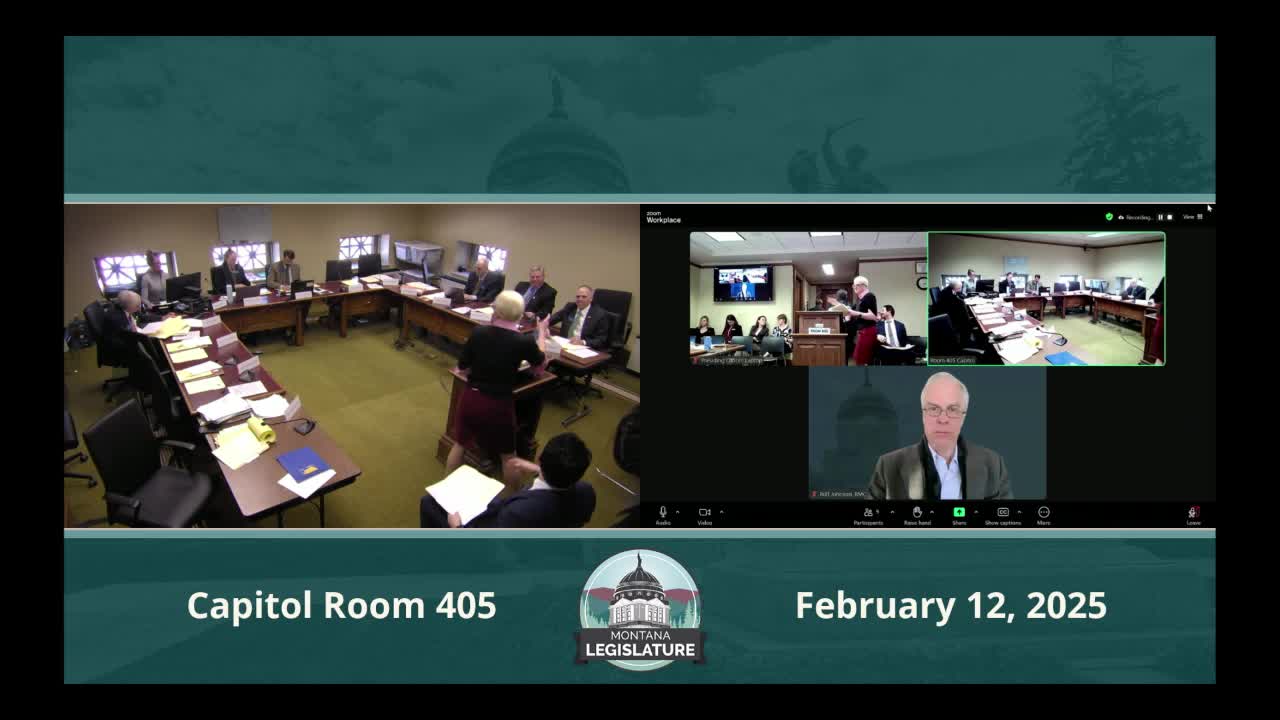
Committee hears bill to allow up to six stories by right in commercial zones of qualifying Montana cities
Summary
Senator Ellie Boldman said Senate Bill 243 would require that in qualifying cities commercial zones must allow multifamily and mixed‑use buildings up to six stories by right.
Senator Ellie Boldman, sponsor of Senate Bill 243, said the measure builds on prior legislative housing efforts and would require that in cities meeting the bill’s criteria commercial zones must allow multifamily and mixed‑use buildings up to six stories by right. Boldman described the change as consistent with recommendations from the governor’s housing task force to “relax height restrictions in Montana cities meeting the same criteria” to expand walkable housing options.
Proponents argued the change would unlock infill housing, reduce per‑unit land cost and limit sprawl. Jake Brown of Shelter Whitefish told the committee SB 243 “specifically addresses … restrictive height restrictions that local jurisdictions might impose, for multifamily homes and mixed use developments, allowing for buildings in those zones to be built up to 6 stories by right.” Supporters included housing advocates, developers and property‑rights groups; Samuel Hooper of the Institute for Justice framed the bill as advancing property‑rights and supply‑side solutions.
Opponents — including municipal associations, planners and several cities — urged the committee to consider ongoing local implementation of the Montana Land Use and Planning Act (MALOOPA). Kelly Lynch, executive director of the Montana League of Cities and Towns, said many communities are already implementing MALOOPA requirements and that “piecemealing the statute with new requirements this far into the process is gonna lead for delays in implementing that statute and we’re gonna waste taxpayer funds.” Lynch said local governments need the flexibility to tailor zoning reforms to local contexts and to finish the public processes already underway.
City officials and planners raised concerns about local service capacity and local criteria for zoning. Chris Saunders, speaking for the City of Bozeman, said the city has issued thousands of permits and allows six‑story buildings in carefully chosen districts but that “the proposed bill does not address any of those criteria” cities typically evaluate when zoning amendments are considered. Anna Vickers of the Montana Association of Planners said the bill imposes a “one‑size‑fits‑all approach” and asked senators to vote “do not pass.”
Supporters emphasized the bill’s narrow scope and the sponsor said the objective is predictability to attract investment and encourage development in established commercial cores. The bill sets a population threshold (the committee heard the bill applies in cities at or above the population threshold specified in the statute; speakers cited 5,000 as the working threshold) and applies to mixed‑use and multifamily development in commercial zones.
Committee members posed questions about local infrastructure, parking, compliance with MALOOPA deadlines and whether the change would force communities to redo planning work. Supporters said projects still must satisfy existing utility and will‑serve requirements; opponents said the bill could upend cities close to compliance. The committee closed the public hearing on SB 243 without taking a vote.
Why it matters: SB 243 would limit local zoning discretion in qualifying cities by requiring six‑story allowance in specified commercial zones. Supporters say the change increases housing supply and certainty for developers; opponents cite local planning prerogatives, infrastructure capacity and pending MALOOPA implementation as reasons to reject or amend the bill.