Get Full Government Meeting Transcripts, Videos, & Alerts Forever!
Get email alerts on the Single Stair Construction topic
No spam. Unsubscribe anytime.
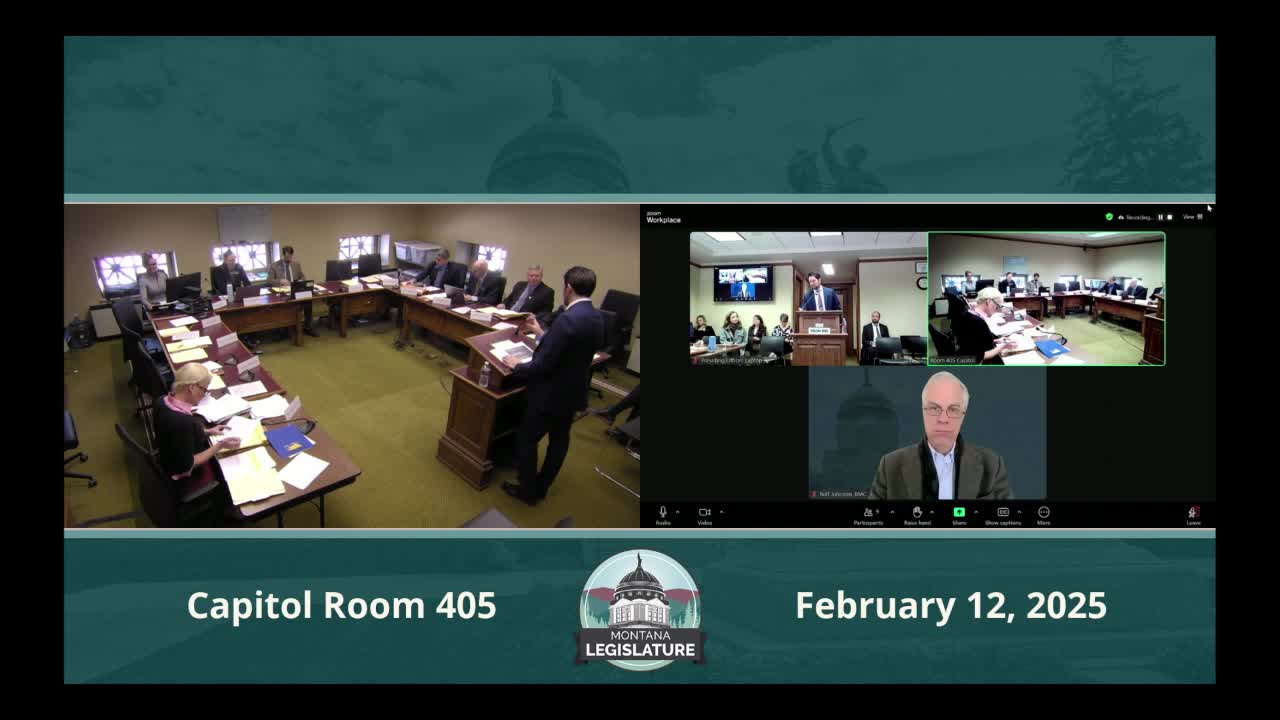
Senate hearing considers single‑stair option to lower multifamily construction costs
Summary
A Montana Senate committee heard testimony for Senate Bill 213 to allow controlled single‑stair configurations in certain multifamily buildings as a cost‑saving measure, with proponents citing affordability gains and opponents — primarily fire officials — warning of life‑safety risks at greater heights.
Senator Daniel Zolnikov, sponsor of Senate Bill 213, told the Senate Local Government Committee he is proposing a change to allow “a single stair construction, instead of requiring dual” stairwells in specified residential buildings. The bill, Zolnikov said, would permit single‑stair designs under controlled conditions while relying on safety measures such as sprinkler systems and emergency exit provisions.
The bill’s backers told the committee that allowing single stairs could lower building costs and expand development of housing. Jake Brown of Shelter Whitefish said the change “provides some more flexibility for residential building design while maintaining key safety standards through requirements like sprinkler systems.” Brown and other proponents argued the design can improve unit layouts, lower per‑unit land cost and increase housing supply without sacrificing safety.
The sponsor and supporters offered figures to illustrate potential savings. Zolnikov described an example of a six‑story apartment building in which two staircases cost “roughly $3,000,000,” while a one‑stair configuration would cost “2.6 to 2.8 million,” producing a savings the sponsor estimated at “about a hundred 80, 3 hundred 90 thousand dollars.” Proponents said those savings can make projects more financially feasible and help hold down rents.
Opponents included municipal fire officials who urged caution. Dax Frazer, fire marshal for the City of Missoula, told the committee that escape windows and ground‑ladder rescues are generally limited to lower levels: “Escape windows are meant for rescues from fire department with ground ladders. So they’re recommended, up to the 3 story level.” Frazer said that at greater heights aerial operations are limited and that “that’s the reason for the second exit.”
Mike McIntosh, assistant chief of prevention for Great Falls Fire Rescue, said his agency also opposes the bill as drafted. McIntosh noted the addition of sprinklers is positive but said an effort to add similar language to the International Building Code drew unanimous opposition from that code committee: “the committee voted unanimously to not apply that language into the international building code,” he testified, adding concerns that single egress could create a pinch point during evacuations.
Eric Copeland, Bureau Chief for Building Codes and Commercial Measurements at the Department of Labor and Industry, appeared as an informational witness and explained the state’s code adoption process. Copeland said Montana adopts nationally recognized model codes but must reconcile them with state law and that the Department balances cost‑of‑construction considerations with “reasonable health and safety.”
The hearing drew architects, housing advocates, chambers of commerce and a civil‑liberties law firm in support. Samuel Hooper of the Institute for Justice said the reform would “unlock” housing by permitting more efficient footprints and noted similar single‑stair types exist in older Montana buildings and in other U.S. cities.
The committee took testimony and questions but did not take a vote at the hearing; the chair closed the hearing on SB 213 after testimony concluded.
Why it matters: Proponents argue the bill is a narrowly tailored change intended to reduce development costs and expand housing supply in Montana’s communities. Opponents — chiefly fire officials — say the safety implications at greater height have not been resolved and flag conflict with forthcoming International Building Code language.
Votes at the hearing: none — the committee conducted a public hearing and closed testimony.