Get Full Government Meeting Transcripts, Videos, & Alerts Forever!
Get email alerts on the Aggravated Vehicular Homicide Hb267 topic
No spam. Unsubscribe anytime.
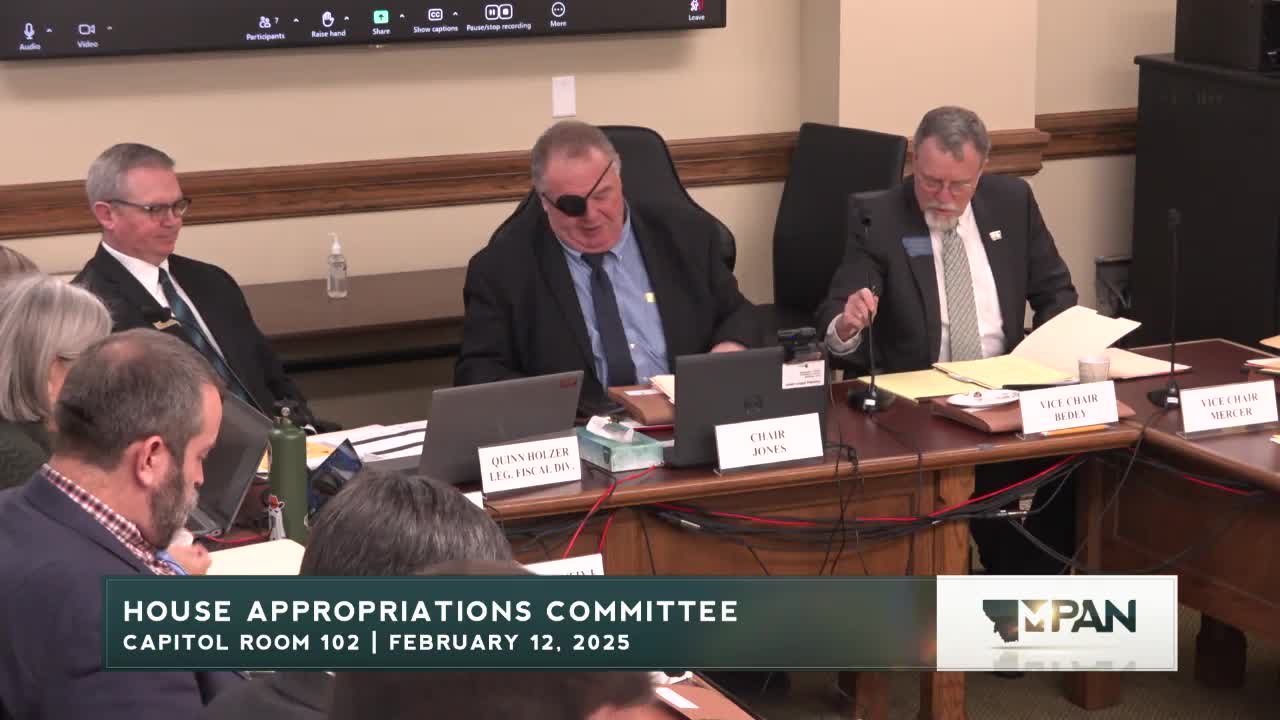
Committee hears bill to create aggravated vehicular homicide for very-high-BAC drivers (HB 267)
Summary
The House Appropriations Committee heard testimony on House Bill 267, a proposal to create an aggravated vehicular homicide offense for drivers with a blood alcohol concentration of 0.16 or higher who cause a death, which sponsor Representative Braxton Mitchell said would carry a mandatory minimum three-year prison term and penalties up to about 30 years.
The House Appropriations Committee heard testimony on House Bill 267, a proposal to create an aggravated vehicular homicide offense for drivers with a blood alcohol concentration of 0.16 or higher who cause a death, which sponsor Representative Braxton Mitchell said would carry a mandatory minimum three-year prison term and penalties up to about 30 years.
The bill’s fiscal note estimates a first-year general fund impact of about $134,000 — an estimate the sponsor and proponents said corresponds to roughly four additional incarcerations in fiscal 2026. Supporters told the committee they view the measure primarily as both a step toward stronger penalties for repeat or highly intoxicated drivers and a potential deterrent.
Representative Braxton Mitchell, sponsor (House District 5), told the committee, “This bill creates a aggravated vehicular homicide statute, meaning that anybody, in the 0.16 or higher, which is double the legal limit, if they kill somebody, while in the aggravated state that they, would, face a mandatory 3 year minimum, imprisonment and upwards of 30 years.” Mitchell said Montana’s DUI laws are “very lax” compared with other states and urged passage.
Brian Thompson of the Montana County Attorneys Association said the association worked with Mitchell on technical amendments and supports the bill. Thompson noted limits in what the Department of Corrections (DOC) can show on a fiscal note: “I don't think that the department in this fiscal note is proposing that they will, create any new bed space or hire any new people because of this bill. And I think that's just a limitation of what DOC can calculate.”
Grace Berner of the Association of Montana Troopers also urged a due pass, saying, “There is a cost to incarceration, and we think that this is a good bill. This is a fair fiscal note, and we urge a due pass on HB 267.”
A victim’s family member, Beth McBride, described statewide DUI fatality data and the costs to families. She told the committee that Montana Highway Patrol statistics show 118 DUI fatalities in 2023 and that 72% of DUI fatalities involved BAC levels of 0.16 or higher, which she said meant roughly 84 people that year. Using the figures she cited, McBride calculated potential state victims’ compensation payouts of roughly $840,000 in burial benefits (84 victims × $10,000) and about $1,260,000 for one year of family mental-health benefits (84 families × $15,000), for a combined estimate near $2.10 million based on those assumptions; she urged the committee to consider such costs alongside incarceration expenses.
Natalie Smitham, chief financial officer for the Department of Corrections, was present as an informational witness to answer fiscal questions. In response to a question about why the fiscal estimate flattens in later years, Smitham confirmed the department assumed that a three-year mandatory minimum imposed in fiscal 2026 would mean those sentences had run by fiscal 2029 in its projection.
Tammy Hinderman of the Office of the Public Defender appeared as an informational witness and offered to answer questions about operational effects and agency costs.
Committee members asked whether the bill could be used as a deterrent and whether outreach or appropriation for public education would be appropriate; the sponsor said he supports deterrence but did not propose adding outreach funding to this bill. Several members thanked the victim witness for speaking and discussed whether a separate appropriation for public-education efforts might be considered.
The hearing closed without a committee vote; the chair moved on to the next bill on the agenda.
Ending: The committee closed the hearing on HB 267 and opened the next hearing on House Bill 155.