Get Full Government Meeting Transcripts, Videos, & Alerts Forever!
Get email alerts on the Ballot Initiative Transparency topic
No spam. Unsubscribe anytime.
Lawmakers debate requiring legislative positions on citizen initiatives on ballots
Summary
A bill from Rep. Lucas Schubert would put a partisan breakdown of legislators’ support or opposition to citizen initiatives on the voter information pamphlet and ballot; proponents said it would increase transparency, opponents called it partisan and unnecessary.
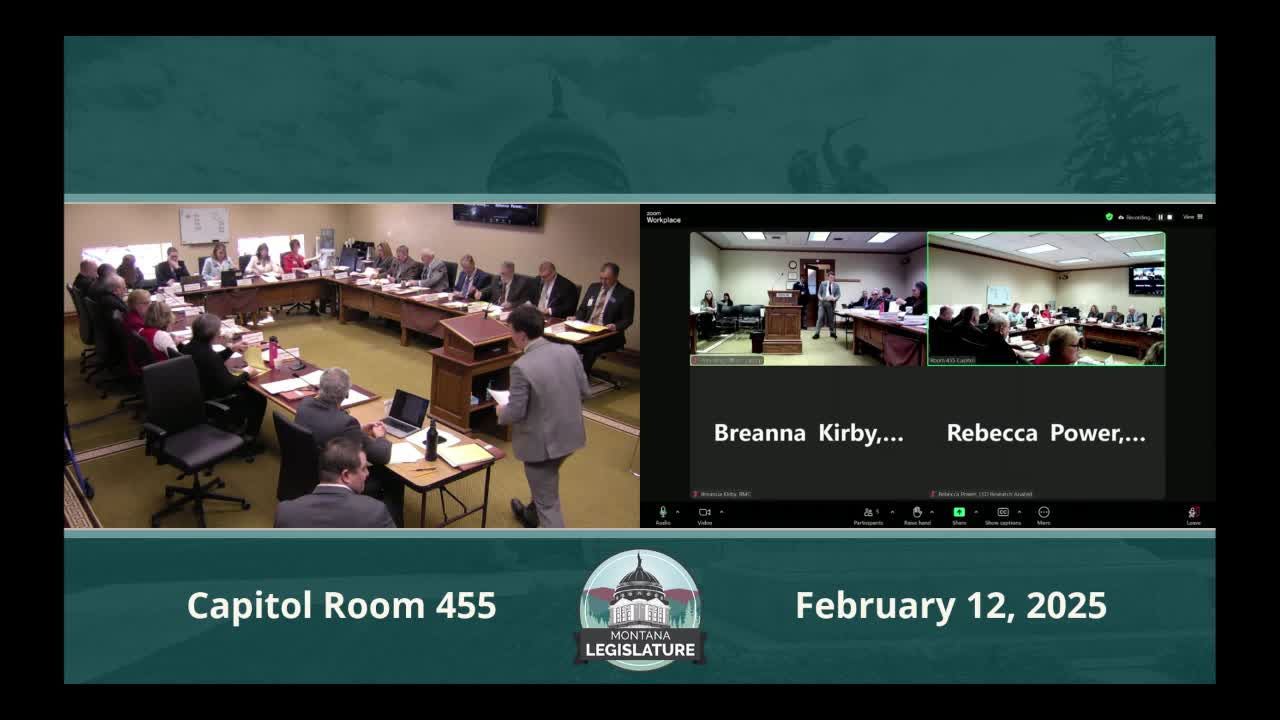
Representative Lucas Schubert, sponsor of House Bill 375, told the House State Administration Committee the bill would require the secretary of state to poll legislators after counties verify signatures and then publish the results—broken down by partisan affiliation—on the voter information pamphlet and ballot.
Schubert said the measure would add transparency to an “opaque” initiative process and let citizens see where legislators stand. “This bill is needed to increase transparency in the ballot initiative process,” Schubert said, noting that recent initiatives were heavily funded by outside groups.
The bill drew support from Austin James of the secretary of state’s office, who said voters had previously found legislative polling information useful and that the voter pamphlet is an appropriate place for the legislature’s opinion. “When the court removed that process … the court was very precise and said that it wasn’t the information itself,” James said, describing prior litigation over initiative procedures.
Opponents urged the committee to reject HB 375. Heather O’Loughlin, executive director of the Montana Budget and Policy Center, said the voter pamphlet already provides substantive statements from proponents and opponents and expressed concern that adding a legislative poll could impede the petition process and provide little substantive information. The Fort Belknap Indian Community argued the bill would inject partisan politics into the initiative process and urged a do-not-pass recommendation. John Marshall and other public commenters said initiatives exist to allow citizens to act outside partisan channels and that legislative statements could discourage direct democracy.
Committee members questioned details of the bill and the practical effects. Representative Cochran asked which amendment would be considered the final draft; Schubert identified 375.1.1 as the working amendment, which removes an option for legislators to decline to take a position and adds language for tie votes. Members asked whether electronic polling was excluded at the secretary of state’s request; James explained the state uses a secure, numbered-ballot system for similar legislative polls and favored excluding unsecured email delivery.
Members also asked about cost and timing. James estimated the polling process “costs a couple of thousand dollars” depending on workload and said the polling would run concurrently with counties’ signature verification so it would not delay the overall initiative timeline. Representatives raised constitutional and policy concerns about the legislature’s role in the initiative process and whether publication of partisan breakdowns would change voter behavior; Schubert said the proposal would only provide information and not bind voters.
No committee vote on HB 375 was recorded in the hearing transcript. The hearing record contains proponents’ and opponents’ statements, questions from members and commitments from the secretary of state’s office to provide additional cost details if requested.
The committee also reviewed two sponsor amendments described publicly: one (375.1.1) removing the “no position” option and adding tie-language, and another (375.1.3) to require non-electronic delivery and extend the response window from 20 to 25 days. Schubert said he was “agnostic” about removing the no-position option but favored including the tie-language. Ending with a call for questions, the sponsor stood open for further committee consideration.
Looking ahead, committee members asked for additional fiscal details from the secretary of state and clarification about the polling return rate and how low response rates would be reported on the ballot. The hearing closed without a recorded committee action on the bill.