Get Full Government Meeting Transcripts, Videos, & Alerts Forever!
Get email alerts on the Judiciary Legislation topic
No spam. Unsubscribe anytime.
House Judiciary Committee advances multiple bills to the floor; one bill held for sponsor consultation
Summary
The House Judiciary Committee on Feb. 14 moved a package of bills to the House floor — including bills on evidentiary rules, trust compensation, and a bill renamed the Carlton R. Smith Act — and took one bill off the agenda for further discussion with its sponsor.
The House Judiciary Committee met Feb. 14 and voted to move several bills to the House floor, approved a block of withdrawn bills as unfavorable, and held one bill for further consultation with its sponsor.
The committee took voting list No. 2 — bills that sponsors had withdrawn earlier this year — as a consent calendar and voted to record them as unfavorable withdrawn. After that procedural vote the panel considered individual bills scheduled for favorable reports to the full House.
Several bills received favorable motions and were approved to proceed to the floor. House Bill 22 (sponsor: Delegate Valentine) received a favorable report and will be carried to the floor by Delegate Valentine. House Bill 27 (sponsor: Delegate Carden) also received a favorable report. The committee approved an amendment to House Bill 39 that names the measure the "Carlton R Smith Act" and then adopted the bill as amended. House Bill 241 (sponsor: Delegate Simpson) was described in committee as an enabling measure that would allow a spouse who is a crime victim to introduce texts and similar communications as admissible evidence; committee discussion characterized the bill as permissive rather than mandatory. Several other bills — including House Bill 243, House Bill 323, House Bill 380, and House Bill 388 — received favorable motions and were advanced to the floor. The committee paused consideration of House Bill 109 to allow the chair to consult with Delegate Conway before acting on that item.
Why it matters: the committee’s favorable reports put these measures on track for debate and potential final votes by the full House. The committee advanced a mix of relatively technical judiciary changes (for example, evidence-admissibility language and criminal-penalty adjustments), statutory cleanup and naming, and other items that were on the docket for the upcoming floor session.
What members said and key discussion points
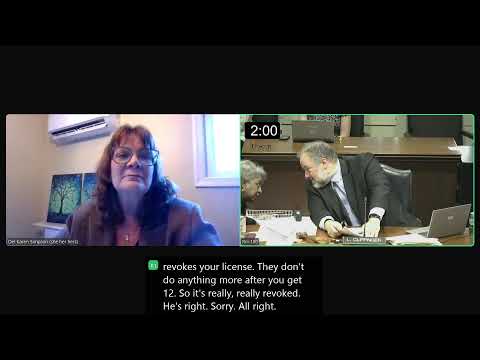
- House Bill 241 (Delegate Simpson): Committee members described the bill as an enabling measure that "allows" a spouse to use texts and other communications as admissible evidence in certain prosecutions; it was repeatedly framed by members as permissive rather than a mandatory evidentiary change. One member summarized: "It allows them to use, like, texts and other things, that would be admissible in court." The bill’s sponsor was not present in the room and participated remotely.
- House Bill 27 (Delegate Carden): Members asked procedural and substantive questions about how the bill changes current statutory language (questions about trustee compensation calculations were raised in committee discussion); the sponsor and members described the amendment as intended to allow fairer trustee compensation where workload varies.
- House Bill 39 (naming amendment): Committee members discussed the naming amendment and whether the bill text should include a sentence explaining who Carlton R. Smith was. A committee member noted that Smith "was a person in the LGBT community in Baltimore City, who is African American and known in that community as an activist on HIV and many other issues." The committee voted to adopt the naming amendment and then voted the bill as amended.
- House Bill 109: The chair said they would "hold on to House Bill 109" and consult with Delegate Conway before the committee acted further.
- Procedure: At the start of the session the committee chair explained the two voting lists: voting list No. 1 contained bills the committee planned to move to the floor; voting list No. 2 contained bills sponsors had withdrawn and those bills were taken as a block and recorded unfavorable withdrawn.
Votes at a glance
- Voting list No. 2 (withdrawn bills): taken as a consent calendar and recorded as "unfavorable withdrawn." (Outcome: unfavorable withdrawn; vote recorded by voice/consent.) - House Bill 22 (Delegate Valentine): Favorable motion adopted; advanced to floor. (Outcome: approved by committee.) - House Bill 27 (Delegate Carden): Favorable motion adopted; advanced to floor. (Outcome: approved by committee.) - House Bill 39 (as amended) — "Carlton R Smith Act": Amendment adopted; bill as amended adopted; advanced to floor. (Outcome: approved by committee as amended.) - House Bill 109: Held for consultation with Delegate Conway; no committee action taken at this meeting. (Outcome: held.) - House Bill 241 (Delegate Simpson): Favorable motion adopted; advanced to floor. Committee described it as an enabling provision allowing certain communications to be admissible. (Outcome: approved by committee.) - House Bill 243 (vice chair/other sponsor): Favorable motion adopted; advanced to floor. (Outcome: approved by committee.) - House Bill 323 (Delegate Forbes): Favorable motion adopted; advanced to floor. (Outcome: approved by committee.) - House Bill 380 (questionable sponsor noted in discussion): Favorable motion adopted; advanced to floor. (Outcome: approved by committee.) - House Bill 388: Favorable motion adopted; advanced to floor. (Outcome: approved by committee.)
Details and clarifications from the hearing
- Remote voting: The committee acknowledged and permitted one member (Delegate Simpson) to participate and vote remotely for health reasons, with the proviso that remote members remain on camera while voting.
- Sponsor absence and floor carry: Several bills had sponsors absent; the committee recorded that, if a sponsor is absent from the committee, another member (for example, the vice chair or an identified delegate) will carry the bill on the House floor.
- Evidence vs. mandate: Committee discussion about House Bill 241 emphasized repeatedly that the bill "allows" the use of certain communications as evidence rather than "requires" it; members framed the change as enabling prosecutors or victims, not as imposing a procedural mandate.
Ending: The chair closed the session by reminding members that the committee would reconvene on Tuesday with a long docket. Several members exchanged brief personal notes (birthdays and family events) before adjournment.