Get Full Government Meeting Transcripts, Videos, & Alerts Forever!
Get email alerts on the Environment Mepa topic
No spam. Unsubscribe anytime.
House approves overhaul of Montana Environmental Policy Act after extended floor debate
Summary
The House passed House Bill 285, a broad rewrite of the Montana Environmental Policy Act (MEPA), after a contentious floor debate that split lawmakers over whether the bill would streamline permitting or weaken environmental protections.
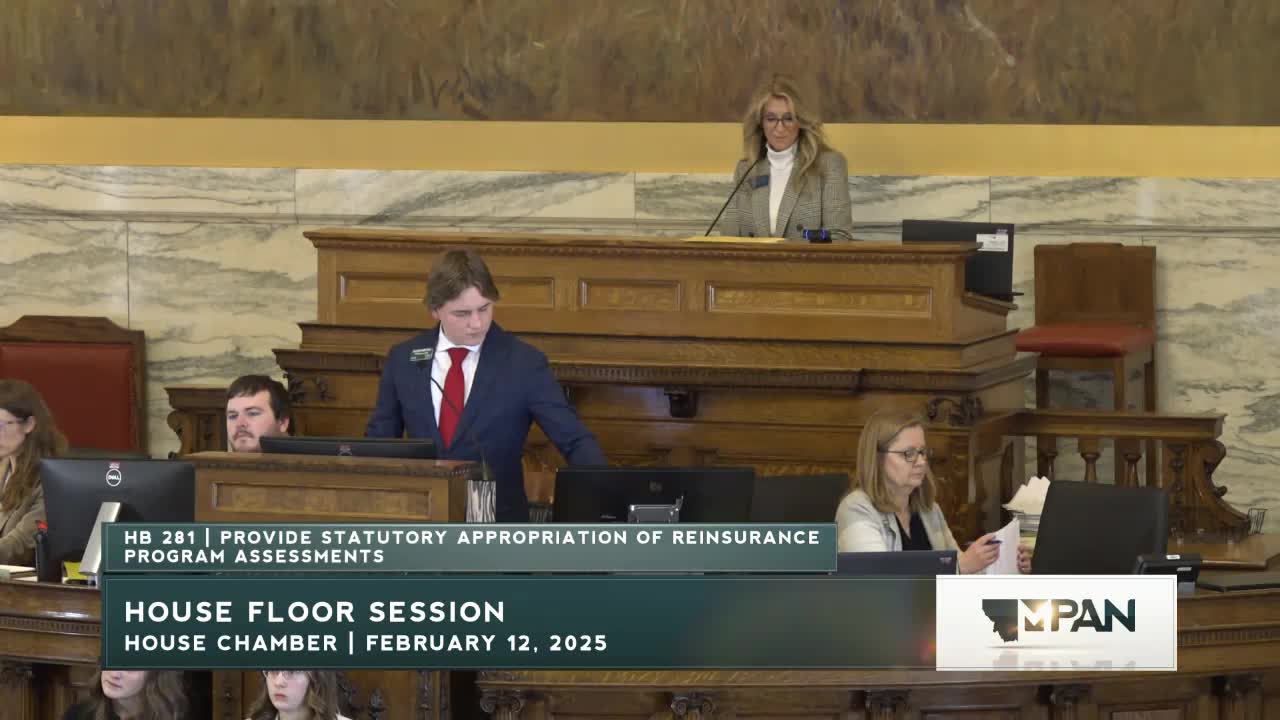
House Speaker W. Perry Lear introduced House Bill 285 on the House floor, saying the measure "takes a bold step towards restoring clarity, efficiency, and purpose to the Montana Environmental Policy Act" and that it "streamlines the MEPA process" to reduce what he called unnecessary red tape.
The bill drew prolonged debate. Representative Zachary Marler said he would vote no, arguing HB 285 "tries to take out the conflict by taking out half of the conversation" and that the bill "does weaken environmental protections." Representative Chris Carlin, who served on the DEQ-convened MEPA working group, said the bill "did not come out of that working group" as a consensus product and cautioned that the bill "seems to be backed by industry" rather than representing all stakeholders.
Supporters said the bill is a product of stakeholder work and would make MEPA more procedural and predictable. Representative Lear said it is designed to make MEPA more procedural “and not so regulatory,” and to give agencies a clearer process to follow. Representative Gist, who said he also served on the working group, urged colleagues to vote green, calling the bill a way to make the process consistent and to protect air and water.
Opponents raised concerns about cultural and long-term environmental impacts. Representative J. Feyant, speaking for the Native Caucus, said the caucus opposed the bill because of potential harm to hunting sites, water resources and cultural resources, and warned that MEPA "is the primary way that the state considers impacts to historic and cultural resources" when projects are proposed.
After floor debate the House voted 58 in favor and 42 opposed on second reading; the clerk recorded that "House Bill 285 has passed second reading." No amendments adopted during the floor debate changed the bill's core approach.
Why it matters: HB 285 alters how state agencies analyze and disclose environmental impacts during permitting. Supporters argue the change reduces duplicative procedures; opponents say it removes substantive protections the public relies on to evaluate long-term environmental and cultural consequences of projects.
The bill will next proceed through the legislative process as a matter of record and further committee and chamber consideration.