Get Full Government Meeting Transcripts, Videos, & Alerts Forever!
Get email alerts on the Youth Substance Use Treatment topic
No spam. Unsubscribe anytime.
Bill would let Department of Juvenile Services fund longer residential substance-use treatment for youth in custody
Summary
House Bill 522 would allow the Department of Juvenile Services to provide funding for up to a year of residential substance-use treatment for youth in DJS custody, and require an ongoing review of youth rehabilitation needs; sponsor and a bereaved mother urged passage to fill gaps in youth treatment capacity and continuity of care.
Delegate C. Tavares (Del. Tavares presented; transcript identifies sponsor as Delegate Tavares) asked the Judiciary Committee for a favorable report on House Bill 522, which would authorize the Department of Juvenile Services to fund residential substance-use treatment for youth in its custody for up to one year and require the Commission on Juvenile Justice Reform and Emerging Best Practices to review evolving treatment needs.
The sponsor said the bill is part of a package addressing youth fentanyl and opioid use and is intended to provide a continuum of care—not just short detox—so young people in DJS custody who need longer-term treatment can access it, including out-of-state placements when in-state capacity is lacking.
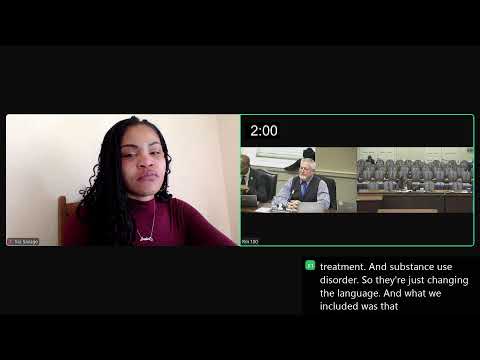
Kia Savage, a parent who lost a daughter to a fentanyl overdose, testified about difficulties finding timely adolescent treatment, long waits for openings, insurance and transportation barriers, and the emotional consequences when appointments are missed or care is delayed. She and the sponsor said many adolescents lack local inpatient options and that timely, clinically appropriate placements can be lifesaving.
Committee members asked about definitions of “substance-use treatment” and whether the bill requires DJS to provide funding; the sponsor said the text and amendments use the term “substance use treatment” and that the commission will study needs and outcomes. The committee did not reach a vote; proponents asked for a favorable report and flagged the need for follow-up on implementation and bed availability.