Get Full Government Meeting Transcripts, Videos, & Alerts Forever!
Get email alerts on the Prescribed Fire Certification Liability topic
No spam. Unsubscribe anytime.
Bill would certify prescribed-burn managers, limit liability for certified burners after claims-fund study
Summary
House Bill 84 would require the DNRC to certify private burners and create a prescribed-fire training program, and it would change liability exposure for certified burners if escapes are not caused by negligence.
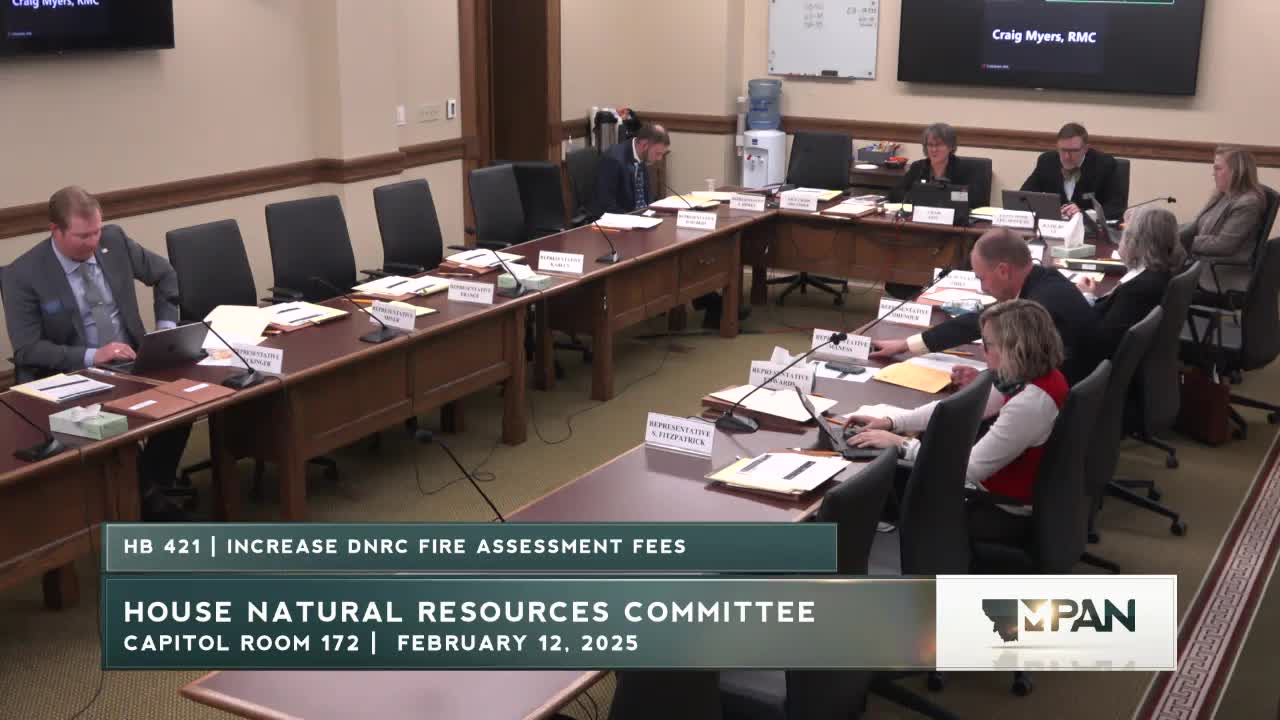
HELENA — House Bill 84, sponsored by Rep. Steve Gist, would direct the Department of Natural Resources and Conservation (DNRC) to develop a certification program for private landowners and contractors who use prescribed fire, and it would change civil exposure for certified burners under a negligence standard. The committee adopted an amendment that delays liability protections until a claims-fund study and appropriation steps occur.
Rep. Steve Gist (R- District 25), the bill sponsor, told the House Natural Resources Committee HB84 “takes a crucial step in increasing the safety effectiveness of prescribed fire on private land” by requiring DNRC to establish rules and administer a prescribed-fire training program for “forestry and fire contractors.” The bill’s stated goals are to expand safe, trained use of prescribed fire as a fuel-reduction and forest-health tool and to complement mechanical treatments such as thinning and logging.
Wyatt Frampton, deputy division administrator for DNRC’s Forestry and Trust Lands Division, described three components the bill and the amendment address: (1) a DNRC-run certification and training program, (2) a negligence-based liability standard for certified burners (the bill would not protect negligent conduct), and (3) a requirement that DNRC study a claims fund and return to the legislature for funding before implementing liability protections.
“Under the current strict liability standards that exist in the state, burners are responsible if you light a match,” Frampton said, summarizing the department’s explanation of why liability concerns deter landowners from using prescribed fire. He added the bill would not provide legal protection to negligent burners: certified burn managers would be protected from liability for escaped prescribed fires only if the escape did not result from negligence.
A broad coalition of conservation groups, recreational stakeholders and private landowners testified in favor. Jonathan Wood of the Property and Environment Research Center said the bill “addresses two of the key barriers keeping more landowners from using this tool: a lack of training and a fear of liability.” The Nature Conservancy, Montana Trout Unlimited, Wild Montana and multiple ranchers and private landowners also testified in support, highlighting timber- and rangeland examples where trained prescribed fire restored desired ecological balance and reduced fuel loads.
Opponents included representatives of some forest-owner interests and individual landowners who warned against reducing liability exposure for burners. Pat McKelvey of the Montana Forest Owners Association said the association opposed the bill as written because limiting liability could leave adjacent landowners responsible for damage from escaped fires. Paul McKenzie, who also spoke in opposition, said strict liability exists for a reason and stressed unpredictable fire behavior and prior experiences where escaped burns caused damage and suppression costs.
Committee members asked DNRC and stakeholders detailed questions about program design, seasons, permitting, insurance, and how DNRC would backstop escaped burns. Frampton said the program would require burners to have burn plans, permits and on-site resources, and DNRC expects burners to coordinate with local authorities; DNRC would not be the first responder, he said, but could be a backup if needed. The amendment adopted by the committee (HB0084.001.001) added rulemaking authority, established an account for a future claims fund, required a study of that fund, and delayed the activation of liability protections until the claims fund and appropriation process are complete.
During executive action, the committee voted to adopt the amendment by voice vote; proxies recorded in the hearing transcript were read as “yes” by proxy for several members. Committee leaders said a revised fiscal note will be required after the amendment and agreed to take final executive action once that note is available.
Ending: With the amendment adopted, the sponsor said the amendment allows DNRC to begin program development while stakeholders continue work on funding, insurance and implementation details; the committee deferred final committee passage pending fiscal analysis.