Get Full Government Meeting Transcripts, Videos, & Alerts Forever!
Get email alerts on the Fire Protection Assessments topic
No spam. Unsubscribe anytime.
DNRC seeks higher parcel and per-acre caps for Fire Protection Assessments
Summary
The Department of Natural Resources and Conservation told the House Natural Resources Committee a statutory rate cap on Fire Protection Assessments has been reached and proposed raising the maximum parcel and per-acre caps so assessments can continue to cover one-third of DNRC's fire program budget.
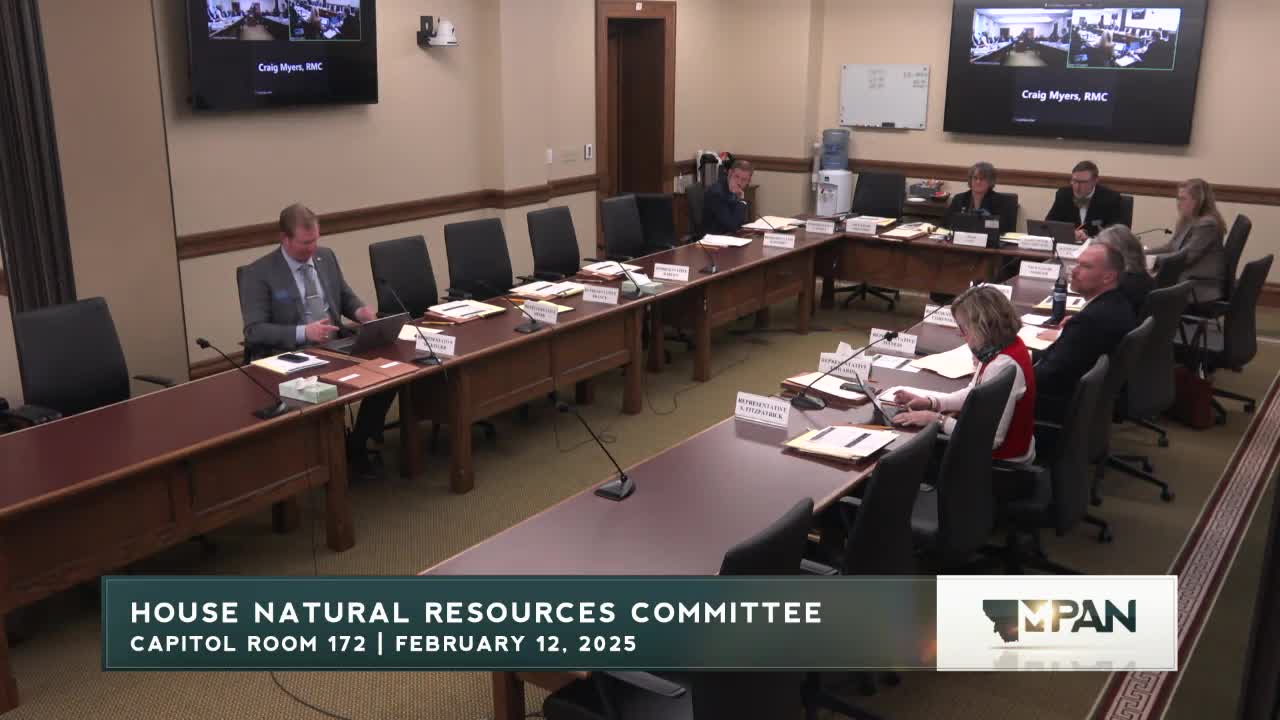
MADISON/HELENA — The Department of Natural Resources and Conservation (DNRC) urged the House Natural Resources Committee to support higher statutory caps on Fire Protection Assessments to close a funding gap for state wildfire protection services.
Matt Hall, Fire Protection Bureau Chief for DNRC's Forestry and Trust Lands Division, told the committee DNRC is responsible for wildland fire protection across about 60,000,000 acres in Montana and that the department relies on a mix of general fund appropriations and assessments to fund its fire protection program. “The legislature provides two thirds of that budget with general funds, and then requires the department to generate the revenue to cover the remaining one third of those funds,” Hall said.
Hall said the statutory caps on Fire Protection Assessments (FPA) were last adjusted in February 2015 and the current caps have been reached, leaving assessments unable to generate enough revenue to match the portion of the program budget the department is required to produce. Under current statute Hall described, the assessment is capped at $50 per parcel and an additional $0.30 per acre for parcels over 20 acres. The bill the department sponsors would increase the maximum allowable rate to $58.70 per parcel and $0.49 per acre over 20 acres; DNRC’s working estimate for next year is an assessed rate of about $52.80 per parcel and $0.43 per acre for parcels over 20 acres.
The department said the proposal is intended to allow assessment revenue to grow gradually along with legislative appropriations so DNRC can “establish, train, and equip” wildfire response and maintain an aggressive initial attack posture intended to keep fires small. “We gotta be able to be ready, be fast, be agile, and attack them quick, keep them small,” Hall told the committee.
Industry representatives who manage or represent large tracts of timber and ranchland largely supported the increase while noting the burden shifts as private timber acreage shrinks. Julia Altimus, testifying for the Montana Wood Products Association, said roughly 850,000 acres of industrial timberland represented by her members are within the assessment system; she noted the cap increase would raise revenue collected from those lands from about $255,000 under current law to an estimated $416,500 at the higher cap. Paul McKenzie, vice president and general manager of F.H. Stultz Land and Lumber Company, said his company supports the training and suppression funding the department provides and would back the assessment adjustments.
Some landowner groups opposed the bill’s approach. Wyatt Lesh of the Montana Stock Road Association asked that owners subject to the fee be allowed to vote on the increase. Committee members also asked staff and the DNRC about details: how forested land is classified, which lands the assessment covers, and whether landowners have ever had an opportunity to vote on FPAs. Hall replied the assessment process and the district/land classification are described in statute and that the statute has authorized the assessment process for many years.
A committee member referenced the department’s fiscal note and commodity costs such as protective clothing and fire shelters to explain rising program costs; a fiscal figure discussed in the hearing put the assessment-derived portion at roughly $450,000 for several future budget years, though Hall characterized the department's estimate conservatively and said it did not intend to automatically set the assessment at the new statutory maximum.
The hearing closed without a recorded committee vote on the bill. The DNRC and timber- and ranch-industry witnesses said they would continue to work with the committee as the bill moves through the session.
Ending: The committee closed the hearing on the bill and moved on to the next bill on the agenda. No committee action (motion or recorded vote) on the FPA rate-change bill was recorded in the transcript excerpts provided.