Get Full Government Meeting Transcripts, Videos, & Alerts Forever!
Get email alerts on the Consumer Protection topic
No spam. Unsubscribe anytime.
AARP presenter warns Cannon Falls residents about rising scams, flags Bitcoin ATMs and pushes restitution fund
Summary
An AARP fraud-prevention representative told a Cannon Falls audience that phone, text and cryptocurrency ATM scams are increasing, described common “money mule” and romance-investment schemes, and urged support for a proposed Minnesota restitution fund for victims of fraud.
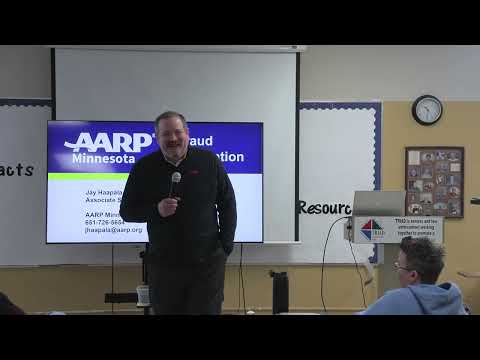
An AARP fraud-prevention representative, identified in the meeting only by affiliation and not by name, told Cannon Falls residents that phone, text and cryptocurrency ATM scams are on the rise and urged local vigilance and mutual support.
“The best resource you have ... is each other,” the AARP representative said, opening a presentation that covered common tactics scammers use, how victims are recruited as money mules, and statewide policy responses now under consideration.
The presenter said AARP’s nationwide fraud call center receives more than 1,000 reports each week and that AARP gives roughly 200 fraud-prevention presentations a year in Minnesota. Common schemes described included government impostor messages (for example, fake IRS texts), work-from-home job postings that turn recruits into unwitting money-transfer operators, romance-investment scams that steer victims to fake trading sites, and recruitment of victims to move drugs and money internationally.
A central local focus of the talk was cryptocurrency ATMs in Cannon Falls. The presenter showed a map of the town and said red dots marked Bitcoin ATM locations, warning residents that scammers often demand cash be converted to cryptocurrency at those machines as a way to move funds that are hard to trace. “Scam victims are being tricked into putting their money in these machines because they think they have to pay their back taxes,” the presenter said.
The speaker summarized the protections enacted by Minnesota law after advocacy that included AARP: victims who realize they were scammed have 14 days to file a police report and notify the cryptocurrency machine operator, and there is a $2,000 transaction limit for new customers. The presenter said the law also requires operators to post warning signs on machines.
The presenter noted a loophole lawmakers are working to close: scammers increasingly ask victims to transfer money into the scammers’ own crypto accounts (rather than the victims creating a new account), and some operators argue those transfers are not covered by the current law. The presenter said legislators are addressing that gap this session.
The talk also covered enforcement limits: the presenter said tracing payments is difficult when funds move overseas, and that many scammers operate from foreign countries. The speaker recounted cases in which victims were recruited to carry drugs abroad and a case where a payment was traced to the Seychelles Islands. The presenter argued that because some payment methods and cryptocurrencies are effectively anonymous, the burden of recovery frequently falls on victims.
As a policy remedy, the presenter outlined a proposed Minnesota restitution fund that would direct some settlement or penalty money the state receives from corporate enforcement actions toward fraud victims’ short-term needs. The presenter said the fund would not make victims whole for large losses but would help people cover immediate needs — for example, groceries or rent — while they recover. “We’re not saying you can send a million dollars to Jamaica and get a million dollars from the state,” the presenter said. “But let’s just help people pay their bills and get back on their feet.”
Audience members asked about who must provide refunds for crypto-ATM losses; the presenter said the kiosk operator is the party responsible under Minnesota law. Residents also asked about “title theft” scams; the presenter said actual title reassignments are rare in Minnesota and recommended checking credit reports and contacting the county recorder or title office for reassurance.
The presenter warned that artificial intelligence makes scam messages and voice impersonations easier and more convincing and recommended practical household measures such as verifying an unexpected request with a known contact and using code words with family members if voice impersonation is suspected.
The presentation closed with a call to community action: seek help from local law enforcement, talk with neighbors and family, report suspicious incidents to local authorities, and consider contacting legislators to support the proposed restitution fund.
Ending: The presenter offered local resources and invited attendees to a related AARP webinar and additional outreach materials; residents asked follow-up questions at the end of the session.