Get Full Government Meeting Transcripts, Videos, & Alerts Forever!
Get email alerts on the Child Welfare Procedure topic
No spam. Unsubscribe anytime.
Bill would let third parties and caregivers offer evidence in abuse and neglect adjudications
Summary
Senate Bill 249 would require Montana courts to hear evidence offered by individuals who have cared for a child in abuse-and-neglect proceedings, removing a statutory gate tied to allegations of abandonment.
Senate Bill 249, introduced Feb. 12 by Sen. Dennis Lance, would revise Montana’s child-abuse-and-neglect adjudication statutes to ensure courts hear evidence from third-party caregivers and others who have provided care for a child when adjudicating abuse or neglect matters. The sponsor said the bill strikes language that currently ties the court’s obligation to hear offered evidence to cases where abandonment is alleged.
Proponents told the committee the change would allow foster parents, grandparents and other caregivers to present evidence about the child’s care, the continuity of caregiving, and parents’ intent when placing the child with another person. Nikki Grossberg of the Department of Children and Family Services told the committee foster parents “have one of the hardest jobs” and currently have limited voice in some proceedings; she said the bill would give judges more information. Kyla Hailstone, representing the Montana Family Court Awareness Project, said the measure creates a narrowly tailored way to receive information about the extent to which a nonparent has cared for a child and how that care shaped permanency planning.
Attorney Joe Rani described a pending example in which a grandmother sought a third-party parenting interest but was unable to intervene in a DN case because statutory language currently narrows intervention to abandonment allegations. He said the bill would restore alignment between Title 41 (child welfare) and Title 40 (family law) so that modern caregiving relationships can be considered in DN proceedings.
Committee members asked how the bill arose and whether constituents had raised the issue; the sponsor said the change responds to constituent concerns and structural limits in the current statute. No opponents appeared in the hearing. The sponsor closed by asking the committee for a due-pass recommendation.
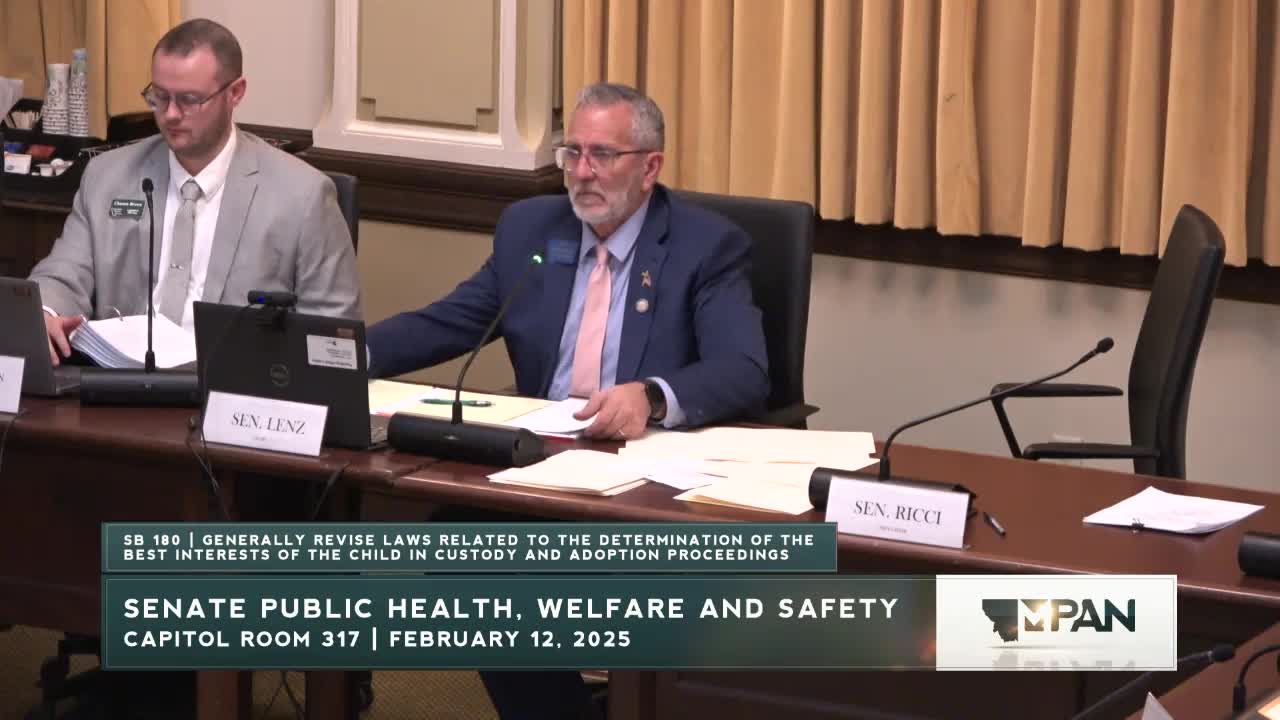
Senate Bill 249 hearing record: proponents included the Division of Child and Family Services, family-law advocates, and a child-protection attorney who described a case example where a third-party caregiver lacked access to DN proceedings under current law.