Get Full Government Meeting Transcripts, Videos, & Alerts Forever!
Get email alerts on the Child Welfare Heritage topic
No spam. Unsubscribe anytime.
Committee hears bill to require courts to consider a child’s heritage, including Indian heritage, in custody and adoption cases
Summary
Senate Bill 180, introduced Feb. 12 by Sen. Susan Weber, would add a child’s culture and ethnicity — specifically including Indian heritage regardless of tribal enrollment or blood quantum — to the factors district courts may consider in custody and adoption proceedings.
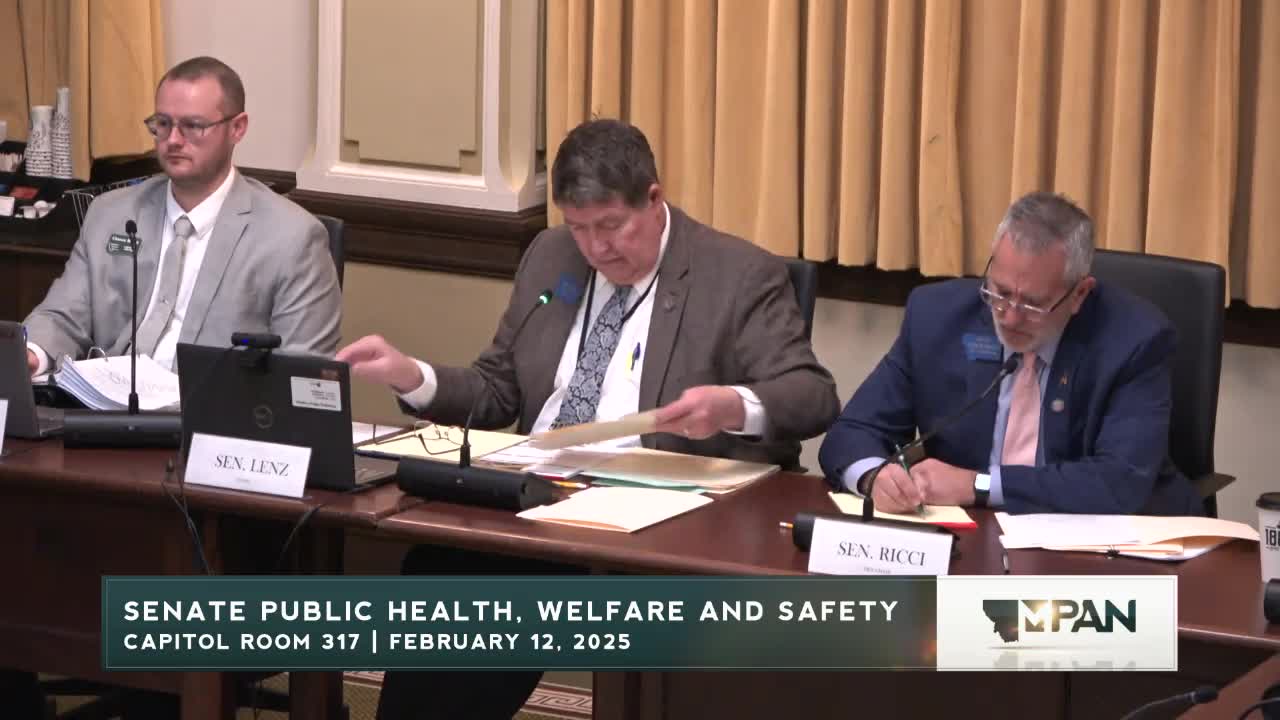
Senate Bill 180, introduced Feb. 12 before the Montana Senate Public Health Committee by Sen. Susan Weber, would add a requirement that district courts consider a child’s culture and ethnicity — including the child’s Indian heritage regardless of tribal enrollment status or blood quantum — when determining the child’s best interest in custody and adoption proceedings.
Supporters told the committee the measure fills a gap between Montana family law and child-welfare statutes and would help descendants of tribal members who are not formally enrolled remain connected to tribal families and communities. Patrick Yawaki, representing the Blackfeet Tribe and other tribal communities, said descendants who are not enrolled can be placed in non-Indian foster or adoptive homes because ICWA and MCWA protections are not applied when enrollment is absent. “Senate bill 180 would provide the adequate language to ensure that these children have the opportunity to stay in their tribal family and community dynamic,” Yawaki said.
The bill would insert the consideration into the list of factors courts already consult under family-law best-interest standards (committee testimony references the statutory listing at 40-4-212). Weber said the change is limited to adding one more discretionary factor and would not override the other 14 factors judges may already consider. “All I’m asking them to do is take into consideration the child’s heritage, should that child be of native heritage,” Weber said.
A range of tribal and child-advocacy groups testified in favor. Lats Fourstar, director of the Montana American Indian Caucus, submitted a letter from the caucus supporting a due-pass recommendation. Representatives from Western Native Voice, the Montana Coalition Against Domestic and Sexual Violence, 0 to 5 Montana, the Montana Family Court Awareness Project, and the Montana Budget and Policy Center also urged passage. Testimony included personal and professional accounts of children who lost cultural ties during foster care or adoption, including a provider who described long experience with Native families and efforts to provide culturally informed supervised parenting time.
Committee members questioned whether the language would apply broadly to all cultural heritages and whether religion should be treated separately from heritage. Weber said she removed language referencing religion in an amendment and stressed the bill is intended to ensure courts may consider cultural and ethnic ties — in particular, Native heritage — when appropriate. Several senators sought confirmation that the provision is discretionary and does not require a court to favor heritage over other factors; senators and the sponsor agreed the statute would add a factor for the judge’s consideration, not a determinative rule.
No opponents appeared at the hearing. The sponsor asked the committee to give the bill a due pass.
Senate Bill 180 hearing record: proponents included tribal representatives, tribal caucus leadership, child-advocacy groups, early-childhood providers, and a provider with direct foster-care experience. The committee engaged in line-by-line statutory questions about geographic and cultural definitions and whether the change would duplicate or conflict with existing state or federal child-welfare law.