Get Full Government Meeting Transcripts, Videos, & Alerts Forever!
Get email alerts on the Boards And Commissions Budget topic
No spam. Unsubscribe anytime.
Boards and commissions budget review spotlights Board of Nursing oversight, proposed fee changes and fund transfers
Summary
DLS and MDH told the subcommittee Feb. 13 that the health professional boards’ fiscal 2026 allowance increases but requires technical correction; the Board of Nursing’s operations transferred to MDH two years ago have produced improvements, and MDH and the board say fee increases are needed to sustain operations.
The Health and Social Services Subcommittee on Feb. 13 reviewed the fiscal 2026 allowance for Maryland’s health professional boards and commissions and discussed fund-balance transfers, ongoing administrative support for the Board of Nursing, vacancy reductions and proposals to adjust licensing fees.
DLS analyst Victoria Martinez said the fiscal 2026 allowance for the boards totals $53.0 million, an increase of $6.2 million (13.4%). The majority of boards are funded with special funds (licensing fees). DLS recommended reducing the allowance by $6.0 million to correct a technical error that had budgeted miscellaneous personnel adjustments that MDH said are not planned.
Board of Nursing oversight and operations: The Board of Nursing’s administrative infrastructure was moved to MDH for a two-year period beginning in fiscal 2024. DLS noted that legislation currently sunsets that arrangement in fiscal 2026 and that MDH introduced a departmental bill to extend MDH oversight for an additional five years. MDH Chief of Staff Erin McClellan and Board of Nursing Executive Director Rhonda Scott told the committee that the partnership improved licensing timeliness, constituent service and staffing. They said the board voted to stay with MDH for an extended period and that fees will need adjustment to ensure long-term self-sustainability.
Investigations backlog and timeliness: DLS presented data showing several boards missed MFR goals for issuing licenses and completing complaint investigations. The Board of Nursing had a low timely-completion rate of 12% in fiscal 2024, which DLS said reflected a large backlog and numerous administrative closures; the board reported about 800 outstanding investigations since fiscal 2020 that it is working to administratively close where appropriate. DLS noted some boards showed marked improvement in timely completions, including pharmacy.
Fund-balance transfers and BRFAA: DLS recommended transfers of special funds from several boards to replace general-fund spending in the Behavioral Health Administration under the BRFAA provision, with adjustments so some boards are not left with negative balances. Witnesses from MDH provided written testimony for boards and said the fee increases included in the DLS analysis are necessary even if MDH’s infrastructure support continues to be funded by general funds.
Licensing systems and fees: DLS included a proposed fee schedule for the Board of Nursing intended to study fee structure and estimated revenue. MDH and the Board of Nursing said they still need fee increases and a phased approach through fiscal 2029 is planned to reach sustainable levels and to support a new licensure system migration.
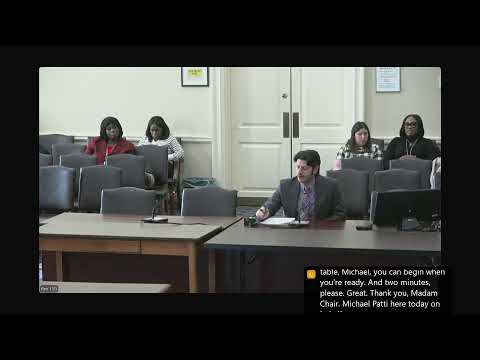
Stakeholder testimony: Michael Patty, representing the Maryland Occupational Therapy Association, urged the committee to avoid transfers that would deplete board fund balances and cited expected IT and implementation costs to join the interstate compact for occupational therapists that have not yet been implemented.
Why it matters: The hearings address regulatory capacity to license and investigate complaints across many health professions and the financing choices (fee increases, fund transfers, or continued general-fund support) that affect licensees and board operations. The Board of Nursing’s operational status is central because it licenses a large workforce and had previously experienced licensing delays.
Next steps: DLS recommended reducing a technical appropriation and asked MDH to comment on fee structures and ongoing support for board infrastructure. MDH concurred with DLS on the technical correction and highlighted improvements while noting additional fee revenue will be needed for long-term sustainability.