Get Full Government Meeting Transcripts, Videos, & Alerts Forever!
Get email alerts on the Community Colleges topic
No spam. Unsubscribe anytime.
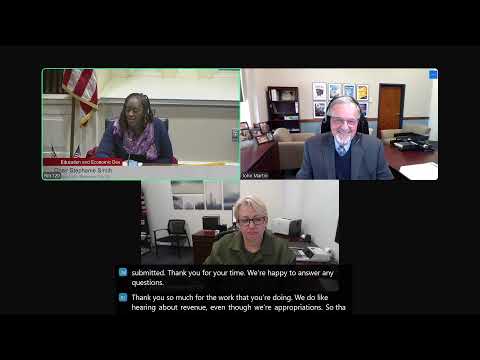
Baltimore City Community College cites enrollment rebound, facility fire and staffing gaps in budget hearing
Summary
College leaders described rising enrollment, accreditation reaffirmation, a life‑science building fire that displaced labs and classrooms, continuing vacancy rates, and plans to expand student supports through the Mayor’s Scholars program; union and faculty representatives raised workplace and contracting concerns.
Baltimore City Community College (BCCC) officials told the Education and Economic Development Subcommittee the institution has seen multi‑term enrollment increases, recent accreditation reaffirmations, and operational setbacks including a major fire in its Life Science Building that took classrooms and labs offline.
Analyst findings and immediate problems
DLS analyst Kelly Norton reviewed enrollment and persistence exhibits and said BCCC’s fall 2024 headcount rose after pandemic declines: total enrollment increased 11.1% year over year and first‑time student population increased 25.5% for fall 2024. DLS noted the college’s fiscal 2026 formula funding would fall below prior levels without the hold‑harmless provision, and that the governor’s proposed BRFAA would set a specific funding floor for BCCC ($44,734,265 for FY26) and potentially reduce the general‑fund appropriation contingent on enactment (transcript blocks starting at 6075.125).
President’s overview: enrollment, accreditation, and a major facility disruption
President Deborah McCurdy said BCCC has made steady enrollment gains across terms, reporting multi‑term percentage increases (e.g., winter and spring growth) and confirmed Middle States accreditation reaffirmation in 2024. McCurdy described a significant fire in the campus Life Science Building that rendered some floors and 37 classrooms unusable, disrupted dental‑hygiene labs and other clinical programs, and will require substantial cleanup and repairs; she said initial cleanup costs approximate $1 million and that affected students will need make‑up lab time.
Retention, Mayor’s Scholars program and funding details
BCCC staff described the Mayor’s Scholars Program (MSP) as a last‑dollar scholarship with higher staff costs because the program historically provided intensive, year‑round supports to participating students. DLS and the college discussed the program’s cohort size fluctuations, second‑year retention improvements for recent cohorts and the institution’s intent to integrate MSP into core admissions, financial‑aid and advising operations rather than maintain a fully separate program structure. DLS requested a report on MSP enrollment and outcomes.
Staffing and contracting concerns raised by labor representatives
The college acknowledged a high vacancy rate (reported at roughly 32.5% in DLS exhibits) and said leadership is revamping hiring and onboarding systems and has posted positions with competitive salaries. Labor witnesses raised additional concerns:
- Nina Kaniewski, president of AFSCME Local 1870 at BCCC, testified about workplace conditions, delayed ADA accommodation processing, telework policy gaps, and conversion of long‑term contract employees to permanent roles.
- Todd Reynolds (AFT Maryland), appearing virtually for faculty unions, urged the legislature to reject state cuts to BCCC and flagged the college’s contract with an outside law firm for bargaining matters; Reynolds asked the committee to scrutinize spending for outsourced legal services given the institution’s limited resources.
Outcome and next steps
DLS recommended committee narrative and reporting on enrollment in the Mayor’s Scholars Program. No formal votes were taken during the hearing. BCCC asked the committee for continued support while noting fiscal pressures and the institution’s limited ability to absorb deep state funding cuts despite recent enrollment gains and accreditation progress.
Ending
The subcommittee concluded the BCCC presentation with requests for follow‑up on program enrollment reporting, vacancy mitigation plans, and details on the fire’s financial impact and remediation timeline.